
Railways fall behind five years after spending Tk1.5 lakh crore

Collected Photo
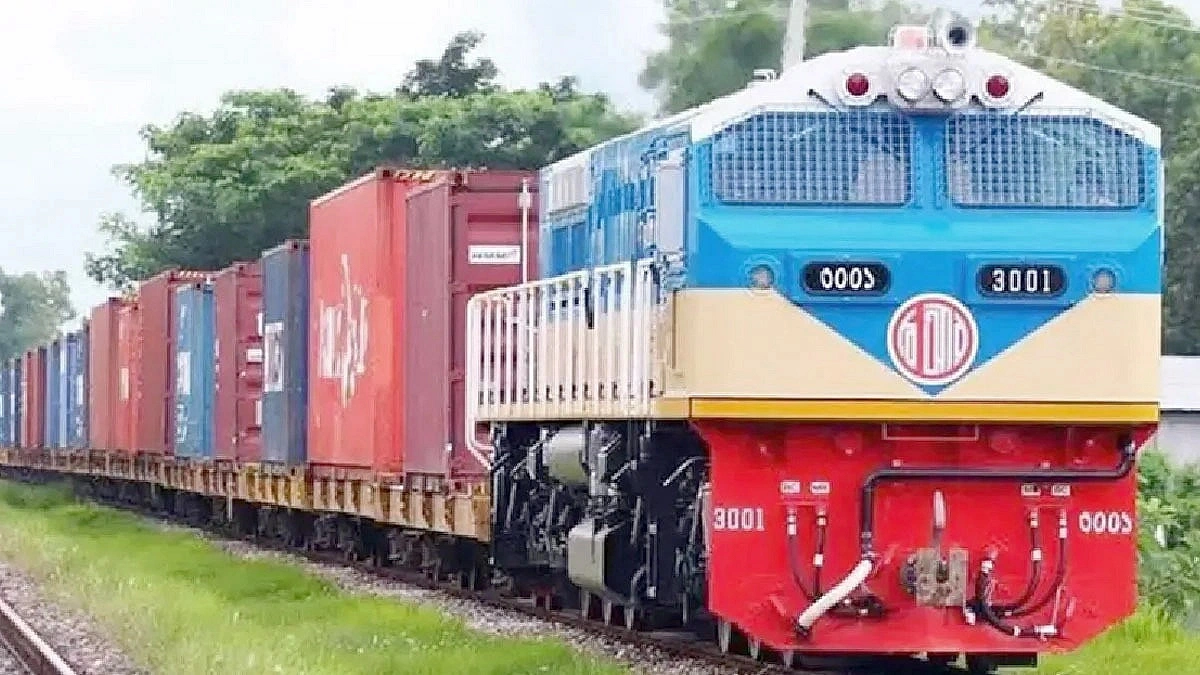
After spending Tk 1.5 lakh crore in 17 years, Bangladesh Railway has lagged behind by five years in passenger transportation and 20 years in freight transport. Over this period, freight movement dropped by 65,000 tonnes, while passenger numbers declined by nearly two crore.
According to officials, despite prioritizing new rail lines and station modernization, train operations are struggling due to an engine crisis. Business leaders said that a freight train takes up to 72 hours to cover the Dhaka-Chittagong route—a distance that usually takes eight and a half hours. Passengers are also dissatisfied with the low quality train service.
When asked about the situation, State Minister for Railways Habibur Rashid said, "In the past, rail lines were expanded without procuring engines, and stations were modernized without buying coaches. Departmental investigations are ongoing regarding these technical issues, and the Anti-Corruption Commission (ACC) has filed cases."
Promising a quick resolution to the engine shortage, the state minister added that efforts are underway to resolve the broad-gauge engine crisis within a year, alongside necessary initiatives to address issues in the meter-gauge railway system.
According to railway data from FY 2008–09 to FY 2025–26, Tk 1.57 lakh crore has been invested across 109 completed and ongoing projects. Out of this total investment, Tk 1,01,473 crore was allocated to the Eastern zone alone.
In FY 2006–07, the Eastern Railway transported 5,74,000 tonnes of freight, which declined to 5,08,000 tonnes in FY 2025–26.
A review of 23 years of railway data shows that container movement fell from 70,000 containers in FY 2003–04 to 43,000 at present. In FY 2019–20, the railway generated a peak revenue of Tk 197 crore by transporting 7 lakh tonnes of freight. In FY 2025–26, revenue dropped to Tk 67.09 crore from transporting 5 lakh tonnes. Within six years, freight revenue declined by 66 percent or Tk 130 crore. In FY 2021–22, the railway earned Tk 114 crore by transporting a record 1 lakh containers and nearly 16 lakh tonnes of goods. Five years later, container movement fell by 58 percent and freight transport decreased by 67 percent.
Transporting fertilizer, stone, and food grains was once profitable for the railways. However, the movement of these three items has remained completely suspended over the last two financial years. While 5,262 wagons of food grains were transported in FY 2020–21, it dropped by 98 percent to just 120 wagons in the latest fiscal year.
Fuel oil transportation has also dropped by nearly 77 percent. In FY 2017–18, a peak of 33,000 oil wagons were transported, which plummeted to 7,000 in the latest fiscal year.
On average, 13 engines are required daily for freight transport. Even in FY 2022–23, an average of 12 engines were assigned to freight movement each day. However, to prioritize passenger trains, engine allocation for freight trains was cut back. As of May 2026, Bangladesh Railway allocated an average of just two engines per day for nationwide freight transport.
Due to the engine crisis, containers are getting stranded at the Chittagong Goods Port Yard (CGPY). According to data from the Dhaka Customs Agents Association, 48,000 containers were transported from CGPY to Dhaka's Kamalapur ICD in 2021, with 2,000 left stranded. By 2025, the number of ICD-bound containers dropped to 28,000. Up to July 2026, only 14,000 containers have been transported. Approximately 92 percent of the country's total import-export trade and 98 percent of container trade are handled through Chittagong Port.
Md. Mizanur Rahman, President of the Dhaka Customs Agents Association, said that while at least four engines are needed daily on the Dhaka-Chittagong route while only one or two are available. Sometimes, no trains run for two to three consecutive days. As containers remain stranded at Chittagong Port for 15 to 20 days, shipping agents impose demurrage fees. Facing financial losses, businesses are increasingly discouraged from using rail transports.
According to Bangladesh Railway's 2024 "Information Book," passenger volume stood at 6.53 crore (65.3 million) in FY 2008–09 and peaked at 9.27 crore (92.7 million) in FY 2018–19. However, by FY 2023–24, passenger numbers dropped to 7.41 crore (74.1 million). Within five years, passenger volume declined by 1.85 crore (18.59 million).
Data from FY 2023–24 shows that out of the railway's 289 diesel engines, 82 were out of order—including 24 broad-gauge and 58 meter-gauge locomotives.
Railway employees have almost forgotten when large-scale recruitment last took place, even as staff members retire every month upon reaching the end of their service terms. To handle emergencies, contractual appointments are being made even for lower-level positions. A significant portion of recruitment in the railway goes to the quota for employees' dependents. The workforce decreased from 30,444 employees in FY 2008–09 to 24,131 in FY 2023–24.
Multiple studies have highlighted deficiencies in railway passenger services. A 2025 survey of 525 passengers across various routes—conducted by researchers from Islamic University of Technology (IUT) and International University of Business Agriculture and Technology (IUBAT)—revealed that management weaknesses force passengers to buy tickets from the black market. Passengers also expressed dissatisfaction over uneven platform heights, overcrowding in coaches, low-quality food, and incidents of stone-throwing.
Another study conducted that same year by researchers at East West University revealed that 66.4 percent of passengers faced payment difficulties while attempting to purchase tickets online. Additionally, 37 percent of passengers reported server crashes during festive seasons, and 59 percent felt that customer support was unsatisfactory.
A 2023 study by Khulna University of Engineering and Technology (KUET) highlighted structural and infrastructural flaws at the Rajshahi Railway Station. Despite being modernized in 2003 with significant investment, there remains a height difference of 6 to 8 inches between the platform and the train coach doors. Due to the absence of elevators or ramps in the three-story building, elderly and disabled passengers cannot access the upper floors. There are no tactile tiles for visually impaired passengers, and seating capacity is severely lacking, forcing people to sit on plastic sheets or mats spread on the floor. Furthermore, luggage trolleys at the station are controlled by a porter syndicate, leaving passengers unable to use them independently and subjected to extortionate fees. Passengers are also left confused as digital display boards show advertisements instead of train schedules and information.
Dr. Hamid Hossain Azad, a regular passenger on the Chittagong-Sylhet route, shared his experience: "Even though online tickets sell out within minutes, they are readily available on the black market. Unauthorized standing passengers are allowed even in AC coaches, with railway staff taking bribes to let illegal passengers aboard. Trains routinely depart two to three hours behind schedule."
Acknowledging the acute locomotive shortage, Mamunul Islam, General Manager of Bangladesh Railway (Eastern Zone), said, "There is a plan to procure 40 engines under two separate projects, and tenders for 20 of them will be invited soon. Since meter-gauge lines are rarely used globally now, sourcing these engines has become increasingly difficult. After the tender process, manufacturing and delivery will take at least two years. Until the new locomotives arrive, we are attempting to run freight trains using the existing older engines."
