
4 Children Raped, Murdered in 7 Days
From Pallabi to Sylhet, the Nation Mourns Amid Panic

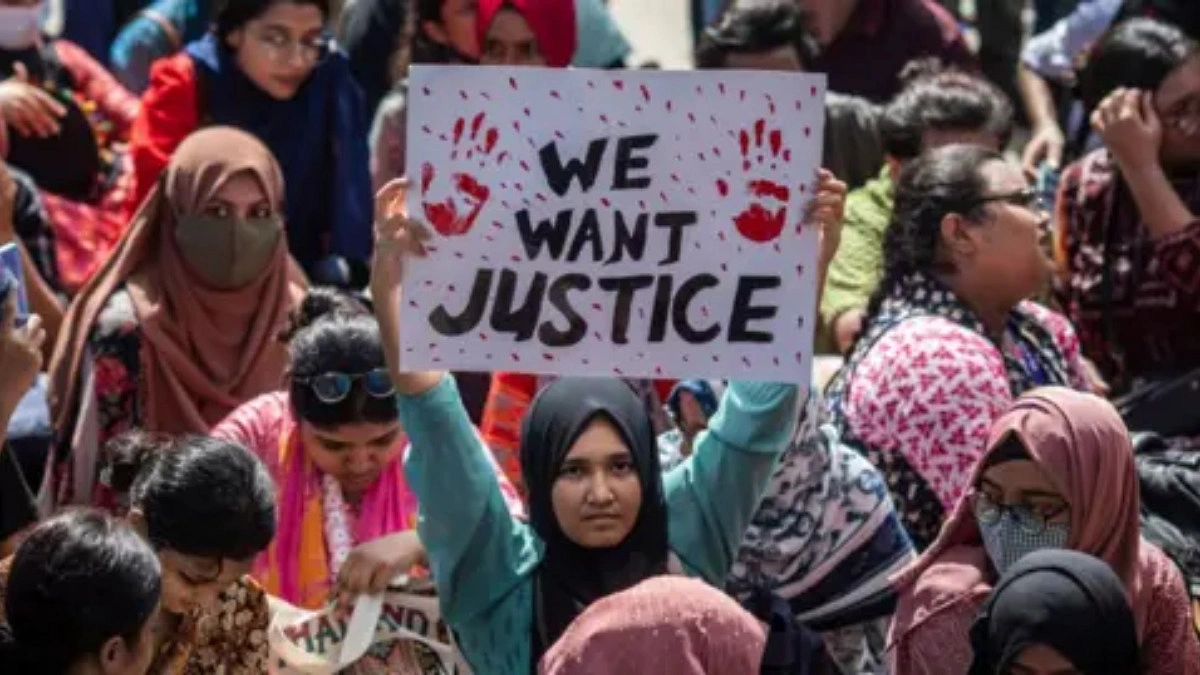
Representational Image. Photo: Collected.
In a single week, across several districts, a few young lives have been taken by criminals, posing a profound questions regarding humanity itself. While the sequence of child rape and murder cases has sparked widespread public outrage, the prevailing sense of panic remains unresolved. Children who should be attending school and enjoying their playtime are instead losing their precious lives to depraved minds.
From Pallabi to Sylhet, every incident exposes a dark facet of this society. Each tragedy is followed by demands for justice and security, only for the same horror to return. Consequently, parental anxiety over child safety continues to escalate, raising a deep and haunting question: who bears the responsibility for the loss of these innocent lives?
8-Year-Old Ramisa in Pallabi
In the Pallabi area of the capital, 8-year-old Ramisa Akter was murdered after being raped. The prime accused, Sohel Rana, has confessed to his crime in court. Dhaka Metropolitan Magistrate Aminul Islam Junaid recorded his statement before ordering him to be sent to jail. The accused's wife, Swapna Akter, was also sent to prison in connection with the same case.
According to the case details, the suspects tricked Ramisa into their flat while she was on her way to school. When family members searched for her later, they discovered Ramisa's headless body in the bedroom of Sohel and Swapna. The child's head was found nearby in a bucket.
The incident has triggered massive public outrage across the country.
Four-Year-Old Fahima in Sylhet
In Sonatala village under the Kandigaon Union of Sylhet Sadar Upazila, a four-year-old child named Fahima Akter was allegedly murdered after being subjected to sexual assault. The police arrested the neighbor and paternal uncle, Zakir Hossain, in connection with the crime.
Locals alleged that Zakir lured Fahima into his house, assaulted and killed her, and then dumped her body in a nearby ditch inside a bag. The police recovered the child's body. As the news of the arrest spread, outraged locals surrounded the police station and later attacked the suspect's house.
Child's Body Found in Thakurgaon Cornfield
In Ranisankail, Thakurgaon, a four-year-old child was raped and murdered. The police have detained a ninth-grade student, Mursalin, regarding the incident.
Family members stated that Mursalin was seen walking with the child. When the child went missing after evening, a search was launched. The following morning, during local questioning, Mursalin confessed to the murder. Based on the information he provided, the child's body was recovered from a cornfield.
Police stated that the child was murdered out of fear of getting caught after the rape.
Allegations Against Step-Uncle in Munshiganj
In Sirajdikhan, Munshiganj, allegations of rape and subsequent murder by suffocation have surfaced against a 10-year-old child's step-uncle, Raja Miah. The child's body was discovered on a bed inside her home. Family members stated that Raja Miah had been living with the family for a long time. Police have detained him from the scene. Preliminary assessments suggest the child was suffocated to death after being raped.
Meanwhile, recent incidents of rape and child murder have fueled growing anxiety and panic among parents. They are more concerned about their children's safety than ever before. Simple routines like walking to school alone, playing outside, or visiting a neighbor's house have now become major sources of worry for many guardians. This anxiety is further amplified daily by reports of child abuse, rape, and murder across news outlets and social media.
Many argue that this fear and uncertainty will not dissolve unless swift justice and exemplary punishment for criminals are guaranteed. Consequently, families are exhibiting heightened alertness and anxiety to ensure their children's safety.
Amena Akter, a resident of Uttara, Dhaka, and a mother of two, shared her fears, stating that she now feels terrified to send her children outside alone. Whether it is going to school, playing, or even visiting the next-door neighbor, she remains constantly worried. As a mother, seeing daily reports of child abuse and murder is deeply alarming. She demanded punishments severe enough to deter anyone from harboring evil intentions toward children in the future.
Similarly, Ramzan Ali, a resident of Pallabi, Dhaka, and a father of one, expressed that he can no longer feel at peace once his child leaves the house. Where the fear used to be about accidents, it is now about people. He emphasized the urgent need for swift trials and maximum penalties for those who perpetrate such brutal violence against children, noting that parental panic will not subside otherwise.
Mahbuba Rahman Kakoli, Chairperson of the Child Rights Implementation Organization, attributed these recent child rapes and murders to social degradation and a culture of impunity. She pointed out that because most victims hail from low-income and middle-class families, perpetrators believe they can easily evade accountability.
She added that the failure to ensure justice for numerous child rape cases over the past year and a half has emboldened criminal tendencies. To guarantee child safety, she noted that responsibility must be shared equally by the state, families, society, schools, and neighbors. Furthermore, she emphasized the necessity of imparting moral, social, and humanitarian education to children from an early age. She believes that fast-tracking child rape and murder cases through special courts to execute the maximum penalty of death by hanging would significantly curb these crimes.
Supreme Court lawyer Ishrat Hasan also believes that weaknesses in the judicial system embolden criminals to commit heinous offenses like rape and murder. She noted that while receiving justice is a fundamental constitutional right for every citizen, many in the country are unfortunately deprived of it.
Although the Prevention of Oppression Against Women and Children Act mandates completing investigations within 30 days, she explained that this rarely happens in reality. Investigations and DNA reports take a long time to deliver. The judicial process is heavily delayed due to a lack of adequate DNA labs and specialized investigative agencies, which breeds frustration among the victims' families.
She remarked that it is shameful for the state when a father, after losing his daughter, says he no longer wants justice. Even when some cases are fast-tracked, backlog issues in the higher courts cause them to drag on for years, delaying final justice.
Ishrat Hasan concluded that if justice is served properly, crime rates will drop significantly, as exemplary punishment would instill fear in potential offenders. However, people are currently not getting justice. She criticized the shortage of judges and courts in the country, stressing that every district needs a DNA lab and that a specialized agency should be formed solely to investigate rape cases.
