
Immigration judges take Trump administration’s ‘gag policy’ to US supreme court

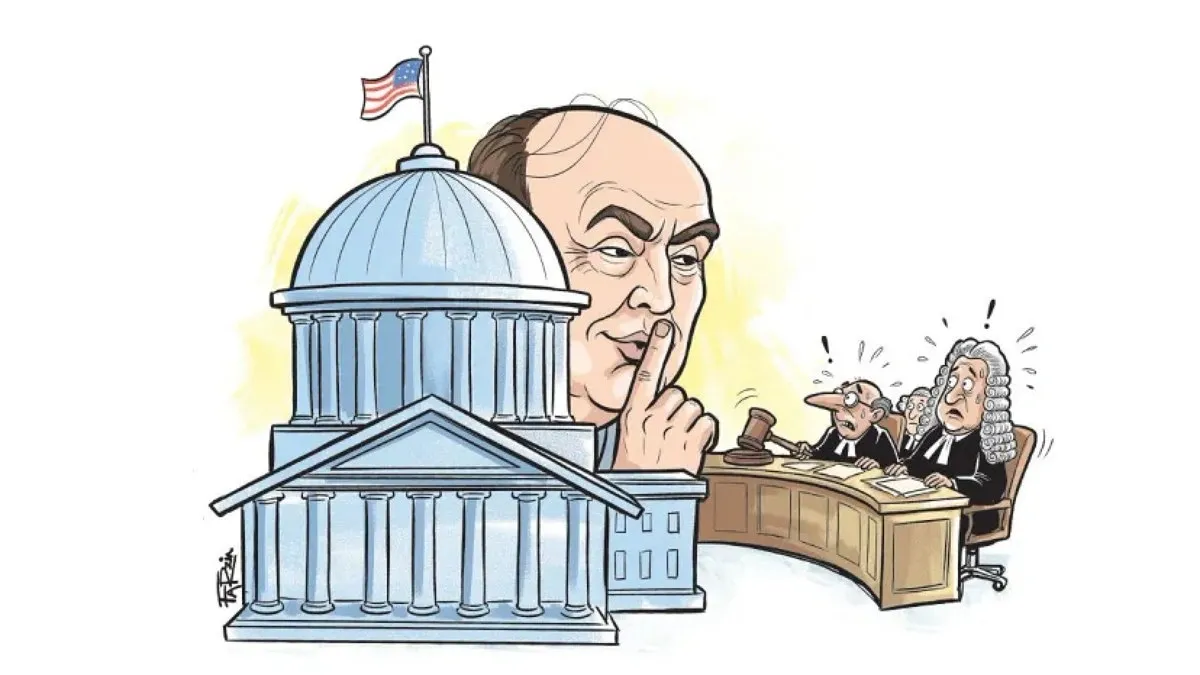
Graphics: Agamir Somoy
Can judges criticize government policies? Does their right to speak publicly about immigration depend on the administration’s permission? Can they express their views publicly on matters concerning their workplace? These questions have now reached the highest court in the United States.
An organization representing the country’s immigration judges has approached the Supreme Court to challenge the Trump administration’s policy restricting their speech. The organization alleges that the government’s policy violates judges’ constitutional right to freedom of speech. At the same time, it claims that the policy limits their ability to directly challenge the restrictions in federal court.
Last Tuesday, the National Association of Immigration Judges (NAIJ) filed a new petition with the Supreme Court. The Knight First Amendment Institute at Columbia University is representing the organization in the legal battle. Its main demand this time is that judges must be allowed to approach federal courts to protect their constitutional rights without being required to go through lengthy government administrative procedures.
What does the controversial policy say?
At the center of the dispute is the Executive Office for Immigration Review (EOIR), which operates under the Department of Justice. Immigration courts across the United States function under this agency.
According to the allegations, judges face restrictions on making public statements or writing in their personal capacity about immigration and related government activities. As a result, they face administrative barriers when attempting to share their experiences and observations on immigration law, government policies and judicial proceedings.
The policy was introduced in 2017 during Trump’s first term in office. It was withdrawn during the Joe Biden administration. However, after Trump returned to power in 2025, the restrictions were reinstated.
Legal battle dates back to 2020
The dispute is not new. NAIJ first filed a lawsuit on July 1, 2020.
In 2023, a federal district court in Virginia dismissed the case. The court argued that complaints related to the employment of government employees must follow the administrative procedures established under the Civil Service Reform Act of 1978.
The case then went to the US Court of Appeals for the Fourth Circuit. In June 2025, questions were raised about the effectiveness of the administrative complaint resolution system.
On May 26, 2026, the Supreme Court overturned the appeals court’s previous decision and sent the case back for reconsideration. However, the highest court did not make a final decision on whether the restrictions on judges’ speech violated the First Amendment.
Later, on August 19, the Fourth Circuit Court of Appeals upheld the decision to dismiss the case. Following the publication of a revised opinion on November 4, the judges again approached the Supreme Court.
Major question over access to courts
The main issue in the new petition is now the judges’ ability to seek legal remedies.
Under the current system, government employees must first file complaints with the Office of Special Counsel. Under certain conditions, the matter can subsequently be taken to the Merit Systems Protection Board.
However, NAIJ alleges that this process does not guarantee access to federal courts.
The organization describes this situation as a ‘First Amendment black hole’. This refers to the risk of being left without an effective legal avenue to protect constitutionally guaranteed rights even when those rights are violated.
The organization fears that if such a precedent is established, broad restrictions could be imposed in the future on government employees speaking out on various matters of public interest.
