
Court orders removal of barricades and normal metro services in Delhi

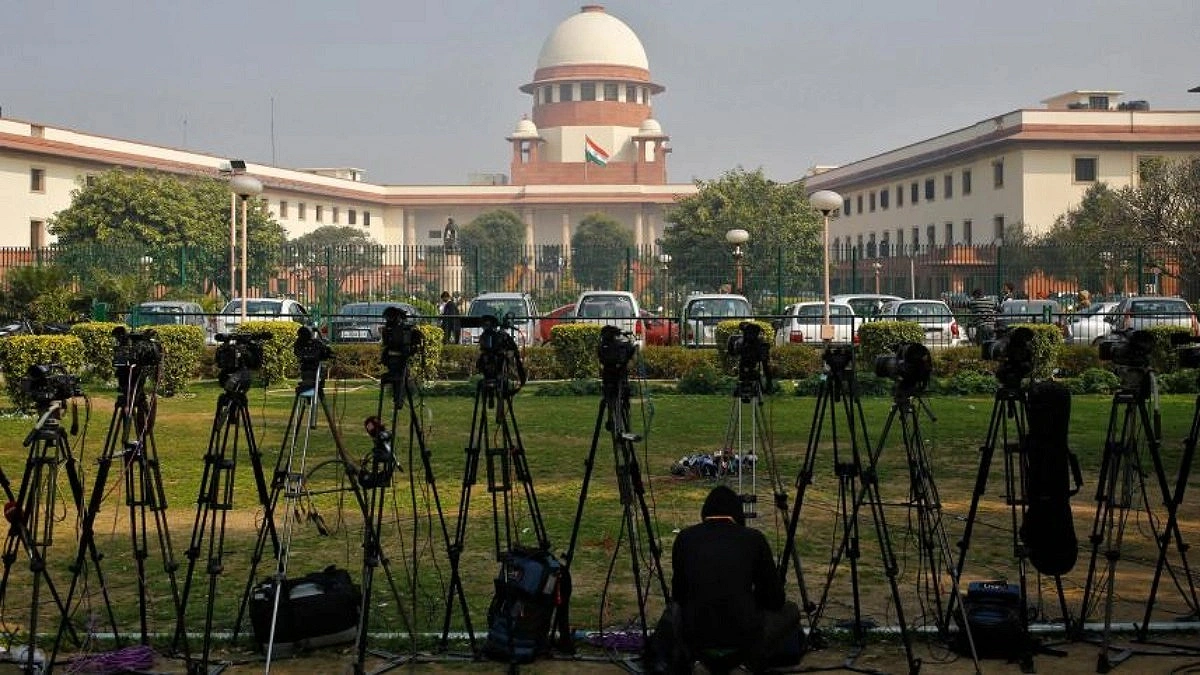
The Supreme Court of India. File photo: Reuters
The Supreme Court of India has ordered Delhi to operate metro services on their regular schedules and keep internet services running amid protests by the Cockroach Janata Party (CJP). The court also directed authorities to restore the public’s freedom of movement. It ordered the removal of all barricades unless they are absolutely necessary. However, movement may be restricted when required to maintain public order.
The directions were issued on Sunday by a special bench during a hearing on a petition challenging the closure of metro stations in Delhi in connection with CJP protests. The observations came during a contempt petition filed by lawyer Shailendra Mani Tripathi.
The petition referred to a Supreme Court order dated October 9. That order addressed a separate petition challenging the closure of 57 metro stations in Delhi and the cancellation of trains bound for the capital in connection with CJP’s planned protests.
On Sunday, a bench comprising Justice Joymalya Bagchi and Justice V. Mohana heard several petitions on these matters. The court said people have the right to protest but must do so within the framework of police laws.
The bench said, “You have the right to protest. There is no dispute about that. However, the manner in which you protest must be within the framework of police laws.”
Justice Bagchi said the right to protest cannot be claimed to be above police laws. He also said restrictions must comply with the requirement to maintain public order under Article 19(2) of the Constitution.
The Supreme Court issued notices to the Delhi Police, the Union Home Secretary and the Delhi Metro Rail Corporation (DMRC), among other authorities, regarding the detentions and related circumstances. The court said it would hear the arguments of all parties regarding the protests in Delhi. It would also ensure that no one faces unnecessary hardship.
CJP is protesting alleged irregularities in the Special Intensive Revision (SIR) of electoral rolls. The party is demanding the resignation of Chief Election Commissioner Gyanesh Kumar.
The petitions challenged restrictions on movement in Delhi and the right to peaceful protest. At the time of the hearing, restrictions under Section 163 of the Bharatiya Nagarik Suraksha Sanhita (BNSS) were also in force on Bhagwan Das Road, where the court is located.
On Sunday, several senior lawyers told the court that ordinary citizens, including lawyers, had faced police brutality and severe restrictions on movement during Saturday’s protests. They also alleged that these actions had curtailed the right to peaceful protest.
Meanwhile, three CJP leaders, Abhijit Dipke, Ashutosh Ranka and Sourav Das, were released on Sunday after being placed in preventive detention. They were released after appearing before an executive magistrate at the Delhi Cantonment police station. CJP legal affairs chief Ratna Singh said they were released on the condition that they would not disturb public peace and order for the next year.
They had been detained aboard an Air India flight from Mumbai to Delhi before the protest at Jantar Mantar on Saturday. Police said Abhijit Dipke had been informed of his grandmother’s death. He was also offered assistance in returning home.
CJP leader Ajinkya Shinde, who led the protests, said the movement would continue until Gyanesh Kumar resigns.
CJP has called for fresh protests on Sunday. The party announced that it would march toward Jantar Mantar again. In a post on X on Saturday, the party said it would continue its movement until all its demands were met.
Earlier on Saturday, opposition leaders and rights activists were also detained during protests against the Election Commission in Delhi. Those detained included Arvind Kejriwal, Mamata Banerjee, Pinarayi Vijayan, Neha Bora, Yogendra Yadav and Prashant Bhushan. Nearly 6,000 people across the capital had reportedly been detained by 7 p.m. No protesters were allowed to reach Jantar Mantar.
Meanwhile, the Delhi Traffic Police said traffic could be disrupted on various roads in New Delhi and central Delhi on Sunday due to law-and-order concerns. Depending on the situation, traffic diversions could begin on various roads at 6 a.m. Restrictions may also be imposed at 30 locations across the city.
Areas where traffic could be affected include the Dhaula Kuan flyover, Jhandewalan, Mandi House, Connaught Place, Jantar Mantar Road, the Lodhi Road flyover, Patel Chowk and areas near Rail Bhavan and RML Hospital.
Police have advised people traveling through New Delhi and central Delhi to railway stations, interstate bus terminals (ISBTs) and the airport to plan their journeys in advance. They have been advised to leave with extra time and avoid nonessential travel.
Sources: Hindustan Times, NDTV and The Indian Express.
