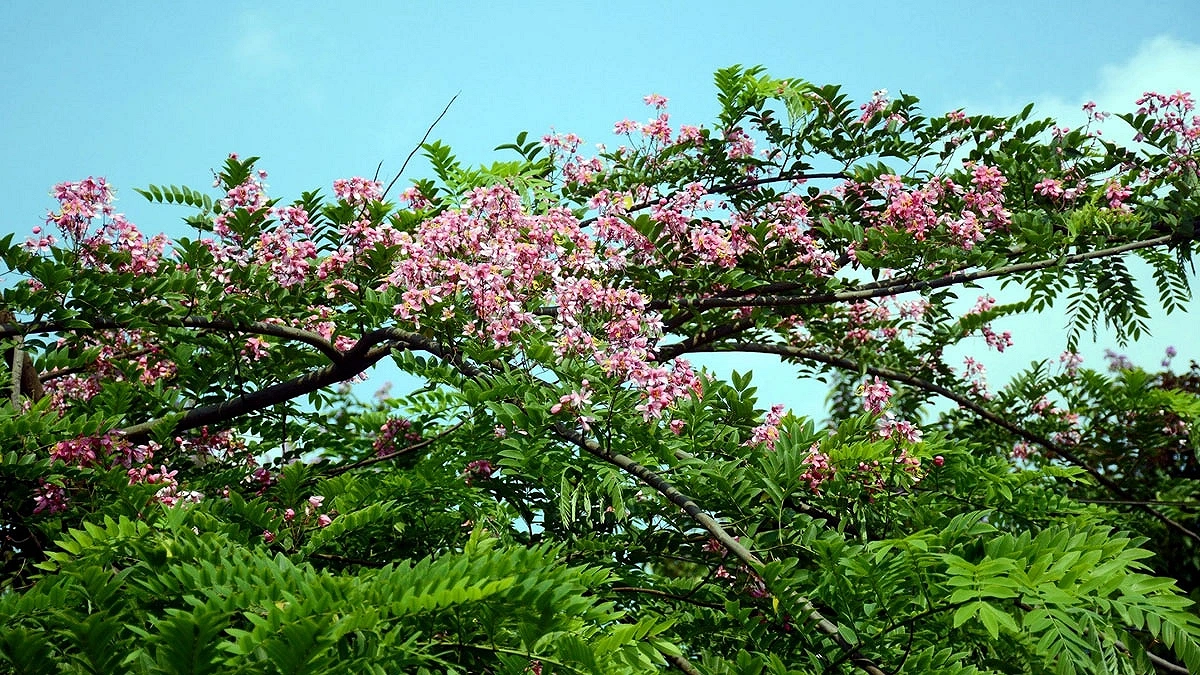
Pink in Color, Red by Name

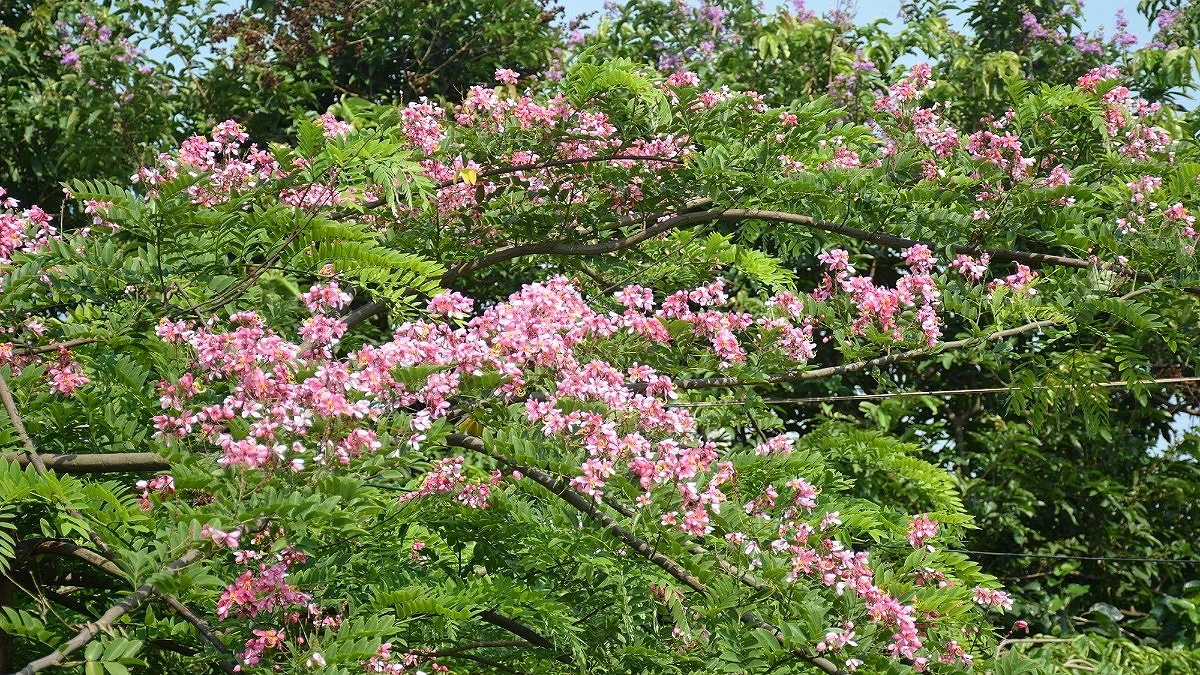
Photo: Agamir Somoy
The campus of Begum Rokeya University in Rangpur has been transformed into vibrant colors as various phoenix flowers have been blossomed.
Krishnachura, Jarul, Swarnachampa, Kanakchampa, Nilmoni, and various other flowers have brightened the campus. However, one particular tree standing near the campus's Independence Memorial is drawing extra attention because it is blooming with the rare Red Sonalu, also known as Lal Sonail.
Despite the name "Red," the flowers are mostly pink in color. For this reason, it is also called the Pink Shower. Its complex scientific name is Cassia javanica.
The pink flowers blooming amidst the green leaves effortlessly spread charm. Passersby stop, even if only for a moment, captivated by its stunning glow. For many, the Red Sonalu provides an aesthetic backdrop for their photographs.
Abid Karim Munna, an agriculturist and Deputy Director of Bangla Academy who is in charge of the Begum Rokeya Memorial Center in Rangpur, shared detailed information about this tree.
According to him, the Lal Sonail blooms in Bangladesh between February and April, though the blooming time varies in different countries depending on the climate. It is native to Southeast Asia and grows in tropical gardens. These flowers bloom in tropical regions including Bangladesh, India, Myanmar, and Indonesia. This fast-growing flowering tree reaches a height of 8 to 10 meters. Although called Lal Sonail or Red Sonalu, the pink hue is more prominent in its flowers.
In addition to its beauty, Lal Sonail has herbal benefits. Agriculturist Abid noted that it was used in ancient times to treat constipation and chlorosis. The leaves of this tree play an effective role against Herpes Simplex (a viral infection). Its bark is a key ingredient in anti-diabetic formulations of Ayurvedic and other traditional medicines. Additionally, the bark is used in the tannery industry.
Under the Lal Sonail tree, a conversation took place with Dr. Tuhin Wadud, a professor of the Bengali Department at Begum Rokeya University and a nature enthusiast. He has planted nearly 37,000 trees of over four hundred species on the campus. He shared that story.
"Various people assisted in collecting these trees. Some bought the trees, while students and staff helped by taking care of them. However, naturalist Mokarram Hossain provided the most help in collecting the rare saplings planted at the university... one of those is the Lal Sonail tree. Out of the three Lal Sonail trees planted on this campus, two are currently in bloom. I hope the other one will bloom next year."
Describing his fascination, Dr. Tuhin said, "Because the Lal Sonail flower is so unique, you feel like staring at it. The way it blooms is also different. The structure and beauty of the tree are wonderful. Long branches spread in all directions, and flowers bloom all along the branches. It looks as if someone has meticulously arranged the flowers one after another."
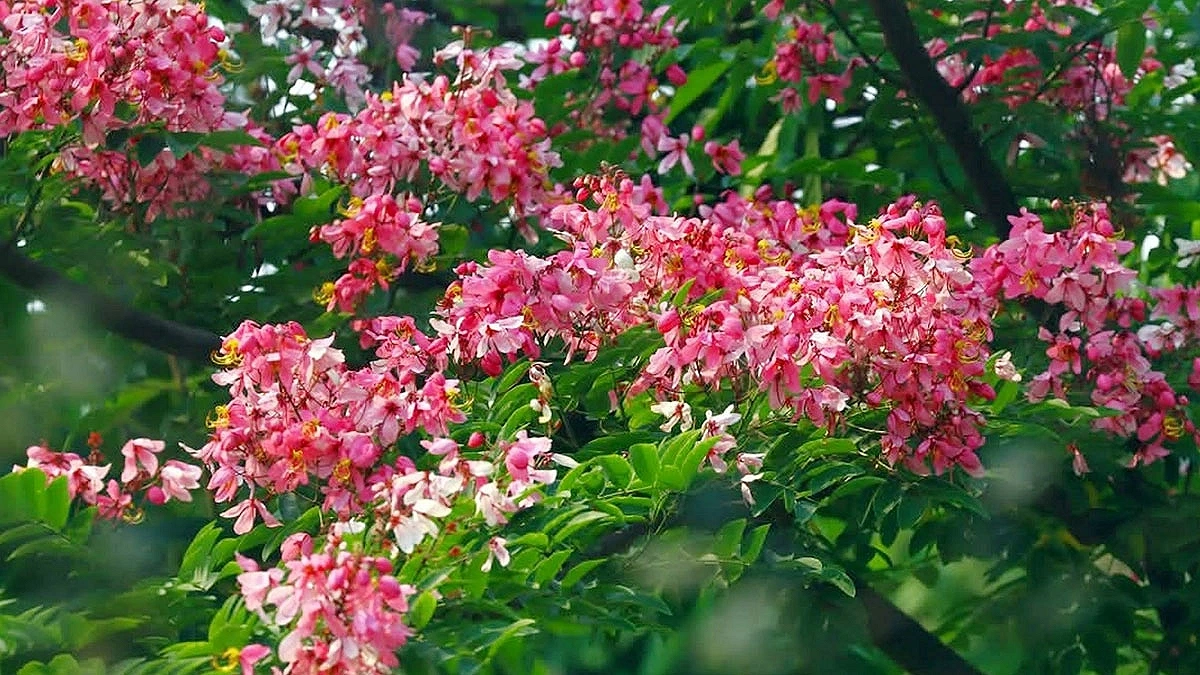
He mentioned that amidst thousands of flowers, many people are coming to the campus just to see this rare Lal Sonail. "Since it is flowering well in Rangpur, it is evident that the soil and weather here suit this tree perfectly."
The tree lover has plans to spread this rare flowering tree across the country. "Lal Sonail is not often seen in Bangladesh. I have seen a few trees in Rajshahi. It is being planted in Dhaka now. It is also present at Jahangirnagar University. However, this tree can be produced from seeds. So, we thought that if we get seeds this time, we will distribute them to many people so that this rare Lal Sonail with its pink glow can spread everywhere."