
China-Chattogram Direct Shipping Expands as Export Gap Persists

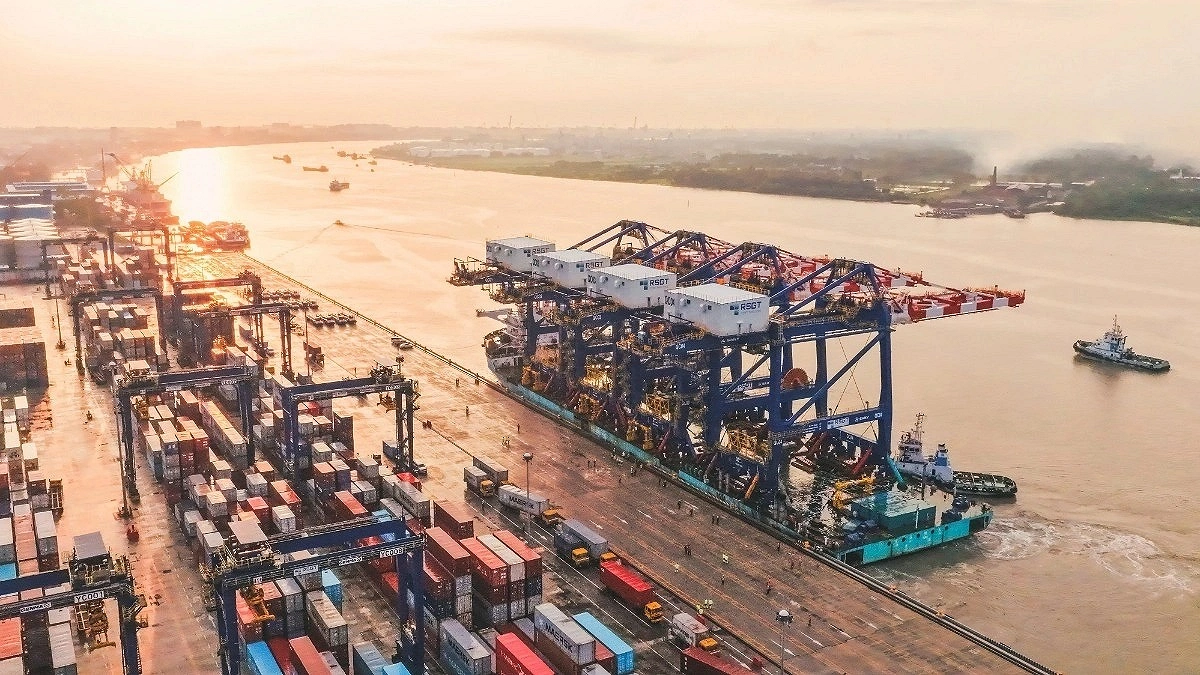
Photo: Agamir Somoy
Bangladesh imports goods worth around $23 billion annually from China, while exports to the country stand at only about $1 billion. Previously, this $24 billion worth of trade moved through transshipment ports via indirect routes. With the launch of direct shipping services, cargo from China is now reaching buyers in 12 days instead of 25. However, return voyages to China often run empty due to a lack of export cargo.
Five foreign shipping lines, operating individually or jointly, are currently running direct services on this route. However, since cargo movement on the Chattogram-China-Chattogram corridor remains heavily import-dependent, the route has yet to achieve long-term stability.
Prime Minister Tarique Rahman has given top priority to China since taking office. He is set to make his first official visit to China on Monday. Earlier, the government allocated significant funding in the national budget to prioritize the China Economic Zone and the Free Trade Zone in Anwara, Chattogram. Officials and business leaders expect the visit to accelerate Chinese-funded projects and expand bilateral trade.
Chattogram Chamber President Mohammad Amirul Haque said he expects Bangladesh’s exports to China to rise from $1 billion to $5 billion within the next two years as government initiatives progress. He added that shipping lines will compete to improve services as trade volume increases, benefiting the overall trade sector.
In 2025, Bangladesh imported nearly $23 billion worth of goods from China, accounting for about 27 percent of Bangladesh’s total imports. In contrast, exports to China stood at around $1.16 billion.
Transporting this volume of goods by sea requires about 700,000 import containers, while exports account for only around 30,000 containers. Foreign shipping lines fully control this logistics network. Import containers from China are first routed through Singapore, Colombo, or Port Klang before being shipped to Chattogram, a process that previously took at least 25 days.
Direct shipping from China began in 2018 with Pacific International Lines (PIL). Since then, several other carriers have joined the route, including Denmark-based Maersk Line, Hong Kong-based SITC, Korea-based Sinokor–Hyundai, and France-based CNC Line. In 2024, Mediterranean Shipping Company (MSC), one of the world’s largest carriers, also launched services on this route. Each operator now runs one to two weekly sailings.
Each voyage from China to Chattogram now takes 12 to 15 days. Importers, especially in the ready-made garment sector, have benefited significantly from faster delivery of raw materials.
However, several carriers have suspended services due to insufficient return cargo. Pioneer PIL, for instance, has temporarily halted operations on this route.
Others continue services by adding alternative ports on return legs. MSC Head of Operations Azmeri Hossain Chowdhury said the company operates direct services based on a clear assessment of cargo imbalance. He noted that freight costs would be lower if cargo were available in both directions, but currently the company minimizes costs by repositioning empty containers from Chattogram to Singapore or China on return trips.
Meanwhile, KSB Services Managing Director Moinul Haque Chowdhury, whose company handles KCS services, said export cargo on the return leg has improved compared to earlier levels.
He said around 1,800 to 2,000 export containers have been shipped to China in the past six months, calling it a positive development. He added that ongoing government initiatives are expected to increase overall trade volume further.
