
Tax Relief Reshapes Budget Philosophy
- Government made sweeping last-minute changes to build a private sector-led economy.
- Tax incentives and investment-friendly policies positioned as key tools for economic recovery.
- Several controversial measures withdrawn in response to public opinion
- Clear strategy to develop the capital market as an alternative source of financing.
- Digital economy, technology, and green energy identified as new drivers of future growth.
- An inclusive budget, but its success will depend on implementation: MK Mujeri.

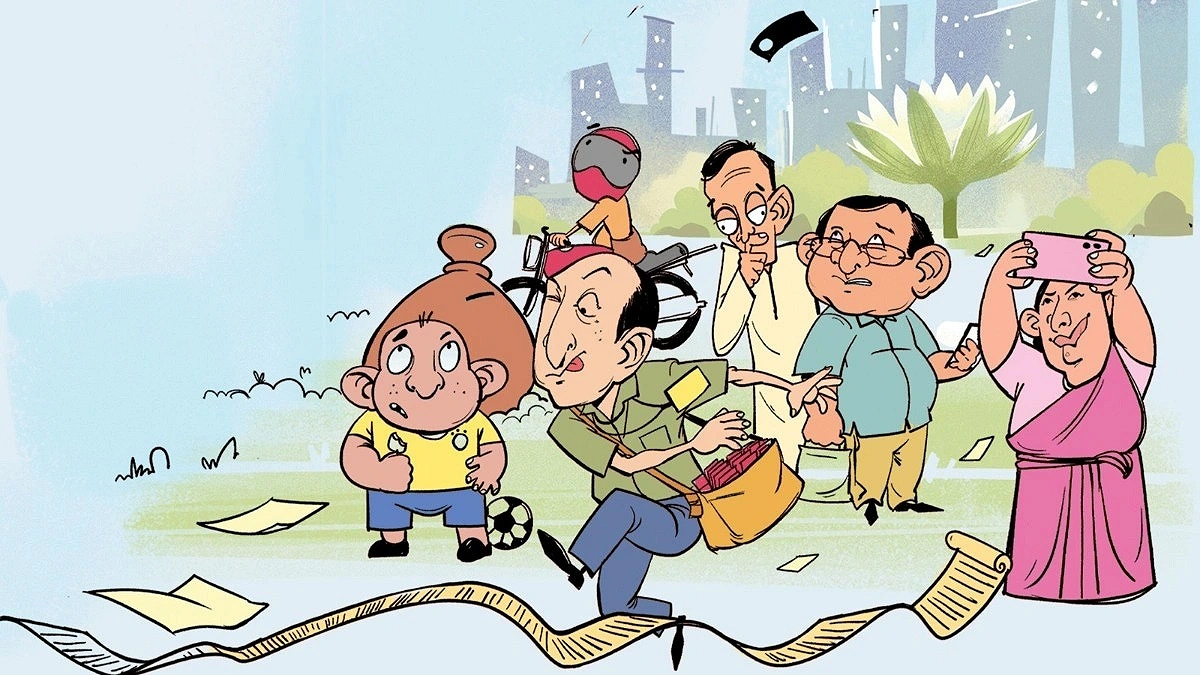
Graphics: Agamir Somoy
The government is passing the budget for fiscal year 2026-27 with sweeping last-minute changes aimed at making the economy more private sector-driven. As part of that shift, it has granted extensive tax exemptions and duty benefits to a range of sectors, including industry, information technology, renewable energy, electric vehicles, the capital market, and the digital economy. Stakeholders believe the government has chosen these economic recovery measures and investment-friendly policies as its primary tools for growth.
The budget, which took effect on Wednesday, July 1, was passed in Parliament on Tuesday. Finance Minister Amir Khasru Mahmud Chowdhury had unveiled the budget on June 11. Although the original proposal included several incentives and concessions, lawmakers introduced 64 amendments to the Finance Bill at the final stage, expanding the scope of tax breaks and benefits. Economists, experts, and stakeholders say it is rare for a budget to be passed with such a large number of changes.
A review of budgets over the past decade shows that their primary focus was increasing revenue collection, expanding the tax and VAT net, and boosting infrastructure spending. This budget, however, takes a different direction. The government has introduced a series of tax incentives for industry, technology, the capital market, the digital sector, renewable energy, health care, and agriculture. It also revised several controversial measures following parliamentary discussions and public feedback. Through the new budget, the government has sought to send a political and economic message to businesses, investors, the middle class, entrepreneurs, and the general public: the state will not serve as the engine of growth but will instead create an enabling environment for growth.
A widely discussed economic principle holds that governments do not always become wealthier by imposing higher taxes. In some cases, lower taxes can stimulate economic activity and generate greater revenue over the long term. The new budget reflects that philosophy. The government has chosen to forgo a portion of immediate revenue in an effort to expand production, investment, and consumer spending, thereby laying the foundation for stronger future growth.
Economist MK Mujeri views the amendments to the Finance Bill as a reflection of public opinion. He told Agamir Somoy that, as the first budget of an elected government, it seeks to be more inclusive by offering benefits to people from different professions and income groups through various initiatives. However, he noted that the success of these incentives will ultimately depend on implementation. Reforming revenue administration, achieving ambitious revenue targets, preventing waste and corruption in development spending, closing loopholes, and ensuring quality project implementation remain major challenges.
Although the government initially left the tax-free income threshold unchanged, it raised the limit by Tk 25,000 on the day the Finance Bill was passed, setting the minimum threshold at Tk 400,000. According to stakeholders, the Ninth National Pay Scale for government employees took effect on July 1, a move that could place pressure on private-sector employers and individuals. The government reportedly increased the tax-free income limit with that consideration in mind.
The government also withdrew the widely criticized provision allowing the legalization of undisclosed wealth. At the same time, it removed the requirement to submit a Taxpayer Identification Number (TIN) certificate when opening a bank account and when registering property transfer deeds and mutation records.
The finance minister said the proposal had created confusion and concern among the public. He explained that the measure was originally intended to protect taxpayers from complications arising from the registration of many properties at mouza values rather than market values. However, he said the government decided to withdraw the proposal out of respect for public opinion.
The government also scrapped a controversial VAT measure targeting small retailers. In addition, it reduced corporate tax rates and introduced a package of incentives for the capital market, signaling a commitment to long-term policy stability. By outlining tax policy, industrial policy, and investment incentives through fiscal year 2030–31, the government sought to assure investors that policy continuity would remain intact.
The budget also attempts to build a production-oriented economy by reducing duties on raw materials, encouraging domestic industries, and providing incentives for export-oriented sectors. Stakeholders believe these measures aim to reduce import dependence and strengthen local production.
Former finance adviser to the interim government, Salehuddin Ahmed, said the elected government had made broad commitments across multiple sectors because of pressure to fulfill electoral pledges and meet public expectations. He warned that implementation would be the greatest challenge. Failure to effectively execute the announced programs, he said, could lead to public disappointment.
Through this budget, the government has also delivered a political message: its first budget is not focused on imposing harsher taxes but on easing inflationary pressures on the public and stimulating economic activity. A key question, however, remains: how will the government address potential revenue shortfalls? Individuals involved in the budget process argue that higher investment and production will expand the size of the economy, broaden the tax base, and ultimately increase revenue collection over the long term. The budget also includes a range of incentives for the capital market.
According to stakeholders, these incentives will largely benefit existing investors. New investors, however, are likely to see fewer advantages. They also point to several limitations. The budget does not contain a direct strategy for creating new jobs, nor does it offer major standalone tax incentives for small and medium-sized enterprises. It also lacks a clear roadmap for increasing technology-driven agricultural production. Furthermore, stakeholders say the budget does not significantly reflect any direct and effective tax policy measures aimed at controlling inflation.
