
Experts demand BRT launch, independent commission to probe irregularities

File Photo
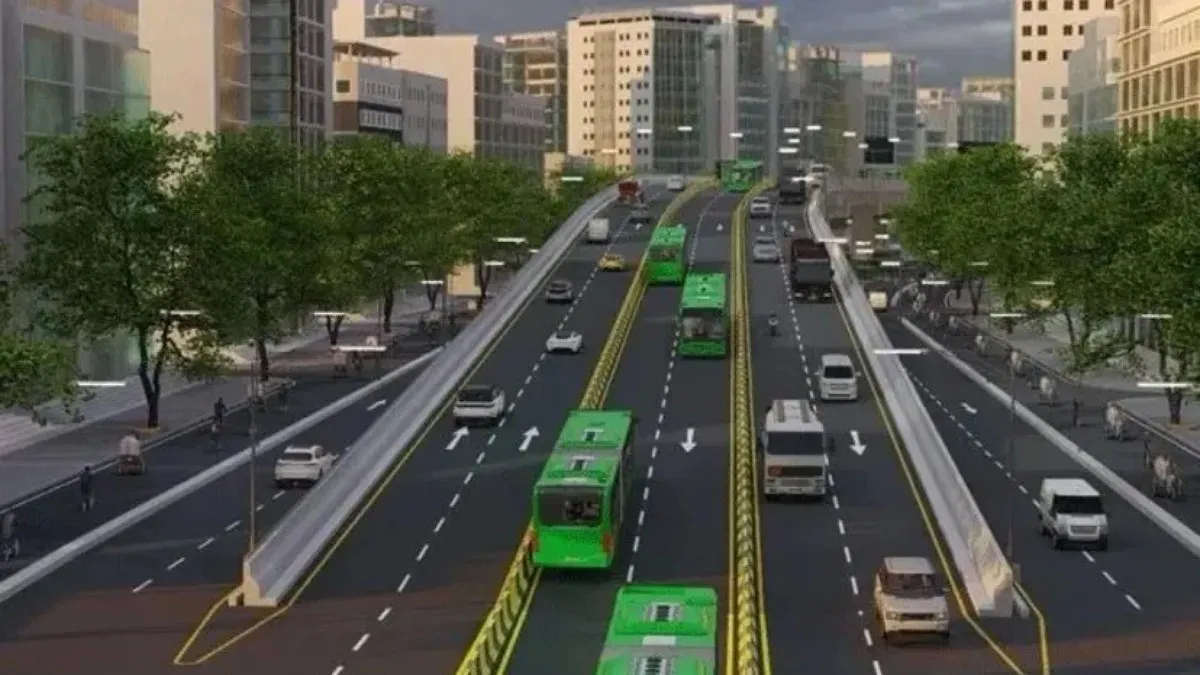
Urban planners, architects and transport experts have called for reconsidering the decision to remove the dedicated bus lanes from the Dhaka-Gazipur Bus Rapid Transit (BRT) project and convert the road into a regular highway after infrastructure was built at a cost of nearly Tk 2,800 crore.
They have also called for preserving all project documents from its inception and forming an independent commission to investigate irregularities, technical faults and negligence in its implementation.
The demands were raised at a press conference titled “Demand for Implementation of Dhaka-Gazipur BRT” at the National Press Club in the capital on Wednesday.
The press conference was jointly organised by the Bangladesh Institute of Planners (BIP), the Institute of Architects Bangladesh (IAB), Work for a Better Bangladesh Trust (WBB) and Gazipur Heritage and Development.
Speaking at the event, BIP President and planner Muhammad Ariful Islam said a Cabinet meeting on October 18 decided to abolish the designated bus lanes on the Dhaka-Gazipur BRT corridor and convert the road into a six-lane highway with three lanes on each side.
He said changing the project in this manner without purchasing buses or launching services after spending nearly Tk 2,800 crore on infrastructure construction raised serious questions.
“If there are financial or operational problems with the project implementation, the relevant individuals and institutions must take responsibility. It is not right to blame the BRT system or the bus lanes for any irregularities or technical mistakes. All relevant documents from the beginning of the project to date must be preserved, along with lists of consultants and implementing agencies and records of the roles played by responsible individuals. An investigation commission comprising experts without any conflicts of interest must be formed, and its findings must be made public,” he said.
Muhammad Ariful Islam said launching BRT services on the Airport-Gazipur corridor would reduce travel time, lower dependence on private cars and create opportunities for investment and urban economic growth in Gazipur.
He said the corridor was included in the 2005 Strategic Transport Plan (STP), the revised 2015 Revised Strategic Transport Plan (RSTP), the updated 2025 plan and the Gazipur Transport Master Plan. Therefore, its future must be determined by considering the overall transport planning framework.
He said a comparative assessment of construction and operating costs, time savings for passengers, environmental benefits and potential financial losses caused by traffic congestion was necessary before deciding whether to retain or scrap the BRT system.
All alternatives should be analysed by taking the views of all stakeholders into account, and the rationale behind the decision should be made public, he said.
He also called for declaring the Airport-Gazipur corridor an urban artery, retaining the BRT lanes and strengthening Dhaka BRT PLC.
Engineer Shamsul Haque, president of Gazipur Heritage and Development, said the BRT project, launched in 2012, had not been completed even after 14 years.
He said a 28-kilometre BRT project in Peshawar, Pakistan, had been implemented in just two years. He called for ensuring accountability over the reasons behind the decision to cancel the project after nearly 97 percent of the work had been completed and identifying those responsible for the prolonged delays.
He said the number of auto-rickshaws in Gazipur was increasing due to a shortage of adequate public transport.
He warned that scrapping the BRT project could end special road-crossing facilities at 25 stations, increasing difficulties for women and people with disabilities.
He urged the authorities to seek public opinion alongside expert views before making a final decision on the project.
Politician Ruhin Hossain Prince said the decision to cancel a project worth nearly Tk 2,800 crore had been made without informing the general public.
“If there has been corruption in the project, it must be investigated and necessary corrections must be made. Cancelling the project without addressing corruption is not reasonable,” he said.
He called for publishing a white paper by disclosing comprehensive information about the project.
Professor Masudur Rashid, general secretary of the Institute of Architects Bangladesh, said technical corrections should be made if there were flaws in the project.
“Cancelling the entire project would be a major mistake,” he said.
Transport expert Engineer Mahbubul Bari said a large number of bus passengers used the corridor.
He said launching BRT services would have a positive impact on the environment and road safety.
He also said there were plans to integrate six bus routes with the BRT system. As a result, scrapping the project would also put the implementation of the bus franchise system into question.
At the press conference, the BIP president presented an eight-point set of demands.
The demands include reconsidering the October 18 decision, conducting financial and environmental assessments of all available alternatives, forming an independent investigation commission and publishing its report, declaring the Airport-Gazipur corridor an urban artery, retaining the BRT lanes and strengthening Dhaka BRT PLC with technical leadership.
They also called for making the country’s transport development planning-based rather than project-based and providing them with an opportunity to hold discussions with the prime minister.
Among others present at the press conference were BIP General Secretary Professor Dr Md. Musleh Uddin Hasan, WBB Trust Executive Director Saifuddin Ahmed and Gazipur resident Kafil Uddin.
