
Four names in contention for next president

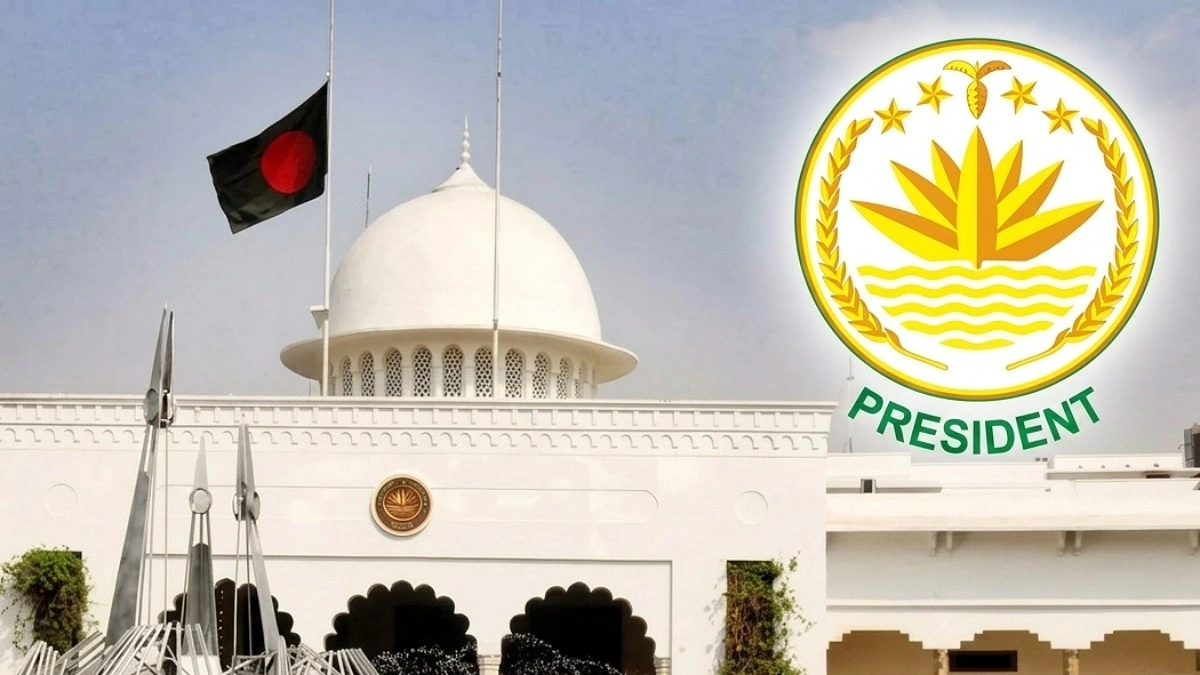
The possible resignation of President Mohammed Shahabuddin has sparked speculation over who could become Bangladesh's next head of state. With Bangladesh's highest constitutional office potentially set for a change, discussions have begun within the government and the ruling BNP over a suitable successor, according to party and government sources.
Several sources familiar with the matter said President Shahabuddin has, in principle, decided to resign due to health reasons. Although no official announcement has been made, the prospect of a presidential transition just five months after the current government took office has prompted the ruling party to approach the issue cautiously.
While the BNP has not formally announced any candidate, four names have surfaced in internal discussions, according to party and government sources. They are BNP Secretary General Mirza Fakhrul Islam Alamgir, Standing Committee members Dr. Khandaker Mosharraf Hossain and Dr. Abdul Moyeen Khan, and Cabinet Secretary Nasimul Ghani, who is currently serving in the post on a contractual basis.
Political analysts say the final decision will largely rest with Prime Minister Tarique Rahman. As the BNP holds a parliamentary majority, its nominee is expected to secure enough votes to be elected president.
Mirza Fakhrul, who has served as BNP secretary general for more than a decade, is regarded by many within the party as a consensus figure because of his long political career. He previously served as a lawmaker and junior minister and currently holds the portfolio of minister for local government, rural development and cooperatives.
However, former Jahangirnagar University professor of government and politics Dilara Chowdhury argued that the next president should come from politics rather than the civil service.
Politicians make sacrifices for their parties and understand the political process, she said, adding that she sees little justification for appointing a bureaucrat to such a high constitutional office.
She also said the choice would ultimately depend on whom BNP Chairman and Prime Minister Tarique Rahman prefers, given the party's majority in parliament.
Despite the speculation over a new president, Chowdhury said a change in the office would not significantly alter the country's governance under the existing constitutional framework.
The president has no effective executive authority under the current Constitution and is required to act on the advice of the prime minister, she said. She added that many had hoped for a better balance of power between the president and the prime minister, but no such structural reform has yet taken place.
