
Ad-din Patients Not Receiving Care at Designated Hospitals

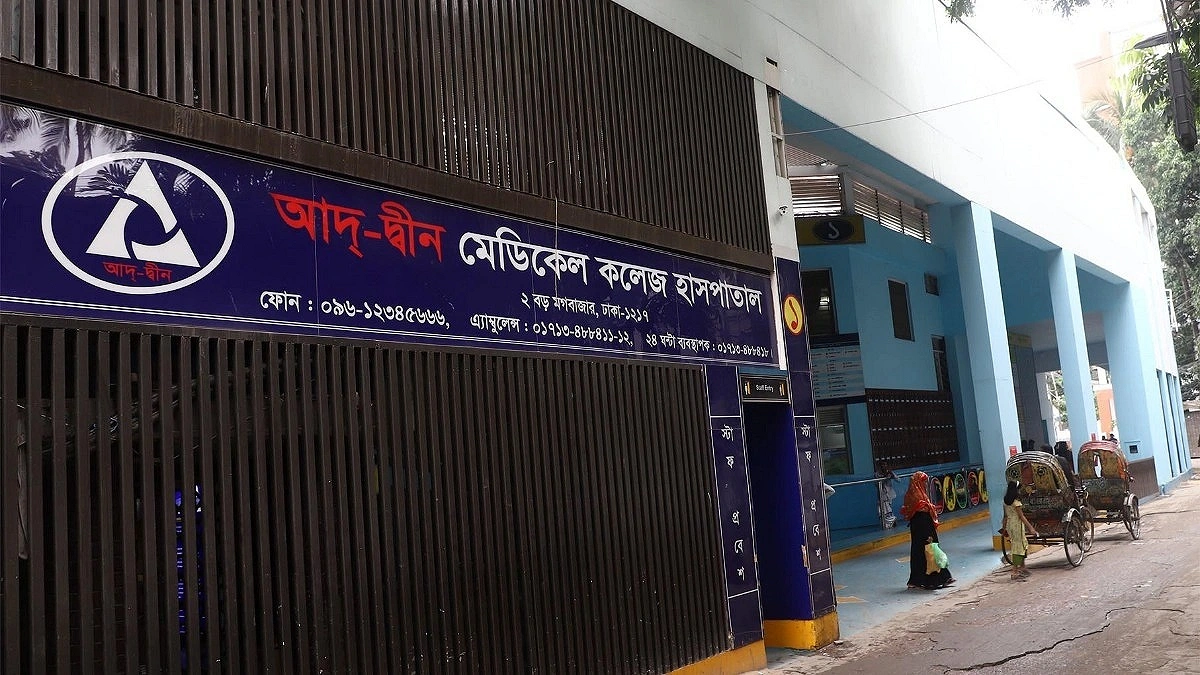
Collected Photo
After canceling the license of Ad-din Hospital, the Directorate General of Health Services (DGHS) directed six government hospitals, including Dhaka Medical College Hospital, to provide immediate and appropriate treatment to Ad-din patients. However, patients say they have not received any special assistance at the designated facilities. Instead, many have faced significant difficulties in accessing care.
Ad-din's medical services were comparatively less expensive than those offered by many hospitals in Dhaka. As a result, the closure of the hospital has placed a heavy burden on low-income patients and those who depended on it for regular treatment. Kidney dialysis patients and pregnant women have been among the most affected groups.
Agamir Somoy spoke with several patients who had regularly received treatment at Ad-din. They said that despite the DGHS directive, they received no additional support at the designated hospitals. Instead, they had to follow the standard procedures applicable to all patients, often involving lengthy processes. Some sought treatment through brokers, while others had to return after receiving only limited services. Many have been forced to seek treatment at private hospitals at much higher costs, while others continue searching for a low-cost alternative similar to Ad-din hospital.
The DGHS revoked Ad-din Hospital's license on June 11 following the deaths of six newborns and gave the hospital 72 hours to transfer its patients elsewhere. The following day, a notice signed by the Director of Hospitals and Clinics instructed Dhaka Medical College Hospital, Sir Salimullah Medical College and Mitford Hospital, Shaheed Suhrawardy Medical College Hospital, Mugda Medical College Hospital, Kurmitola General Hospital, and Bangladesh Shishu Hospital and Institute to provide immediate and proper treatment to patients referred from Ad-din.
A kidney patient in his fifties from Rampura, who had undergone dialysis twice a week at Ad-din for the past two years, sought treatment at Mugda Medical College Hospital after the hospital's closure. He said he received no special consideration as an Ad-din patient. Staff in the emergency department told him they were unaware of any such directive and that he would have to follow the same procedures as all other patients. He later visited Dhaka Medical College Hospital, where he received a similar response.
The privately employed patient said, “To undergo dialysis at this hospital, I have to visit three times on the scheduled day, first in the morning to secure a serial number, then at noon to obtain a bed, and finally in the afternoon for the dialysis itself. This is impossible for working people.”
As a result, he now receives dialysis at a private hospital, where the cost is nearly double what he previously paid.
Another kidney patient, a schoolteacher, continues to receive dialysis at Dhaka Medical College Hospital to keep costs down. His wife collects the serial number and secures a bed, while he arrives later in the day for treatment. The couple said the process has disrupted their children's studies because of the time and effort required.
“It is not practical to undergo dialysis with this much running around,” the teacher said. “At Ad-din, regular patients could receive dialysis at a fixed time and at a lower cost, which was very convenient for working people.”
Asked about these experiences, Brig. Gen. Md. Asaduzzaman, director of Dhaka Medical College Hospital, told Agamir Somoy that the hospital always operates under heavy patient pressure. He said the hospital cannot reserve beds or create separate arrangements specifically for Ad-din patients.
“Patients have to receive treatment according to the hospital's existing rules,” he said. “However, if they contact the authorities, we will try to make arrangements after considering their situation.”
A 28-year-old woman who had been receiving prenatal care at Ad-din has yet to begin treatment elsewhere since the hospital closed. Now seven months pregnant, she remains uncertain about where she can afford to give birth in two months. She hopes the private hospital will reopen before her child is born.
According to Ad-din authorities, the hospital provided dialysis to 25 to 30 patients daily. Low-income patients could receive the service for just Tk 250, while the most expensive dialysis package cost Tk 2,700. The hospital also handled around 50 deliveries each day, many of them normal births. Its outpatient department treated about 2,000 patients daily.
Public health expert Lelin Chowdhury said Bangladesh already has far fewer hospitals than required. He warned that closing a 700-bed hospital would further reduce healthcare capacity.
“The government should keep the hospital operating, even by ‘temporary acquisition’ if necessary,” he said. “Otherwise, suffering will increase not only for pregnant women and kidney patients but for all patients.”
He added that those responsible for the deaths of the six newborns must face exemplary punishment. At the same time, he argued that the hospital should be given a deadline to address its shortcomings and deficiencies under the supervision of the DGHS.
Twenty Patients Still at the Hospital
Although authorities ordered the transfer of all patients within three days of the license cancellation, 20 infants remain in the hospital's neonatal intensive care unit (NICU) because of medical complications and financial constraints.
Most of the critically ill infants were born with low birth weight. Some are in extremely fragile condition, while others remain on ventilator support. Several families also lack the financial means to continue treatment at other hospitals.
Tarikul Islam Mukul, director of Human Resources and Company Affairs at Ad-din Hospital, told Agamir Somoy that the hospital applied to the DGHS last Wednesday for the restoration of its license.
He expressed hope that the health authorities would review all aspects of the matter and reinstate the hospital's license.
