
Bangladesh to Buy Four Airbus Jets amid Trade Considerations

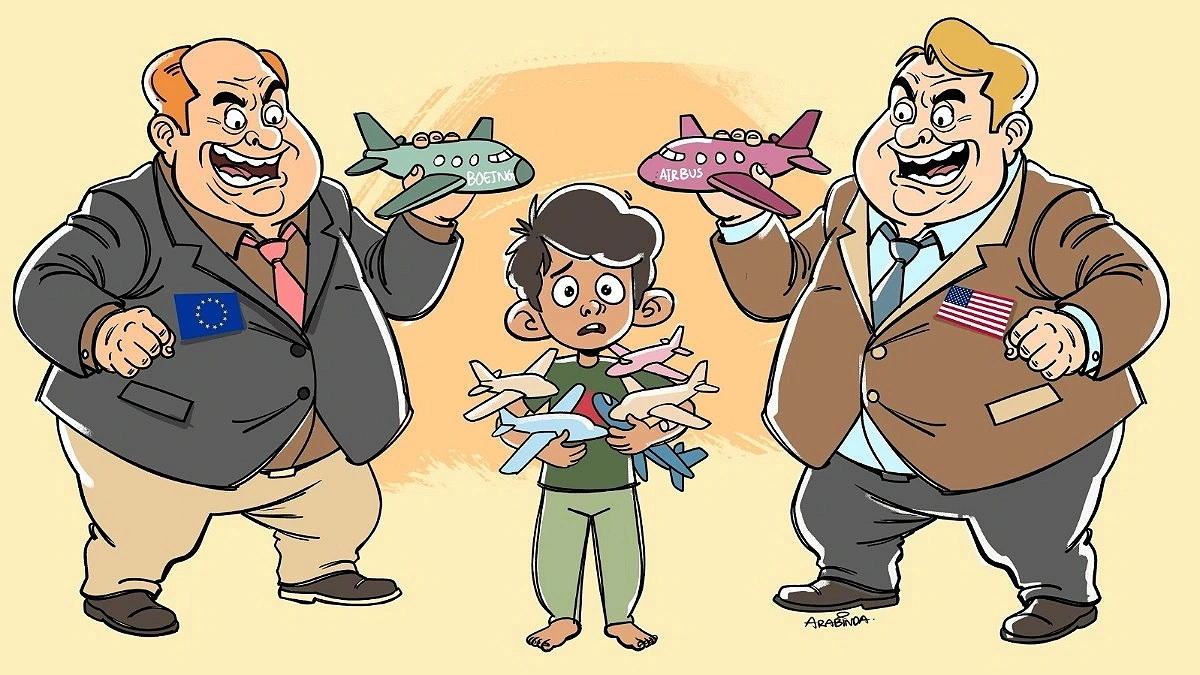
Graphics: Agamir Somoy
The government has decided to purchase four Airbus A350-900 wide-body aircraft for national flag carrier Biman Bangladesh Airlines, accelerating the procurement process despite questions over the airline’s immediate operational needs. Officials say broader economic and diplomatic considerations, particularly Bangladesh’s trade ties with the European Union, played a key role in the decision.
The move comes months after Bangladesh agreed in principle to purchase 14 Boeing aircraft, a deal valued at roughly Tk 45,000 crore. A senior government official familiar with the matter described both decisions as politically driven, saying major international partners have sought to advance their commercial interests in Bangladesh’s aviation sector.
Asked how the European Union influenced the decision, the official said EU representatives had raised concerns about the transparency of Bangladesh’s Boeing deal during discussions on non-tariff barriers last month.
“If we do not buy from them, such concerns will continue,” the official said. “Our trade relationship with the EU is significant. Nearly half of our exports go there. We have to follow a balanced path that keeps both sides satisfied.”
After receiving a green light from the government, the Ministry of Civil Aviation and Tourism instructed Biman to proceed with the Airbus purchase, according to the official.
At a meeting chaired by Civil Aviation and Tourism Adviser Afroz Khanam on June 9, officials decided to acquire four Airbus A350-900 aircraft and complete the procurement process within the shortest possible time. The meeting also decided against forming a new technical and financial evaluation committee. Instead, the committee previously assigned to assess the Boeing purchase proposal will evaluate the Airbus acquisition as well.
Under the plan, Biman will pay the one-percent signing money required for the deal. The proposal will first require approval from the airline’s board of directors before moving to the Cabinet for final clearance. Officials also plan to seek an exemption from the Bangladesh Public Procurement Authority because the Airbus proposal is a single-source procurement, with Airbus serving as both manufacturer and supplier.
The ministry sent the meeting minutes to Biman the day after the decision. Upon receiving what officials described as a mandatory directive, airline executives met the following day and agreed to seek board approval. Officials expect the board to convene within days before forwarding the proposal to the Cabinet.
An official who attended the June 9 meeting said the rationale for the purchase is outlined in the meeting minutes. According to the document, the decision extends beyond commercial and financial considerations and involves broader economic and diplomatic interests.
The minutes note that between 50 and 55 percent of Bangladesh’s garment exports are shipped to European markets, underscoring the strategic importance of relations with the European Union. They also cite Bangladesh’s extensive trade and development cooperation with the bloc as reasons for evaluating the Airbus proposal from a broader strategic perspective.
The meeting ultimately agreed to pursue the purchase of four Airbus aircraft using a process similar to the one followed for the Boeing deal.
For decades, Boeing and Airbus have competed for a share of Bangladesh’s aviation market. Airbus has often lagged behind its American rival, largely because of Washington’s stronger influence in the country.
In 2007, during the military-backed caretaker government, Bangladesh signed an agreement to purchase 10 Boeing aircraft. A subsequent elected government later implemented the deal. More recently, the interim government approved in principle the purchase of 14 Boeing aircraft, which are scheduled for delivery between 2031 and 2035. The average price of each aircraft is estimated at about Tk 3,200 crore.
Although the Boeing agreement appeared to leave Airbus at a disadvantage, the European manufacturer continued lobbying government officials and renewed its sales efforts. In a letter sent to the aviation ministry in May, Airbus Bangladesh representative Rafael Gomez Noa expressed interest in restarting discussions and advancing a potential deal.
Documents related to Airbus’ proposal show the company initially plans to supply four long-haul A350-900 aircraft. Deliveries would take place in stages between 2034 and 2035. The first aircraft would arrive during the first half of 2034, the second in the second half of that year, the third in the first half of 2035, and the fourth in the latter half of 2035.
After discounts, the estimated net price of each aircraft would be $165.09 million, or about Tk 1,981 crore. While Airbus aircraft remain more expensive than comparable Boeing models, the company has offered significant concessions as it seeks to strengthen its presence in Bangladesh.
Aviation expert Kazi Wahidul Alam said competition between Airbus and Boeing is a longstanding reality in the global aviation industry.
“Both are major aircraft manufacturers and strong competitors,” he told Agamir Somoy. “In developing countries like ours, major powers, particularly the United States and the European Union, naturally have influence and seek to serve their commercial interests. We must ensure that our own interests remain the priority.”
He also warned against committing to major new investments without first maximizing the use of the existing fleet.
“Moving ahead with additional aircraft purchases without ensuring optimal utilization of the current fleet could create financial pressure in the future,” he said. “The risks become even greater when delivery timelines stretch so far into the future.”
