
Gyanesh Kumar’s rise to power and why he remains at the center of controversy

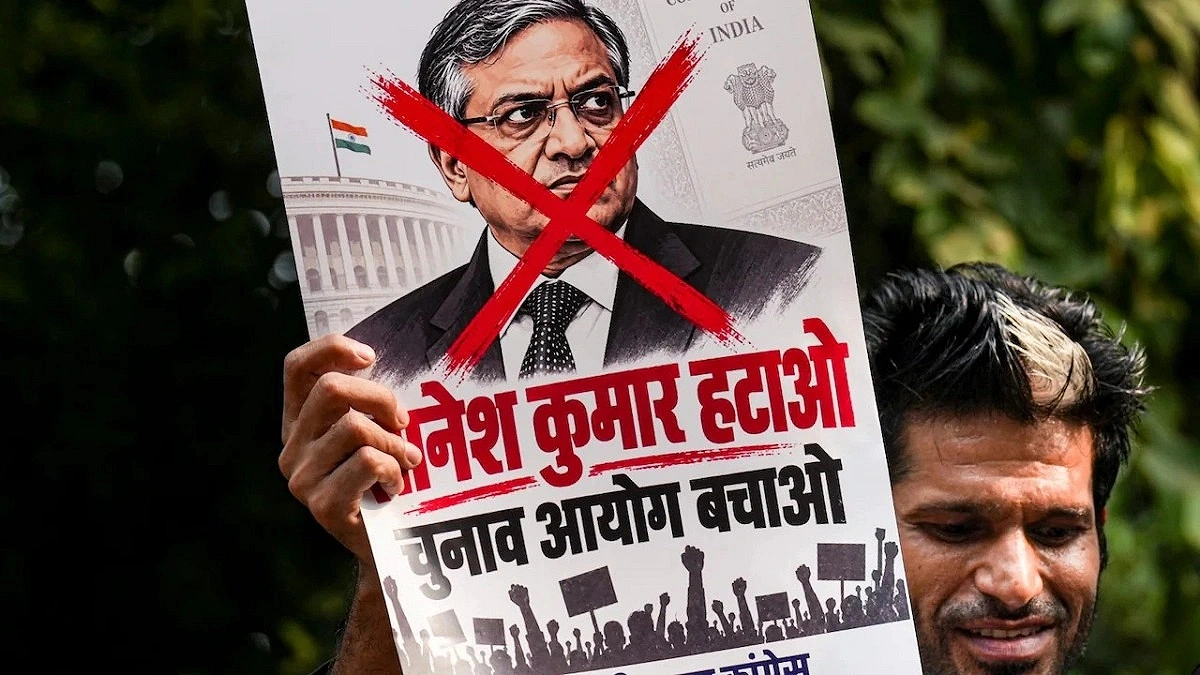
Protests are underway in India demanding the resignation of Gyanesh Kumar. Photo: Reuters
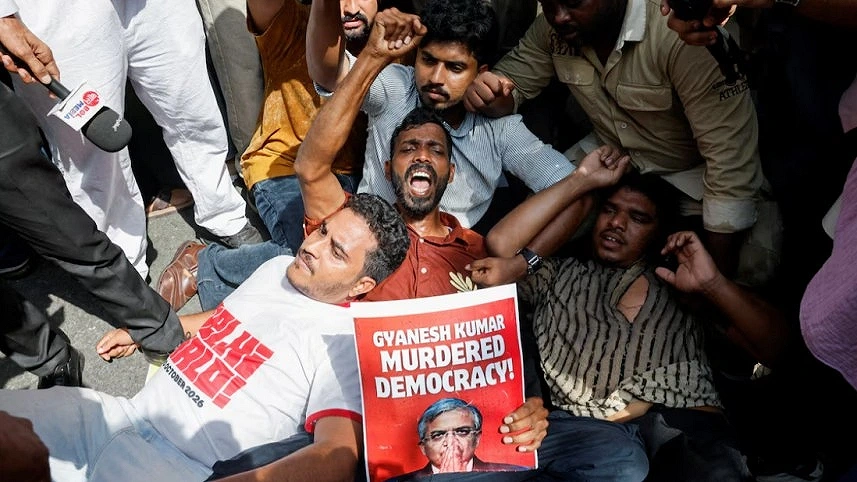
Protesters in Delhi have recently branded Chief Election Commissioner (CEC) Gyanesh Kumar an "enemy of democracy" as nationwide demonstrations spark intense political debate across India.
Kumar became the first Chief Election Commissioner appointed under a contentious new law governing selection panel compositions for the Election Commission of India (ECI). Critics allege the updated legislation significantly increased the Central Government's leverage over high-level election appointments.
Since assuming the top post 19 months ago, Kumar has faced continuous scrutiny. Opposition parties have sharply criticized his handling of the Special Intensive Revision (SIR) of electoral rolls across multiple states, accusing him of steering commission decisions to favor the ruling Bharatiya Janata Party (BJP).
Internal discord within the commission has further heightened public scrutiny. Reports indicate that election commissioners Sukhbir Singh Sandhu and Vivek Joshi alleged Kumar bypassed them on key administrative calls—taking at least 14 unannounced decisions over the past 10 months without prior consultation. These developments have raised broader concerns regarding transparency and neutrality within the three-member election body.
From Bureaucrat to Chief Election Commissioner
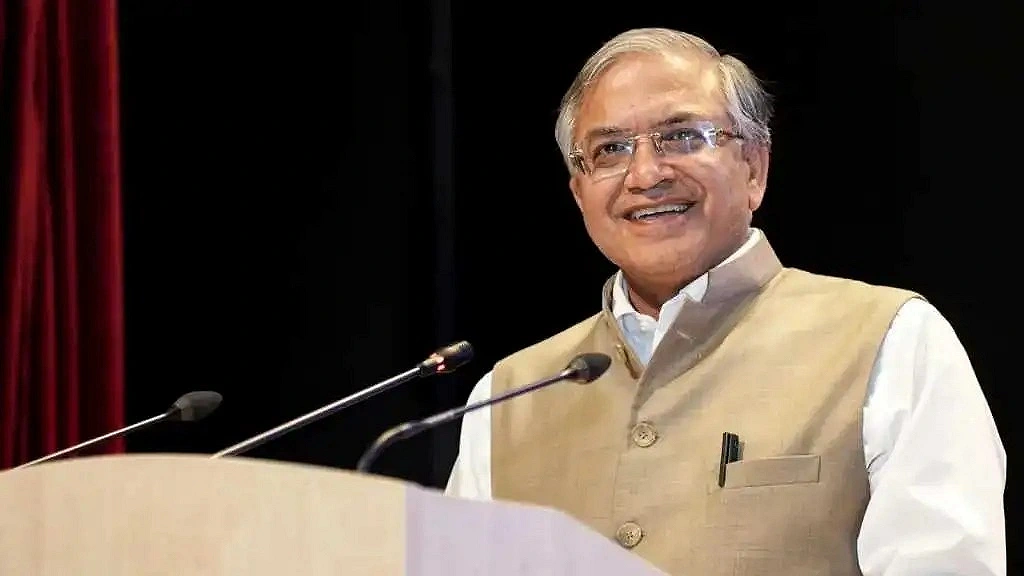
Gyanesh Kumar is the Chief Election Commissioner of India.
Gyanesh Kumar is a 1988-batch Indian Administrative Service (IAS) officer from the Kerala cadre. He holds a bachelor's degree from IIT Kanpur and completed coursework in economics at Harvard University.
Kumar began his civil service career in 1990 as a Sub-Divisional Magistrate in Pathanamthitta, Kerala. After holding several state government portfolios, he moved to New Delhi in 2012 as the Resident Commissioner of Kerala House.
A major career milestone occurred in May 2016 when he was appointed Joint Secretary of the Kashmir Division in the Ministry of Home Affairs under then-Home Minister Rajnath Singh. His tenure coincided with heightened security operations following the rise of Hizbul Mujahideen commander Burhan Wani in Kashmir.
When Amit Shah assumed leadership of the Home Ministry in 2019, Kumar was tasked with drafting the Jammu and Kashmir Reorganisation Bill. The legislation restructured the former state into two Union Territories and revoked Article 370 of the Indian Constitution—achieving a long-standing core objective of the BJP and the Rashtriya Swayamsevak Sangh (RSS). His role in handling security coordination and administrative strategy following the repeal earned him significant trust within top government circles.
Protesters in India claim that Gyanesh Kumar is destroying democracy. Photo: PTI.
Despite a brief career pause in 2020—when he was initially omitted from a promotion list of 1988-batch IAS officers elevated to full Secretary status—Kumar returned to key positions in February 2021. He served as Secretary of the Ministry of Parliamentary Affairs and subsequently headed the newly created Ministry of Cooperation under Amit Shah before his appointment to the Election Commission.
In the administration, Gyanesh Kumar's colleagues say he was always sincere about his work. He was not in favor of leaving any work pending. He would do all his work with a cool head.
Two of Gyanesh Kumar's daughters are also in government service. One is an IAS officer and the other is an officer of the Indian Revenue Service (IRS). Both of their husbands are also IAS officers.
In January 2024, within less than two months of retiring, Gyanesh Kumar was appointed as Election Commissioner. The day after his appointment on March 15, the schedule for the Lok Sabha elections was announced.
In a busy election year, Gyanesh Kumar was involved in organizing the first assembly elections in Jammu and Kashmir after the abrogation of Article 370, as well as elections in Haryana, Maharashtra, Jharkhand, and Delhi.
As the senior-most member of the Commission, he was expected to become the Chief Election Commissioner. Keeping in mind that new appointment rules were going to take effect, he had begun consulting officials several months before taking charge. Eventually, in February last year, he became the Chief Election Commissioner.
According to officials of the Election Commission, a major difference was seen in the working style of Gyanesh Kumar compared with former Chief Election Commissioner Rajiv Kumar. In the Commission's meetings, heated discussions became a common occurrence during Gyanesh Kumar's time.
In many people's eyes, an official whose door was once open to everyone and who would not let guests leave without serving them Kashmiri kahwa has now reached a very distant position.
Why is the Election Commission facing controversy?
India's Election Commission is now facing major controversy over allegations of irregularities against Gyanesh Kumar.
The major allegation against him is that he is making all decisions while keeping Sandhu and Joshi in the dark. He is not paying heed to their objections. Sandhu and Joshi have also complained to the Cabinet Secretary about their concerns.
Opposition leaders believe the allegations against the Chief Election Commissioner are serious. For that reason, they have demanded Gyanesh Kumar's resignation.
Citing the written objections of the other two Election Commissioners, opposition leaders say Gyanesh Kumar is violating the fundamental principles of democracy.
Congress leader Rahul Gandhi has called Gyanesh Kumar a "traitor." In his words, democracy is being destroyed in India.
However, in response, the Election Commission said in a statement that differences of opinion in the decision-making process are normal.
Amid the ongoing Special Intensive Revision (SIR) of voter lists, a major controversy has arisen around the Election Commission.
The Commission claims that this initiative is meant to ensure that no ineligible person's name remains on the voter list.
Opposition parties claim that the two Election Commissioners also objected to the SIR process. But their objections were ignored.
Last August, Election Commissioner Sukhbir Singh Sandhu wrote in a document that the decision to change Form-6, used for adding names to the voter list, was "unauthorized and illegal." Reports say he recommended that the change be withdrawn immediately.
O.P. Rawat, who served as India's Chief Election Commissioner in 2018, described the change to Form-6 as "completely wrong and illegal."
Former Chief Election Commissioner S.Y. Quraishi also said that amending Form-6 would require changes to the rules. He said the arguments of the current two Election Commissioners on this matter are correct.
The opposition alleges that the Chief Election Commissioner is manipulating the voter list to benefit the ruling BJP.
However, the BJP says its intention is not to protect any particular person; rather, the party in power at the Centre is trying to protect India's democracy.
BJP spokesperson Sambit Patra also criticized Rahul Gandhi's "traitor" remark. He said the whole country is waiting to see who is actually betraying the country.
Another BJP spokesperson and Rajya Sabha member, Sudhanshu Trivedi, is counterattacking the opposition by citing allegations of electoral irregularities during Congress rule.
India's Election Commission has faced such challenges in the past as well. This happened during the time of Chief Election Commissioner T.N. Seshan.
At that time, the Congress government of Narasimha Rao was in power. Seshan opposed the decision to appoint two Election Commissioners, M.S. Gill and G.V.G. Krishnamurthy.
The matter even reached the Supreme Court. The court then made clear in principle that although the Chief Election Commissioner is the chairman of the Commission, the Election Commission is a collective institution. The other Commissioners also have a meaningful role in decision-making.
Controversy also arose in 2009 during the time of Chief Election Commissioner N. Gopalaswami. He recommended the removal of Election Commissioner Navin Chawla on allegations of partisan behavior. But the government rejected that recommendation. Later, Navin Chawla replaced Gopalaswami.
Disagreements in the Election Commission also occurred in 2019 and 2024. At those times, the Election Commissioners were Ashok Lavasa and Arun Goel, respectively.
Source: NDTV, Indian Express
