
U.S. Targets Iranian Drone and Radar Sites as Iran Claims Strike on Military Airfield

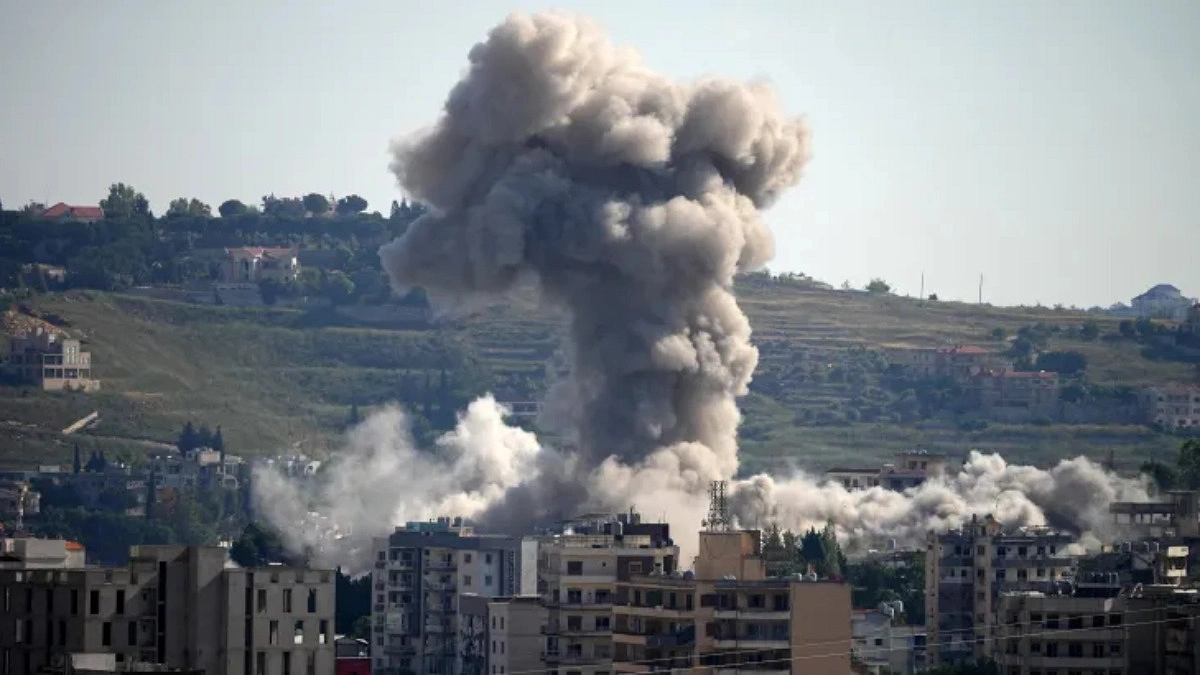
Photo Courtesy: Al Jazeera.
The United States military says it conducted "self-defense strikes" on Iranian radar and drone control sites over the weekend. In response, Iran claims it targeted an air base used in the American attack. The two countries continue to trade blows even as they hold talks aimed at ending their broader conflict.
On Sunday, US Central Command announced on X (formerly Twitter) that the strikes had been carried out in Goruk and on Qeshm Island. The action, it said, was "in response to aggressive Iranian actions," specifically that Iran had shot down a US MQ-1 drone flying over international waters.
According to the command, American fighter jets destroyed Iranian air defense systems, a ground control station, and two one-way attack drones that "posed clear threats to ships transiting regional waters." The US military added that no American service members were harmed.
On Monday, Iran's Revolutionary Guards (IRGC) said its aerospace forces had targeted the source of what it called a US attack on a telecommunications tower on Sirik Island in Hormozgan Province. The IRGC did not disclose the location of the base it struck.
In a statement carried by Iranian state media, the IRGC warned that if US attacks continued, its response would be "completely different" and that Washington would bear responsibility for the consequences.
Meanwhile, the Kuwaiti army said on X that it was "currently responding to hostile missile and drone threats." It added that any explosion sounds heard were the result of air defense systems intercepting attacks. Kuwait did not specify where the attacks were coming from or what was being targeted. However, Kuwait hosts a US air base that has been attacked in the past by Iran and its proxies.
The United States and Iran have exchanged strikes multiple times since agreeing to a ceasefire in early April. Just last week, Iran also targeted an air base. Negotiations over a broader agreement are dragging on, with both sides disagreeing on several key issues, including the future of Iran's nuclear and missile programs.
US-Israel War Has Killed Thousands as Diplomacy Stalls
The war launched by the United States and Israel on February 28 has killed thousands of people—mostly in Iran and Lebanon—including 13 American service members. In response, Iran effectively shut down the Strait of Hormuz, a vital shipping lane that carried one-fifth of the world's oil supply before the war. This has caused global energy prices to soar.
On Friday, President Donald Trump said that Iran must agree to never possess a nuclear weapon, and that the Strait of Hormuz must be reopened for "unrestricted shipping traffic, in both directions." He also demanded that any mines in the waterway be destroyed.
Iran has accused Trump of stalling negotiations by making "excessive demands."
Complicating the US-Iran talks further is Israel's ongoing war in Lebanon. Despite a ceasefire, Israeli military operations against the Iranian-backed Hezbollah militia have continued.
On Sunday, Prime Minister Benjamin Netanyahu said Israel seeks direct control over more of Lebanese territory. This follows the capture of Beaufort Ridge—a medieval castle and key strategic location—in the deepest Israeli incursion into Lebanon in more than 25 years.
A US official said Sunday that Secretary of State Marco Rubio has spoken with Netanyahu and Lebanese President Joseph Aoun as part of ongoing diplomatic efforts. Rubio proposed a plan that would "create space for gradual de-escalation and an effective cessation of hostilities." The official did not specify when these conversations took place.
Let me know if you'd like a shorter version, a bullet-point summary, or a headline-only adaptation. (Source: NBC News).
