
Pakistani Interior Minister to Visit Tehran
Iran sets seven conditions for talks with the United States

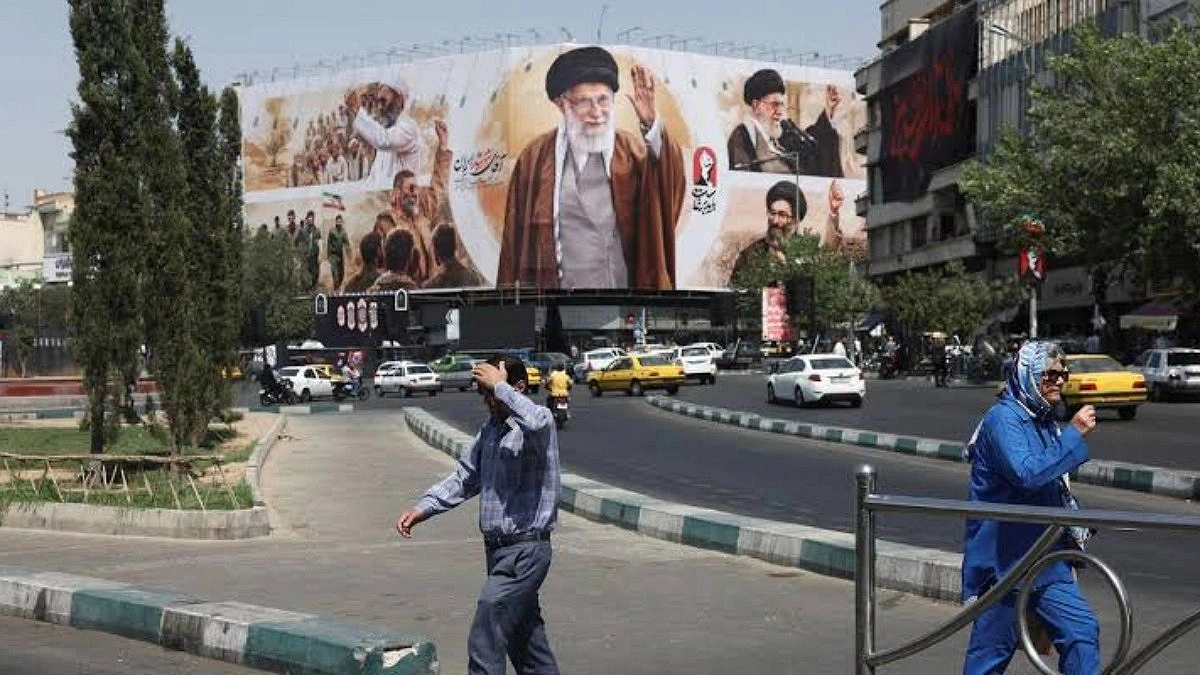
People walk past a billboard featuring the late Supreme Leader Ayatollah Ali Khamenei in Tehran, Iran. File photo: Reuters
Iran has set seven conditions for resuming peace talks with the United States. Mohsen Rezaei, secretary to Iran’s Supreme National Security Council, said the conditions had been conveyed to Washington through Qatar.
Rezaei made the remarks in an interview with Qatar-based news outlet Al Jazeera on Saturday. He said Qatar had already communicated Iran’s conditions to the United States. Tehran is now waiting for a response from US President Donald Trump.
In a post on X, Rezaei also said that Iran had outlined seven conditions for restarting negotiations with the United States. However, he did not disclose the full list of conditions.
Rezaei separately revealed three of the conditions: an end to hostilities on all fronts, the release of Iranian funds frozen in the United States, and the lifting of the US naval blockade.
“These conditions should be accepted in Washington’s own interests. Trump’s threats will achieve nothing. We are prepared for a decisive war,” he said.
Rezaei said Qatar was communicating with the United States regarding Iran’s conditions. Meanwhile, Pakistan was also attempting to facilitate the resumption of talks between the two countries. Pakistani Interior Minister Mohsin Naqvi is scheduled to visit Tehran.
Discussions are also underway regarding the Strait of Hormuz. Rezaei said a proposed agreement between Iran and Oman concerning the strait was still ready for consideration.
Rezaei said the war was still ongoing, but Tehran was working on a strategy to bring the conflict to an end quickly.
When asked whether the United States could launch another attack on Iran, he did not rule out the possibility. He told Al Jazeera that, according to Iran’s military assessment, there was a possibility of further US attacks.
Rezaei said Iran’s military planning had also changed following the previous two rounds of fighting. He said current planning was focused on the positions of US naval forces stretching from the Persian Gulf through the Gulf of Oman to the Arabian Sea.
Rezaei also claimed that Iran had recently tested an anti-ship missile capable of carrying multiple warheads near a US vessel or aircraft carrier. However, the claim could not be independently verified.
He further warned that future Iranian retaliation could include attacks on US military bases, commercial interests and American companies operating in the region.
Rezaei also said that Iran had not decided to withdraw from the Nuclear Non-Proliferation Treaty (NPT). He said Iran had a longstanding religious position against nuclear weapons and that there had been no change in the country’s nuclear policy.
However, he did not rule out a change in Iran’s position if the United States increased pressure over its nuclear programme. Rezaei said military actions by the United States and Israel could give Iran a reason to withdraw from the NPT. He stressed, however, that no such decision had been made so far.
According to an Al Jazeera report, Qatar and Pakistan have been attempting to restart talks between Tehran and Washington after a memorandum of understanding expired last month.
The war began after the United States and Israel launched attacks on Iran in February. Since then, regional countries have been trying to bring an end to the conflict.
Source: Al Jazeera
