
Under New Taliban Law, 'Silence of a Minor Girl' Signifies Consent to Marriage

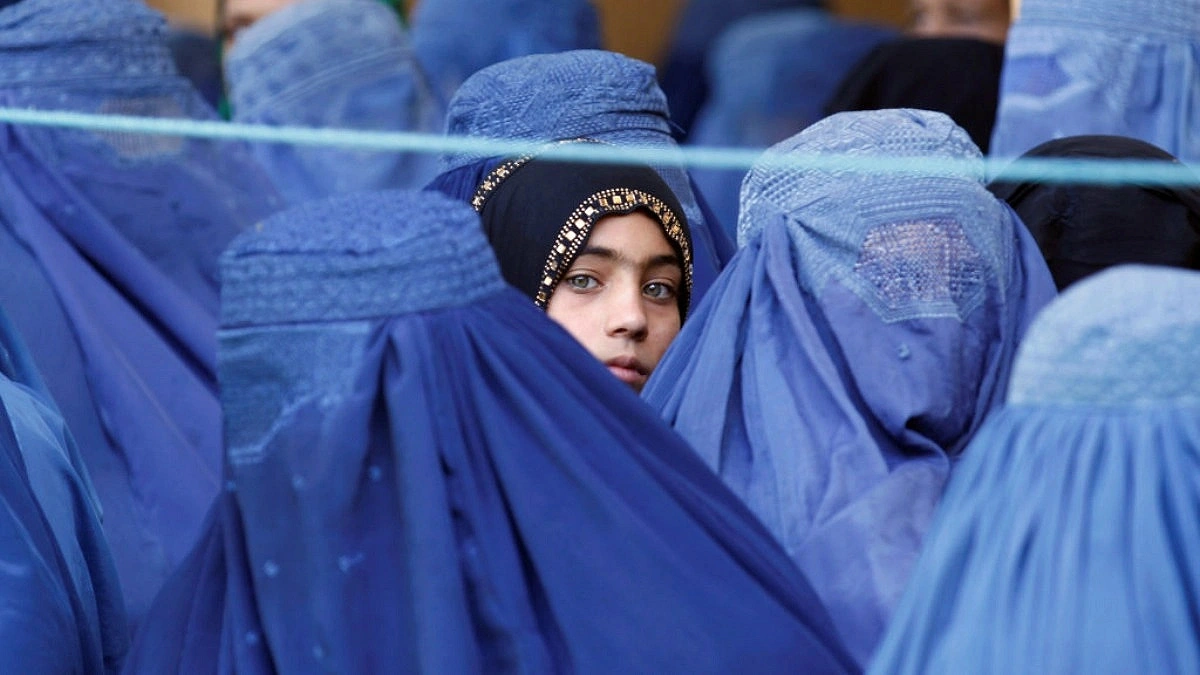
Collected Photo
The ruling Taliban government in Afghanistan has passed a new family law. According to the new legislation, the marriage of minors has received legal recognition under specific circumstances. At the same time, it states that upon reaching puberty, children can apply through court orders to annul the marriage.
The law grants absolute authority to religious courts to annul marriages and settle marital disputes.
Taliban leader Hibatullah Akhundzada approved the 31-article law, titled "Regulations on Separation Between Husband and Wife."
The law outlines rules for separation in cases of child marriage or when a husband goes missing. It also covers rules for separation under various religious and legal circumstances, including apostasy, forced separation, milk-kinship, and allegations of adultery.
The most widely discussed part of this law is "Khiyar al-Bulugh" or the "Option of Puberty." This means a child married at an early age can apply to annul the marriage upon reaching puberty.
Article 5 states that if any relative other than the child's father or grandfather arranges the marriage of a minor boy or girl, the marriage will be considered legally valid provided the partner is socially compatible and the dower (mahr) is acceptable. However, upon reaching puberty, the child can apply to the court to annul the marriage.
Another clause states that a marriage between "unequally compatible" partners or one with an unfair dower determination will not be considered valid.
Furthermore, fathers and grandfathers have been granted absolute authority regarding child marriages. However, a marriage can be annulled if the guardian is deemed abusive, mentally unfit, or morally corrupt.
The conservative guardianship system over women has also been reaffirmed in several clauses of the law.
Article 7 states that the "silence of a virgin girl" who has reached puberty can be taken as consent to marriage. However, the silence of a boy or a woman who has been married before will not automatically be considered consent.
The law grants Taliban judges the authority to intervene in marital disputes based on various religious matters, such as apostasy ("turning away from Islam"), a husband's prolonged absence, allegations of adultery, and "Zihar."
"Zihar" is an ancient concept in Islamic law where a husband compares his wife to a female relative whom he is religiously forbidden to marry.
The section regarding "Zihar" empowers judges to compel the husband to undergo religious punishment or to order a separation. The use of imprisonment and physical punishment is also permitted if necessary.
Since returning to power in August 2021, the Taliban government has imposed extensive restrictions on women and girls. Female education beyond the sixth grade has been banned in the country, and access to universities has been closed. Strict limitations have also been placed on their employment, movement, and participation in public life.
The United Nations has repeatedly condemned these restrictions, describing them as a systematic violation of fundamental rights. Human rights activists have also expressed concern that the Taliban is increasingly incorporating harsh interpretations of Islamic jurisprudence into state regulations, thereby institutionalizing anti-women restrictions within the legal framework itself.
(Source: Amu TV)
