
Riyadh airport attack prompts Trump to consider operation against Houthis

Collected Photo
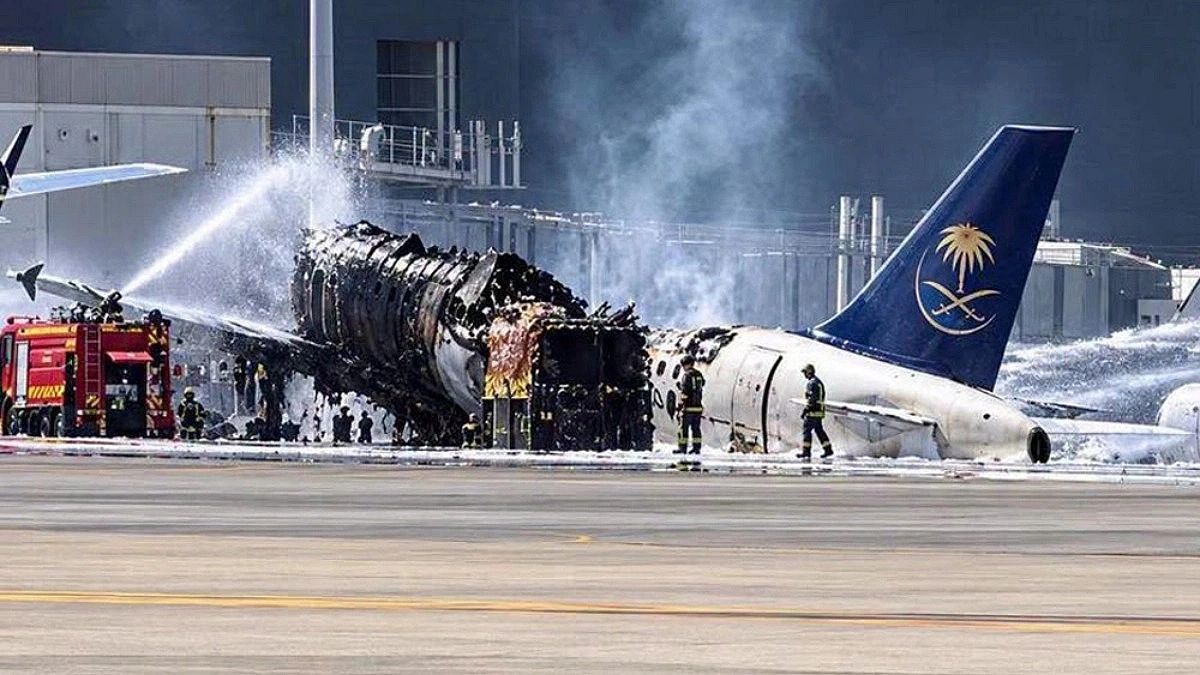
The US administration is considering launching a new military operation against Yemen’s Houthi rebels following a series of attacks on King Khalid International Airport in Riyadh, the capital of Saudi Arabia. According to a report by Arab News, US President Donald Trump has indicated the possibility of military action against the Houthis following the latest attack on the airport.
Meanwhile, a projectile was reportedly found near King Fahd International Airport in Dammam, an eastern Saudi city. These incidents have renewed concerns about the security of critical infrastructure in the country and the effectiveness of its air defense systems.
Questions have emerged about why Saudi Arabia continues to face repeated attacks despite having advanced missile defense systems, US military support and defense coordination with regional allies. Discussions have also begun about the Houthis’ missile and drone capabilities and the potential effectiveness of a US military operation.
Repeated Attacks on Riyadh Airport
According to Arab News, King Khalid International Airport in Riyadh has been targeted in multiple attacks within a few days. The incidents have raised concerns about casualties as well as airport operations and security. Saudi authorities had previously said they intercepted several ballistic missiles launched toward Riyadh. However, falling debris from intercepted missiles can also pose a risk to civilian infrastructure.
Meanwhile, the reported landing of a projectile near King Fahd International Airport in Dammam has heightened concerns about the security of critical infrastructure in eastern Saudi Arabia. However, detailed information has not been released about the type of projectile, its launch origin or whether air defense systems attempted to intercept it.
Trump Signals Possible Military Action Against Houthis
The possibility of a new US military operation against the Houthis has emerged following the attack on Riyadh Airport. In 2025, the United States conducted air and naval operations against the Houthis for several weeks. The campaign targeted Houthi military facilities associated with missiles and drones.
If the United States launches new strikes, Houthi military infrastructure, missile stockpiles and drone operation capabilities could be damaged. However, there is no guarantee that attacks on military facilities alone would completely eliminate the group’s long term offensive capabilities. The Houthis could retain the ability to launch further attacks by assembling weapons locally, using alternative facilities and drawing on their experience from years of conflict.
The effectiveness of any potential operation will therefore also depend on how significantly it can weaken the sources of their military capabilities.
Why Is It Difficult to Stop Attacks Despite Advanced Defenses?
Saudi Arabia’s air defense system includes advanced technologies such as the Patriot system. US military assistance and defense cooperation with other countries are also part of the country’s security arrangements. Even so, intercepting every attack remains difficult.
Ballistic missiles, cruise missiles and attack drones differ in speed, flight paths and detection characteristics. Identifying and intercepting each type of weapon requires appropriate technology and rapid decision making.
Small drones may be less likely to be detected by radar. Flying at low altitudes can also make them difficult to detect. In contrast, the time available to respond to fast moving ballistic missiles is extremely limited.
When multiple attacks come from different directions simultaneously, pressure on defense systems increases further. If expensive interceptor missiles are used to stop each attack, maintaining weapons stockpiles and ensuring continued supplies can also become a long-term challenge.
However, determining exactly why recent attacks penetrated the defense perimeter requires detailed information about the weapons used, radar data and interception operations.
What Weapons Do the Houthis Have?
Through years of conflict, the Houthis have gained experience using ballistic missiles, long range drones and other offensive weapons. Using different types of weapons to put pressure on an opponent’s defense systems is an important part of their military strategy. When drones are used alongside missiles, defenders must be prepared to counter multiple types of threats.
Foreign technology, components and local weapons assembly have also played important roles in the development of Houthi military capabilities. However, possessing advanced weapons does not necessarily mean the group is technologically superior to Saudi Arabia or the United States. Rather, its ability to launch repeated attacks at relatively low cost and employ different types of weapons may provide certain advantages.
How Much Influence Does Iran Have Over the Houthis?
Iran’s role is particularly important in discussions about Houthi military capabilities. Various international reports and security analyses have cited the provision of weapons, technical assistance, components, training and funding to the Houthis by Iran. Such support may contribute to strengthening their missile and drone capabilities.
However, Iranian assistance and direct Iranian orders for a specific attack are two different matters. The Houthis have their own leadership and political objectives. Therefore, specific evidence is required before claiming that the recent attacks on Riyadh or Dammam were directly ordered by Tehran.
US, Pakistan and Türkiye Stand Alongside Saudi Arabia
US military cooperation has long been a key part of Saudi Arabia’s security arrangements. Defense cooperation with Pakistan and Türkiye is also important for regional security.
However, possessing weapons and technology from multiple countries does not automatically mean that all defense systems are connected to a single integrated network. Effective joint defense requires coordinated radar and intelligence data, rapid communication, a joint command structure and adequate weapons stockpiles.
Without information about which country is responsible for securing specific facilities, how well their defense systems are integrated and which units were active during the recent attacks, it is difficult to reach a definitive conclusion about the role of allied countries.
Saudi Arabia’s defense challenges therefore cannot be viewed solely as a shortage of weapons. Technology, preparedness, information sharing and coordinated responses to different types of attacks are also important.
Significance of Targeting Airports
Attacks on major airports such as those in Riyadh and Dammam can have consequences beyond military damage. Potential effects include disruptions to air travel, risks to passenger safety, interruptions to economic activities and concerns among international investors.
Attacks on critical infrastructure can also raise questions about the effectiveness of Saudi Arabia’s security arrangements. In this situation, alongside strengthening defenses, authorities need to prepare emergency security measures for civilian infrastructure and ensure that alternative arrangements remain available.
What Could Happen Next?
If the Trump administration launches a new military operation against the Houthis, the conflict in the Middle East could expand further. Such an operation could damage Houthi military capabilities while also increasing the risk of retaliatory attacks.
For Saudi Arabia, a long-term solution will depend on more than missile defense systems alone. Drone detection, early warning systems, joint defense, efforts to disrupt weapons supply networks and a political resolution to the conflict in Yemen will also be important.
The repeated attacks on Riyadh Airport and the reported landing of a projectile near Dammam have presented major challenges to Saudi Arabia’s security system. Trump’s potential military action could take the situation in a new direction. However, how much airstrikes could reduce the Houthis’ offensive capabilities will depend on the sources of their weapons, their ability to launch further attacks and the broader political situation surrounding the conflict.
