India’s Election Commission in crisis over voter roll purges

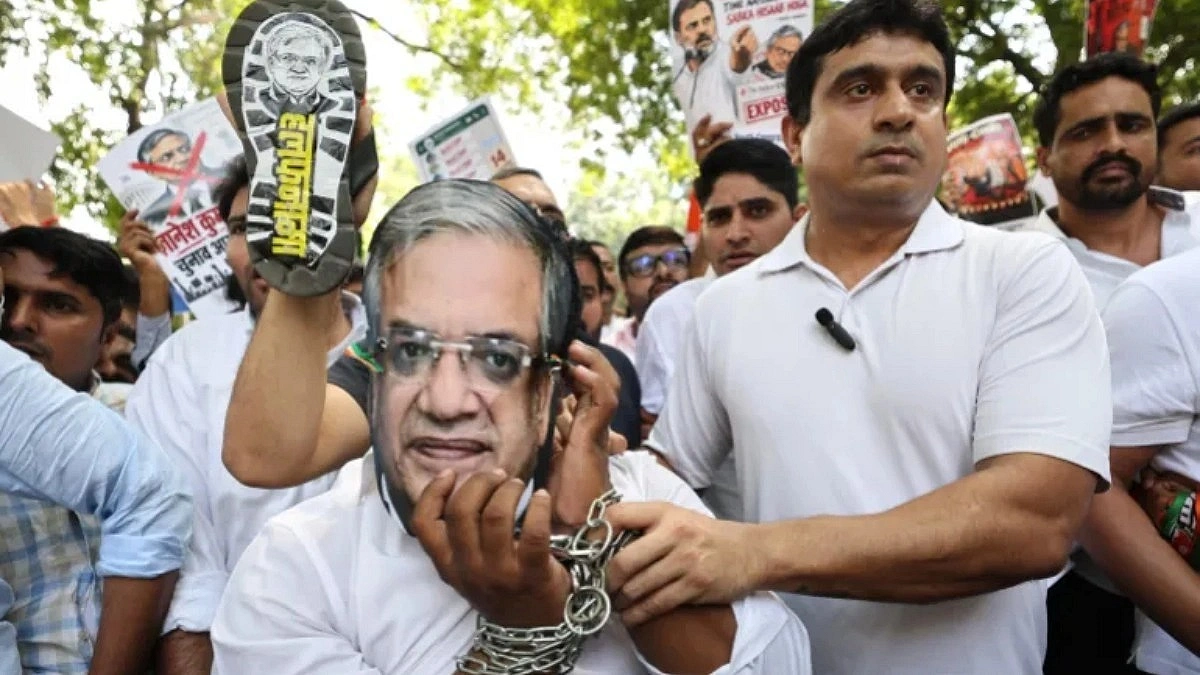
Photo: REUTERS
Internal divisions within India’s Election Commission have shaken public confidence in the nation’s democratic framework following new investigative disclosures.
The autonomous constitutional body administers elections across the world’s largest democracy and previously earned global acclaim for conducting voting processes of unparalleled scale and complexity.
However, a multi-part investigative series by The Indian Express revealed that Chief Election Commissioner Gyanesh Kumar repeatedly bypassed and overruled two equal-ranking commissioners, Sukhbir Singh Sandhu and Vivek Joshi, regarding major modifications to the national voter registry.
For months, opposition parties strove to expose the commission’s “sabotaging” conduct, alleging that Prime Minister Narendra Modi and his ruling Bharatiya Janata Party (BJP) dictated these actions for electoral advantage.
While India has historically struggled with deep-seated social inequality, caste and religious divisions, and campaign finance corruption, citizens and international observers long accepted the election administration as free and fair.
Former chief election commissioner SY Quraishi, who led the poll panel from 2010 to 2012, told Al Jazeera, “Today, that faith [in the election process] has shaken. It is very shocking for the nation. The Election Commission used to be a very reputed institution. Now, it is totally dysfunctional - and that’s an understatement.”
Voter purges and centralized digital controls
Although Indian law mandates that the three-member panel reach decisions by majority consensus, internal records demonstrate that Kumar acted unilaterally while Sandhu and Joshi challenged the legality of his measures.
Over the past ten months, Sandhu and Joshi lodged formal written objections on record at least 14 times, with Sandhu explicitly branding Kumar’s actions as “unauthorised and illegal”. These internal protests targeted new voter registration rules, list security, appeal procedures, and voter roll deletions.
Since last June, state-level revisions under the Special Intensive Revision (SIR) initiative struck over 13 million individuals from electoral rolls. Critics maintain that the drive disproportionately targeted economically disadvantaged groups, ethnic minorities, and vulnerable communities.
The policy places an extreme evidentiary burden on citizens by forcing them to present decades-old land, birth, or educational documents, where minor spelling errors lead to instant disenfranchisement.
In West Bengal, the exercise purged 9 million residents right before the April-May state elections, removing Muslims - who constitute 27 percent of the state population - at a 34 percent rate before the BJP gained power in the state.
BJP leaders and SIR advocates claimed the project removes deceased voters, duplicates, and “illegal Bangladeshi migrants”.
However, the drive recently backfired when officials dispatched notices demanding proof of citizenship to Foreign Minister S Jaishankar, his wife, prominent judges, senior bureaucrats, and former ambassadors who represented India abroad for decades.
Despite the commission’s claims of decentralized administration, the panel utilized a digital platform called ECINet, which concentrated editing authority in New Delhi.
In Goa, state electoral officials identified nearly 100 mistakenly deleted voters but could not restore them because New Delhi ignored eight urgent emails sent prior to the deadline, leaving those citizens disenfranchised.
Opposition demands accountability as institutional trust collapses
In response to the purges, opposition parties petitioned the Supreme Court of India, which largely upheld the eligibility criteria.
In India, where the population exceeds 1.4 billion people, losing voting rights directly terminates access to vital government social welfare programs. Facing these developments, Indian National Congress leader Rahul Gandhi accused election officials of committing “treason” against the nation and pledged to try commission leaders in court if his party secures power.
The Cockroach Janta Party, a prominent Gen-Z group that forced the education minister’s resignation in July, threatened mass street demonstrations unless Chief Commissioner Kumar resigns by Saturday.
At a New Delhi press briefing on Thursday, Rahul Gandhi asserted, “Our elections are fundamentally broken” and declared that “The sacred belief in elections” was rapidly vanishing.
Gandhi questioned Modi’s victories in 2019 and 2024, saying anti-incumbency “doesn’t exist in North Korea. There is no democracy where anti-incumbency doesn’t work. We are looking for answers to where it went here” before adding, “And we have found answers.”
On the other hand, the Election Commission issued a statement downplaying the investigative findings as standard “differing views and deliberations” among leadership. BJP spokesperson Sambit Patra defended the panel, telling reporters that internal disagreements represent “a sign of a healthy democracy.”
Analytic warnings and democracy in crisis
Experts emphasize that the current crisis fundamentally undermines India’s democratic foundation.
Milan Vaishnav, director of the South Asia program at the Carnegie Endowment for International Peace, noted, “The [revision of voters’ list] fundamentally inverts India’s model of electoral democracy. Since the adoption of the Constitution, India has assumed the burden of ensuring that the last man or woman is registered to vote.”
He added, “Specifically, the way in which [the revision] has been carried out threatens to turn that principle on its head. It is now the voter who must prove his or her entitlement to remain on the electoral rolls.”
Quraishi urged immediate intervention, saying, “I hope [these revelations] are a wake-up call and serious action will be undertaken, including at the Supreme Court, the central government, and the Parliament. Because the reputation of the Election Commission has gone into the dumps. And it is very difficult to restore it now. We need efforts to rebuild faith in the system.”
Political analyst Asim Ali warned that India faces a “dangerous moment, where we could see a breakdown of the republic. We have reached a situation where every opposition party feels that the democratic guardrails have been destroyed” while noting that “independent institutions like the Election Commission and Supreme Court have become co-opted.”
He highlighted that “Politics has assumed a kind of existential stakes, where we have unrestrained politics of friend vs enemy.”
Veteran journalist Rasheed Kidwai stressed that “impartiality is paramount” for the poll body, asserting, “The fact is that Caesar’s wife should be above suspicion. In India, we have seen difficult times, including a state emergency, but never was the role of the Election Commission compromised at this level.”
Rejecting BJP claims that opposition parties are mere sore losers, Kidwai told Al Jazeera, “The outcomes of a match are inconsequential, but at least the umpire should play fair.”
Vaishnav observed that while previous international criticisms focused on how authorities “pointed to the erosion of basic freedoms, an uneven rule of law, and the concentration of power in the hands of the executive”, most experts previously agreed that “most observers have argued that when the electoral spotlight is on, India’s democracy remains remarkably robust and competitive.”
He concluded that the Election Commission’s controversial conduct is “now calling this distinction into question.”
Source: Al Jazeera (adapted)