
Hamas agrees to Gaza disarmament in deal with Board of Peace

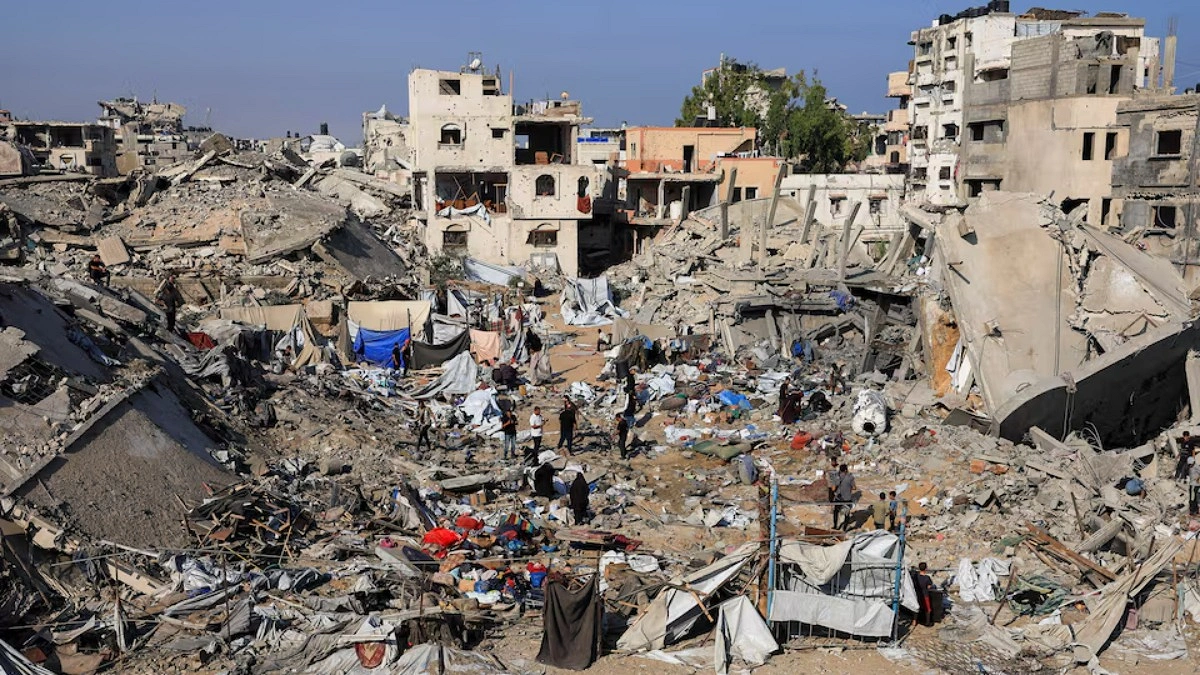
Photo: REUTERS
Hamas and several other Palestinian factions have officially finalized a document with the Board of Peace that outlines a comprehensive plan for their disarmament within Gaza.
US President Donald Trump lauded the development as “a monumental step” toward achieving long-term security and peace in the region. According to the agreement, the parties must establish a precise roadmap for this disarmament within 14 days, though an international verification body can grant extensions if all parties agree.
Ghazi Hamad, who represents Hamas in the negotiating delegation, described the process to Al Jazeera, saying, “These negotiations were difficult and hard, and we tried to reach the best possible formula that was achievable.”
However, Hamad clarified that Hamas will not execute any portion of the plan if Israeli forces neglect their own obligations, specifically regarding a withdrawal from Gaza and the progression of reconstruction.
While Israel has refrained from issuing an official comment, President Trump hailed the agreement as a victory for the Board of Peace, the entity tasked with overseeing the governance of Gaza.
Trump posted on his Truth Social platform that, “This agreement is a critical step towards Gaza finally being governed by a new Palestinian government that will work closely with the Board of Peace to help the Palestinian people.”
He added that the deal ensures “Israel will have the security it deserves, with Gaza no longer used as a base for terror attacks.”
The disarmament process will commence once an International Stabilization Force and a National Committee enter Gaza to manage the inventory and storage of weapons. The agreement explicitly states that the National Committee will serve as the only entity holding weapons in Gaza and that no arms shall be surrendered to Israel or any other non-Palestinian body.
A Board of Peace official explained that the armed groups will first hand over police weaponry before decommissioning heavy equipment, a process that requires the cessation of all military activity.
This transition is linked to the staggered withdrawal of Israeli troops from the territory. Trump categorized the disarmament as part of the ceasefire agreement he brokered in October to halt the war that has resulted in the deaths of more than 73,000 Palestinians.
Despite the ongoing ceasefire, Israeli actions have led to the deaths of over 1,200 Palestinians since it began, including six individuals killed in attacks on Thursday.
Trump intends for a new Palestinian police force and an international force to replace withdrawing Israeli troops. He emphasized that, “Under this agreement, Gaza will finally be in the hands of a new Palestinian government that serves its PEOPLE.”
Hamas leaders have remained in Cairo to continue ceasefire discussions with mediators from Turkiye, Qatar, and Egypt, with one official describing the talks as positive.
While Egyptian media reports that Palestinian factions have approved the proposal, the Palestinian Islamic Jihad group expressed reservations about the specific wording currently in circulation.
Hamas had previously dissolved its governing body on 6 July, and analysts suggest the group faced significant international financial pressure to accept the new arrangement.
Military analyst Nidal Abu Zaid noted that the focus on “inventory and storage” rather than “disarmament” is a strategic nuance, saying, “From a military standpoint… Inventory and storage is carried out by a third party, but that party does not need to be an enemy force,” whereas factions would never agree to disarmament by an enemy.
A US official defended the participation of Qatar and Turkiye in the Board of Peace, asserting that the agreement successfully creates a technocratic, apolitical alternative to previous leadership for the benefit of the Palestinian people.
Source: Al Jazeera (adapted)
