
Gulf States Arrest Over 1,000 for Social Media Posts on Iran Conflict, Says Amnesty

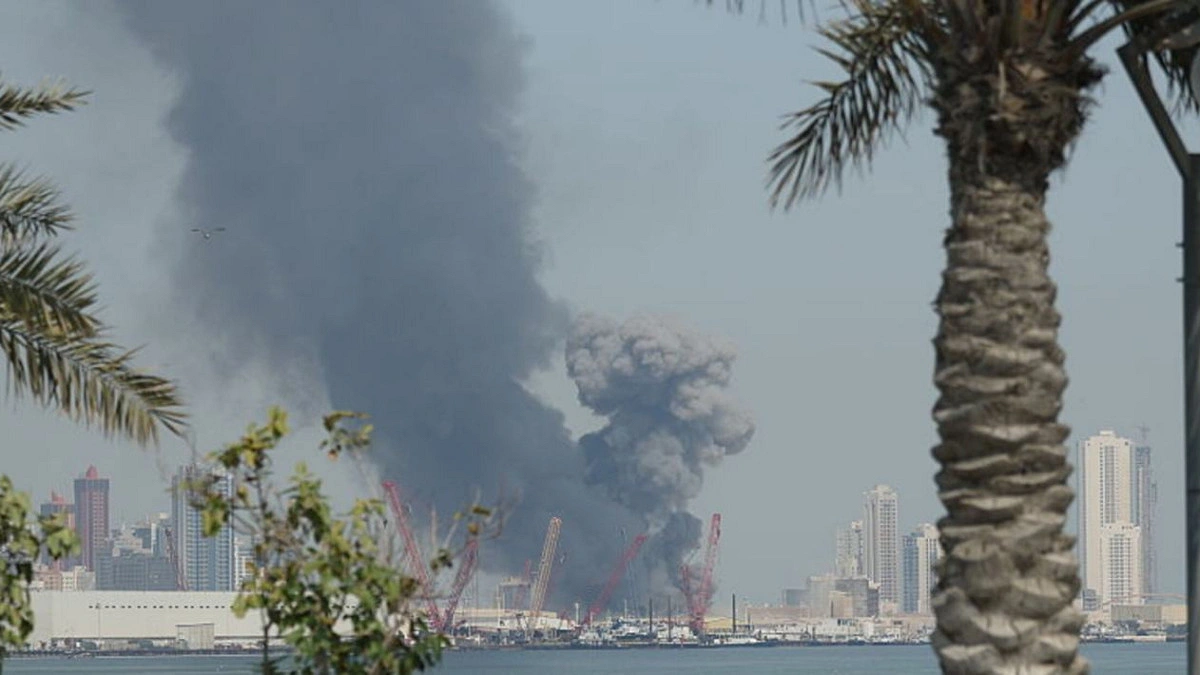
Representational Image. Photo Courtesy: Amnesty International (UK).
Amnesty International has reported that more than 1,000 people have been arrested across six Gulf countries for sharing information or opinions related to the ongoing conflict involving Iran, the United States, and Israel. The human rights organization described the wave of detentions as a "widespread crackdown" on freedom of expression.
In a statement released Monday, Amnesty accused members of the Gulf Cooperation Council (GCC)—Kuwait, Bahrain, the UAE, Qatar, Saudi Arabia, and Oman—of "indiscriminately criminalising the exchange of information" under the guise of protecting national security.
Heba Morayef, Amnesty's regional director for the Middle East and North Africa, said the arrests reveal a deep-rooted pattern of repression. "These governments are exploiting the escalation in regional tensions to intensify their already suffocating grip on freedom of expression, in order to protect their pristine image as safe havens," she stated.
According to Amnesty's findings, the United Arab Emirates and Qatar account for the majority of cases, with over 700 documented arrests between them. Authorities in Kuwait, Bahrain, the UAE, and Qatar have issued official statements confirming the detention of hundreds of individuals for filming and sharing videos related to missile interceptions or damage from projectiles.
In several instances, people were arrested for "glorifying" a hostile state and its military leadership—a charge that appears to refer to expressing sympathy with Iran.
Between March 3 and April 8, UAE authorities detained at least 375 people, including dozens of British nationals, for allegedly publishing or sharing videos and other visual content related to the Middle East conflict.
In Qatar, 313 individuals of various nationalities were arrested between February 28 and March 9 for disseminating what authorities called "misleading information" or rumors.
Amnesty stressed that such actions—including sharing images or commentary—are not criminal offenses under international law. The organization said Gulf authorities have relied on "vaguely formulated and excessively broad" provisions within cybercrime, counter-terrorism, and national security legislation.
In Kuwait and Bahrain, the crackdown has gone further, with authorities stripping individuals of their nationality. Kuwait has revoked the citizenship of more than 1,200 people by decree, without providing any reasons. In Bahrain, at least 69 individuals and their families face similar measures for alleged support of Iran. Amnesty warned that arbitrary deprivation of nationality violates international law, particularly when used as punishment for peaceful expression.
Saudi Arabia has seen lower arrest numbers, but Amnesty highlighted increasing restrictions on access to information. According to Meta, Saudi authorities requested in April that 144 accounts be restricted over content related to regional conflicts and political satire.
A journalist in Riyadh told Amnesty that the climate of fear has severely limited reporting. "No one speaks openly about what is happening or how they feel," he said.
Amnesty concluded that the measures adopted by Gulf states go "far beyond" what is permitted even during armed conflict. The organization called for the immediate release of those detained solely for exercising their right to free expression. (Source: Radio France International)
