
Politics even takes centre stage in US air traffic crisis!

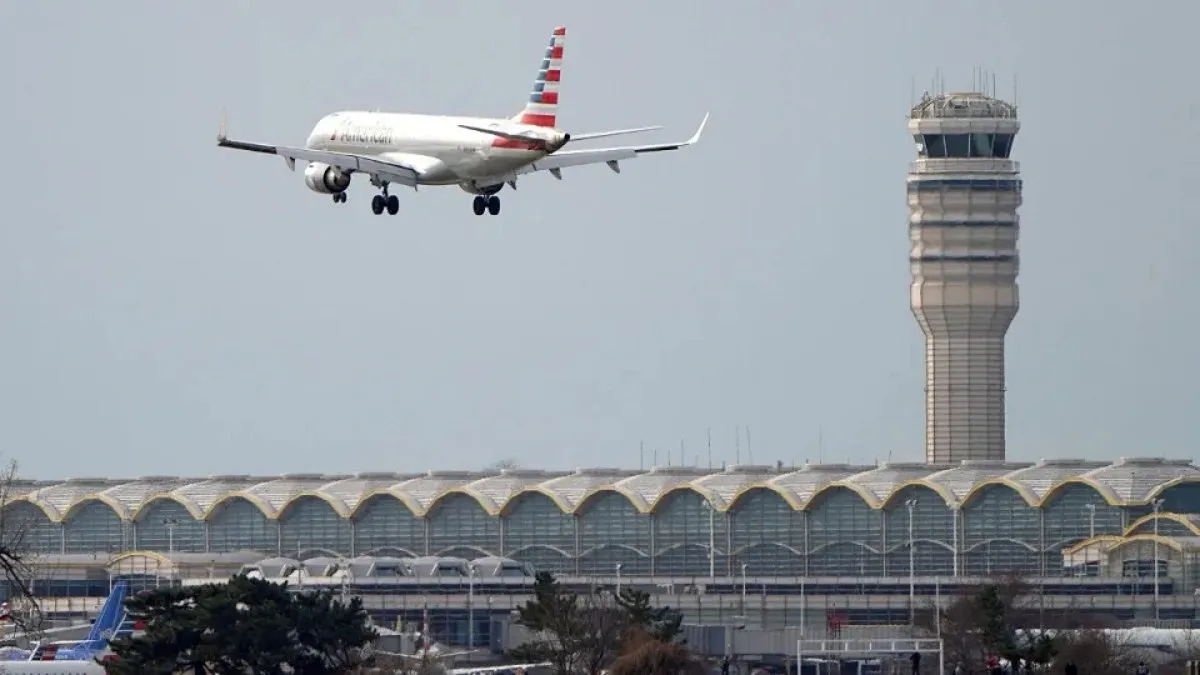
Representational image. Reuters.
The recent disruption to the United States' air traffic system has once again highlighted the urgent need to upgrade the country's ageing air traffic control (ATC) infrastructure. Last week, a government shutdown triggered widespread disturbances in air travel nationwide. Thousands of flights were delayed or scrapped, leaving more than one million passengers facing serious inconvenience. However, by Monday morning local time, flight operations had largely returned to normal.
Nevertheless, the incident has sparked growing political controversy in Washington over who should be held responsible, what led to the breakdown and what measures are necessary to prevent similar disruptions in the future.
President Donald Trump's administration has called for billions of additional dollars to overhaul the country's air traffic control infrastructure. Democrats, whose position in Congress has recently become stronger, have responded that they will not approve such a substantial allocation without a clear strategy and full transparency regarding how the money will be spent.
Experts and lawmakers say the US air traffic control network has been struggling with outdated equipment and mounting operational pressure for years. They agree that upgrading the infrastructure is essential, but carrying out such an extensive transformation without interrupting ongoing operations presents significant technical and logistical challenges.
Trump's Remarks and Demand for Additional Funding
Following the disruption in air travel, US Transportation Secretary Sean Duffy appeared on several television programmes, urging Congress to act without delay. He argued that the air traffic control system had been deprived of adequate investment for decades, leaving its infrastructure in a seriously deteriorated condition.
Duffy explained that the latest disruption was linked to work involving the replacement of ageing copper cables. The operation produced an enormous volume of data traffic, placing considerable pressure on the entire network.
However, the administration's account of the incident has also come under scrutiny. During a press briefing last Friday with Homeland Security Secretary Markwayne Mullin, Duffy failed to offer a detailed explanation of what had happened. Instead, the briefing became an occasion for political remarks while thousands of travellers remained stranded at airports.
In a post published yesterday on his social media platform, Truth Social, Trump held former President Joe Biden's administration responsible for the disruption. He also called for a substantial one-time investment to revamp the air traffic control network, arguing that the problem could not be addressed through small, piecemeal allocations.
On Friday, Duffy increased his proposed modernisation budget from $30 billion to $50 billion. However, he did not provide a comprehensive breakdown explaining the reasons for the additional $20 billion or outlining how the proposed funds would be utilised.
Democrats' Opposition: Transparency Must Come First
Democrats have indicated that they are prepared to support the funding required to upgrade the country's air traffic control infrastructure. However, they insist that strict safeguards must be established to ensure accountability and proper utilisation of public money. They argue that any substantial financial commitment must be backed by a comprehensive proposal, a clear spending framework and transparent oversight.
Democratic Senator Chris Van Hollen pointed out that Congress had already approved $12 billion through Trump's "Big Beautiful Bill" in response to the administration's request. However, only about one-third of the allocated amount has so far been utilised. He argued that the administration should first provide an account of how the previous funding was spent before seeking another massive financial package.
Van Hollen said he would support whatever level of funding was necessary to resolve the crisis. Nevertheless, he stressed that the administration must clearly justify any request for additional resources.
Democratic Representative Jim Himes, meanwhile, held the Trump administration's policies responsible for contributing to the breakdown. He alleged that measures taken by the Department of Government Efficiency (DOGE), led by Elon Musk, resulted in approximately 1,300 Federal Aviation Administration (FAA) employees retiring or leaving their positions last year. A further 400 probationary employees were also dismissed. Himes argued that the consequences of these workforce reductions became evident during the recent disruption.
Doubts Over Modernisation Capabilities
Concerns have also emerged over whether the Trump administration has the capacity to tackle the crisis facing the country's air traffic control network. A series of recent government initiatives and controversies has fuelled public questions about the administration's ability to manage the situation effectively.
A report released by the US Government Accountability Office (GAO) last September found that the FAA had made progress in upgrading its outdated air traffic control infrastructure. However, the agency was sometimes placing greater emphasis on accelerating implementation than controlling expenditure. Such an approach could potentially lead to further disruptions in air travel.
The report also noted that the FAA did not have comprehensive life-cycle cost assessments or properly integrated schedules for its modernisation programmes. These shortcomings could lead to implementation delays and force the agency to continue depending on obsolete technology for an extended period.
In fact, the disruption last Friday was not caused by an entirely new problem. For decades, lawmakers and successive US administrations have repeatedly raised concerns about the vulnerabilities of the country's air traffic control infrastructure.
According to Transportation Secretary Duffy, several systems currently in operation rely on technology dating back to the 1990s. Some radar equipment, meanwhile, still operates using technology developed during the 1960s and 1970s.
Decades of Political Disagreements Behind the Crisis
Political rivalries and disputes over government spending have long complicated efforts to upgrade America's air traffic control infrastructure. While successive administrations have sought substantial funding for major modernisation programmes, disagreements between political parties in Congress have frequently delayed or reduced financial support.
Back in 2011, then-Representative Chris Van Hollen accused Republican leaders of reducing funding for air traffic infrastructure improvements to the levels recorded in 2008. At the time, he warned that the country's aviation infrastructure required immediate and substantial reforms.
Similarly, in 2015, Shaun Donovan, then budget director under President Barack Obama, cautioned that a proposed $255 million reduction by Republicans from the FAA's $2.6 billion allocation would hamper modernisation efforts. He warned that the funding cut could contribute to longer flight delays in the years ahead while making the eventual replacement of outdated equipment more expensive.
Democrats also voiced reservations in 2025 over the Trump administration's proposed $12.5 billion allocation for the FAA. They maintained that such a substantial amount should not be spent without clearly defined policies, implementation strategies, project deadlines and detailed funding requirements.
Political Showdown Over Modernisation Looms
As Democrats are expected to take control of Congress next year, disagreements with the Trump administration over modernising the air traffic control system could become even more pronounced.
Senator Tammy Duckworth accused Republicans of directing funds towards various projects favoured by Trump while failing to give adequate priority to the safety and modernisation of the country's air traffic infrastructure.
Transportation Secretary Sean Duffy, on the other hand, has urged political leaders to put partisan differences aside and work towards an immediate resolution. He maintains that further delays in upgrading the US air traffic control system are no longer acceptable.
In principle, aviation safety represents a shared national interest that demands cooperation across party lines, as the security and everyday activities of millions of passengers depend on the reliability of the system.
However, the political reality in the United States remains complicated. Deep partisan divisions and competing political priorities continue to create obstacles to the planning and execution of major infrastructure development projects.
Source: CNN
