
Congress is now the Democrats' — What problems does that pose for Trump?

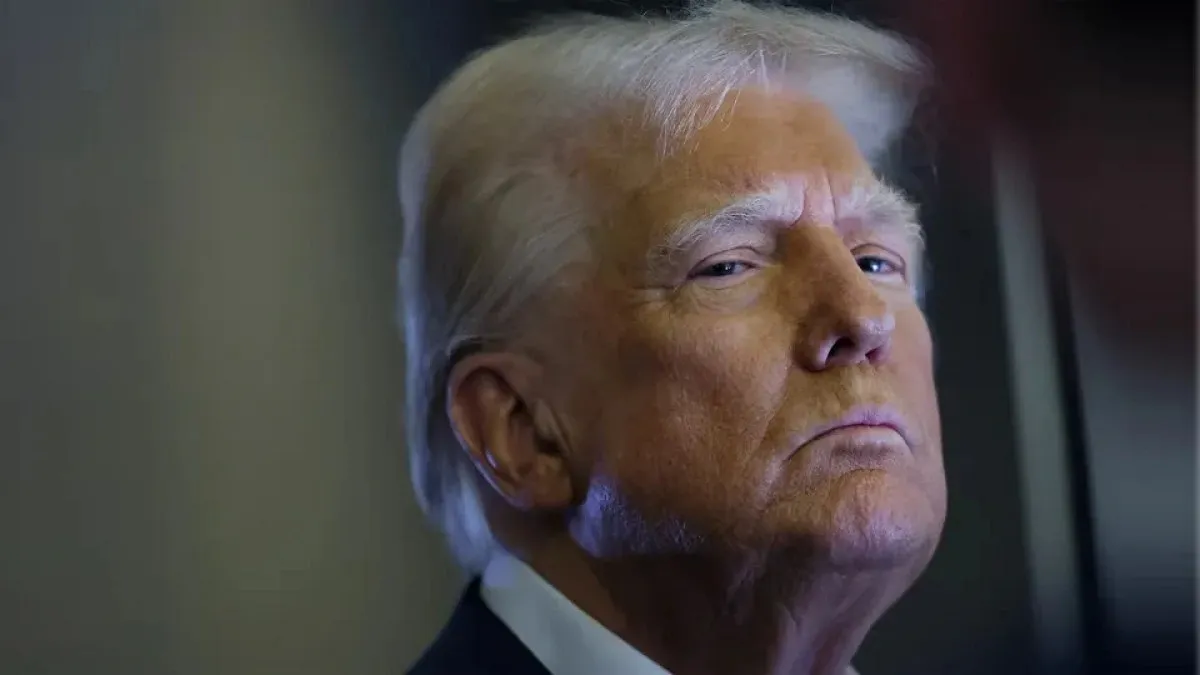
US President Donald Trump. Reuters photo.
US President Donald Trump and his Republican Party are facing a major setback in the country's midterm elections. The opposition Democratic Party has won control of both chambers of Congress — the House of Representatives and the Senate. As a result, a divided government is set to take shape in the United States during the last two years of Trump's second term.
The Democrats won not only in traditionally competitive seats but also in long-standing Republican strongholds. Winning Senate seats in states like Texas, Kansas, South Carolina, Iowa, and Ohio was one of the biggest developments of this election. Meanwhile, in the House of Representatives too, the Democrats are ahead by a significant margin.
Voters' dissatisfaction over the rising cost of living, war with Iran, the economic situation, and the government's actions played an important role in the Republicans' defeat. A large portion of voters saw this midterm election as an opportunity to express their discontent with Trump.
Why is losing control of both chambers of Congress such a big blow for Trump? What constitutional powers can the Democrats now use? And what changes might this bring to US domestic and foreign policy?
A Series of Investigations Against the Trump Administration May Begin
The most immediate change following the Democrats' takeover of Congress could be the creation of opportunities for extensive investigations into the Trump administration.
With control of various House committees, Democrats will gain additional powers to scrutinize the administration's actions. Trump's policymaking, the conduct of government officials, his family's business interests, and the release and management of documents related to the Jeffrey Epstein investigation — these matters could all come under investigation.
Congressional committees can issue subpoenas to summon government officials and relevant individuals to testify. They will also have the opportunity to request necessary documents, organize public hearings, and question the administration's decisions.
Investigations into the independence of the judiciary, the conduct of immigration officials, the use of public funds, and the president's family's business interests could prove particularly uncomfortable for the Trump administration.
However, the White House may refuse to provide certain information, citing executive privilege. In that case, the matter could potentially escalate to the courts.
In other words, alongside facing Democratic investigations, the Trump administration may have to endure sustained political and public pressure over a long period.
Trump's Impeachment May Come Up for Discussion Again
With the House of Representatives now under Democratic control, efforts to impeach Trump may also come up for discussion anew.
During his first term, Trump was impeached twice, in 2019 and 2021. The first time, an impeachment resolution was brought against him over allegations of applying political pressure on the President of Ukraine; the second time, over his role in the January 6, 2021, attack on Capitol Hill. However, both times he was not convicted, as the required majority was not secured in the Senate.According to the US Constitution, the House of Representatives can approve articles of impeachment against the president by a simple majority. After that, the charges are tried in the Senate. There, removing the president from office by convicting him is not possible without the support of two-thirds of the members present.Even though the Democrats have won a majority in the House of Representatives, securing two-thirds support in the Senate will be difficult. As a result, even if an impeachment resolution passes, Trump's removal from power is not guaranteed.However, if the impeachment process begins, it could put Trump's political standing under significant pressure. Information from investigations into the administration, public hearings, and the allegations would then move to the center of national politics.Another major challenge for Trump could be facing Senate opposition in appointing people to important government positions.According to the US Constitution, the appointment of cabinet members, ambassadors, and judges of federal courts, including the Supreme Court, requires Senate approval. Consequently, with control of the Senate passing to the Democrats, opportunities will be created to block, delay, or reject the nominations of individuals chosen by Trump.This will become especially important if a vacancy arises on the Supreme Court. Because even the appointment of a single justice there can influence the ideological balance of the US judicial system for decades.To appoint candidates of his choice, Trump will now have to reach an understanding with the Democrats. As a result, his freedom in making appointments to important administration positions will be reduced compared with before.One of the biggest administrative problems for Trump from losing control of both chambers of Congress could be implementing his political and economic agenda.Passing a new law in the United States requires the approval of both chambers — the House of Representatives and the Senate. As a result, it will be difficult to get Trump's proposed laws passed in a Congress controlled by the Democrats.Democrats can block various proposals related to immigration policy, healthcare, tax policy, imposing tariffs, and government spending. Even Trump's key legislative initiatives could be stalled without Republican support.However, as president, Trump will retain the power to veto. If he vetoes a bill passed by Congress, overriding it will require two-thirds support in both the House of Representatives and the Senate.In addition, in the Senate, ending debate and moving to a vote on most ordinary legislation generally requires the support of 60 members. As a result, even with a majority in both chambers, not all Democratic proposals will easily become law.According to the US Constitution, the power to approve government spending lies with Congress. As a result, with control of both chambers of Congress passing to the Democrats, the Trump administration will need new negotiations over the budget and government funding.In particular, disputes could arise between the two sides over funding for immigration control, border security, defense spending, and various administration programs.Democrats may try to reduce or place conditions on funding for Trump's controversial programs. Meanwhile, the White House will exert pressure to secure the money needed to implement its priorities.If such a deadlock drags on, passage of funding bills for government operations could be blocked. There is even a risk of a partial government shutdown if no agreement is reached on the new fiscal year's budget or on temporary funding.Political bargaining could also intensify over raising the debt ceiling. As a result, the budget dispute would not remain confined to a political crisis in Washington; its effects could also be felt by government employees, businesses, and financial markets.Trump's foreign policy could also come under intense scrutiny from a Democratic-controlled Congress. In particular, the White House's decisions regarding war with Iran, assistance to Ukraine, conflicts in the Middle East, relations with NATO, and trade and strategic competition with China could face renewed demands for review.The impact of the Iran war was also significant in the 2026 election. According to a Reuters analysis, voter dissatisfaction over rising fuel prices and the cost of living due to the war became one of the key reasons for the Republicans' defeat.Democrats can now use the relevant congressional committees to hold hearings and investigations into the costs of the war, military decisions, and the Pentagon's role.According to the US Constitution, the power to declare war and appropriate funds for the armed forces lies with Congress. On the other hand, the president, as commander-in-chief of the armed forces, enjoys significant authority in conducting military operations.As a result, although Democrats cannot fully control the president's power in foreign policy, they can exert pressure on the administration regarding military spending, foreign aid, and the conduct of war.However, Congress does not have the direct power to stop a war with Iran or any other military operation. In this case, conflict could arise between the president's executive authority and Congress's powers of funding and legislation.Even after losing control of Congress, Trump's executive power will not come to an end. As president, he can issue executive orders to direct various government agencies.However, a Democratic-controlled Congress can scrutinize how these orders are being implemented, what their legal basis is, and how public funds are being spent for them.In particular, there could be investigations into immigration control, the restructuring of government agencies, personnel management in the federal administration, and the use of various emergency powers.Democrats may also take initiatives to pass new laws to limit the impact of executive orders. However, if such legislation faces Trump's veto, it will be difficult to make it effective.In other words, even if Trump continues trying to implement his policies through executive power, he may have to face more legal and political challenges on every major decision.Leadership Conflicts May Also Grow Within the Republican PartyLosing control of both chambers of Congress could also have a major impact on the internal politics of the Republican Party.After such a major defeat in the midterm elections, questions may arise among party leaders about Trump's political strategy, policymaking, and electoral leadership.In this election, several candidates backed by Trump were also defeated. His preferred Senate candidates did not win in Texas, South Carolina, and North Carolina. This could raise questions about his strategy of giving greater importance to political judgment and personal loyalty in candidate selection.In particular, Republican legislators who will have to run for election again may distance themselves from some White House decisions, considering their own political futures.This could increase friction between leaders loyal to Trump and other leaders who are thinking about the party's future leadership.However, it would not be accurate to say that Trump's influence over the Republican Party will come to a complete end. A large section of the party still depends on his political standing and popularity. Nevertheless, this electoral debacle could accelerate competition for new leadership within the party.The results of the 2026 midterm elections could also have a significant impact on the 2028 US presidential election.According to the 22nd Amendment to the US Constitution, no person may be elected president more than twice. Since Trump has already been elected to two terms, he does not have the constitutional opportunity to be elected president again in 2028.As a result, an important question now faces the Republican Party — who will lead the party after Trump? Vice President JD Vance and other potential leaders of the party may try to strengthen their positions.This defeat in Congress could quickly weaken Trump's political influence. At the same time, competition among Republicans over the possibility of succeeding him could increase.On the other hand, the Democrats, having won control of both chambers of Congress, will have the opportunity to consolidate their political position before the 2028 election. They can use investigations into the Trump administration's actions and debates over the cost of living, healthcare, and foreign policy as key themes in their election campaigns.However, winning the congressional elections does not guarantee a Democratic victory in the presidential election. How effectively they can implement their promises over the next two years will also be important.Democrats Will Gain a Major Political Platform for Shaping Public OpinionAs a result of gaining control of Congress, Democrats will not only acquire the power to legislate or investigate but also gain a powerful platform to project their position in national politics.Public hearings of various congressional committees, questioning of administration officials, and policy debates could receive extensive coverage on television and in the news media. Through this, Democrats will have the opportunity to shape public opinion on the Trump administration's decisions.According to an election poll published by Reuters, nearly 70 percent of voters wanted Congress to establish more control and balance over the president's power. As a result, Democrats will now also face pressure to meet that expectation.In particular, they can run sustained campaigns on the cost of living, healthcare, immigration, the cost of war, and allegations of government corruption.However, this is also a test for the Democrats. If they remain confined only to an anti-Trump stance and fail to play an effective role in solving the economic and social problems of ordinary people, it may be difficult to hold on to this political advantage.Losing both chambers of Congress in the 2026 midterm elections is undoubtedly a major political blow for Trump's second term. The election results are not merely a matter of the Republicans losing their parliamentary majority; they also reflect voters' dissatisfaction with Trump's leadership, policymaking, and political strategy.However, this victory has not given the Democrats the power to remove Trump. As president, his executive authority, veto power, and significant control over military and foreign policy will remain intact.Moreover, despite winning the election, the new members of Congress will not take office until January 2027. That means, until then, the current Republican-controlled Congress will continue to serve.After that, over the next two years, US politics could become even more conflict-ridden. On one hand, Democrats will use their powers of investigation, budgeting, and legislation to exert pressure on the administration; on the other hand, Trump will try to advance his political agenda using executive power.All in all, this Democratic victory is not bringing Trump's presidency to an end, but it is making his final two years politically more difficult, more conflict-ridden, and more uncertain.
