
Sudan Revisits Dark Ages
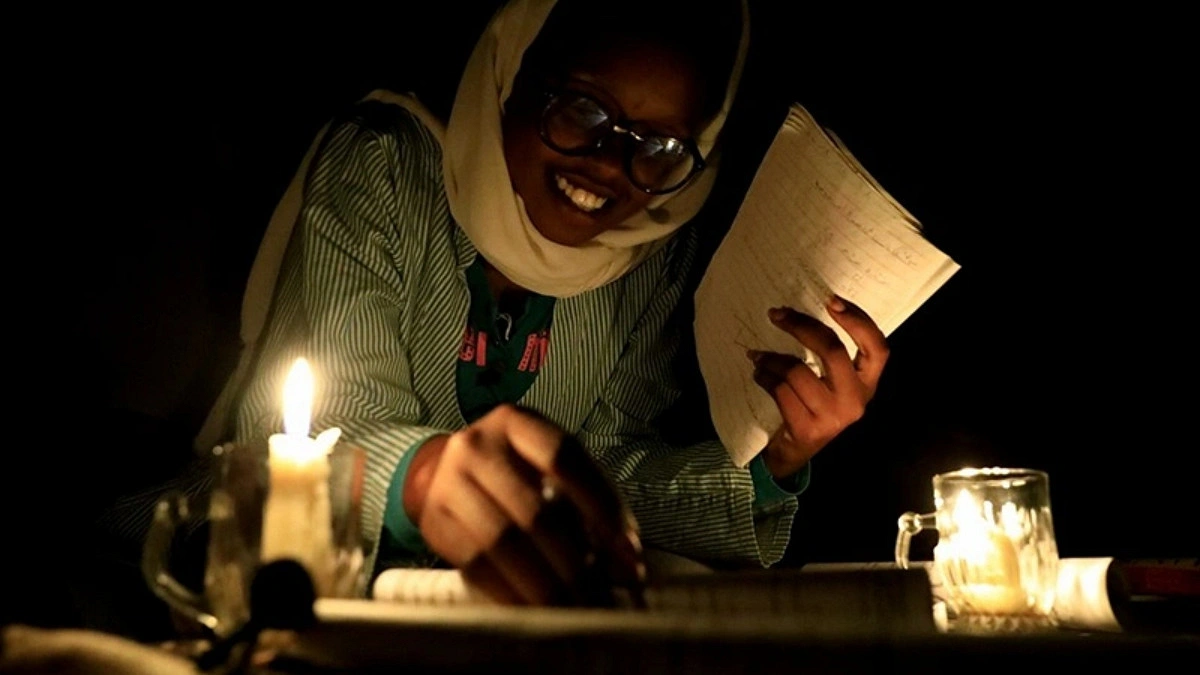
Sudan Students Prepare Homeworks In Candlelight

Collected Photo
Sudan's civil war has now entered its fourth year. The impact of this conflict is no longer confined to the echoes of shelling and bombardment; the lives of ordinary citizens have come to a standstill due to a profound power and fuel crisis.
Darkness now reigns in the homes of the capital, Khartoum. The situation has deteriorated to the point where candles are the only hope for students trying to study, while working-class people spend half their day waiting in oil queues.
Husna Mohammed, a 34-year-old resident of South Khartoum, lives a daily life that is a story of endless struggle. Every morning, before her five children head to school and her husband leaves for his workshop, Husna must rush to the neighborhood tap with large plastic drums or jerrycans to fetch water. There was a time when a simple flick of a switch would provide water via an electric motor, but due to continuous power outages, that motor now sits useless.
In Husna’s words, her entire day is consumed by trying to meet small, basic needs, which by the end of the day becomes an immense mental and physical burden. When electricity was regular, even simple household chores felt much easier.
Sudan's power outage is not a sudden issue. The country's power grid had been in a fragile state for years. On top of that, nearly four years of war between the army and paramilitary forces have accelerated this downfall. Currently, tensions between Iran and Israel in the Middle East have disrupted global oil supplies, dealing a major blow to Sudan. Since Sudan relies heavily on imported fuel, the shortage and skyrocketing prices have nearly crippled the nation's economy.
Currency Devaluation
In the last few weeks, the Sudanese pound has lost 20% of its value. On the black market, 1 USD now exceeds 390 pounds.
High Fuel Costs
The price of petrol per liter has increased by more than 40% in just a few weeks.
Rising Commodity Prices
In a single week, the price of 10kg of sugar has jumped from 28,000 to 35,000 pounds. The costs of rice, pulses, and edible oil are also moving far beyond the reach of ordinary people.
Living without electricity has made domestic life unbearable. Because refrigerators no longer function, homemakers like Husna can no longer store food; whatever is cooked must be consumed the same day. Often, they are pushed to their limits trying to cook over wood or charcoal stoves. Students are suffering the most. Husna’s 16-year-old eldest daughter, while preparing for a major upcoming exam, is forced to study for hours under the dim, flickering light of candles. Maintaining focus or studying effectively in such an environment has become nearly impossible.
A shadow has also fallen over livelihoods. Husna’s husband, Ahmed Ali, is a car mechanic whose entire workshop depends on electricity. Previously, he would use a generator during power outages, but with the current hike in fuel prices, running a generator is synonymous with incurring a loss. Fuel that cost roughly 4,860 pounds per liter at the end of March surged to 6,870 pounds within just a few weeks. With a price increase of over 40%, operating a generator is now far beyond the reach of ordinary people.
This crisis has also paralyzed the transport system. Bus driver Yasir al-Balhoui says his day now begins by standing in long queues at petrol stations. He spends more time struggling to secure fuel than earning a living by driving on the road. Although bus fares have increased due to high fuel costs, the number of passengers has dwindled because ordinary people lack the funds. Consequently, it has become difficult for him to provide for his family. Like Yasir, thousands of working-class people are now trapped between two harsh realities: waiting in lines or staying home without work.
The market situation is even more dire. The prices of daily essentials like sugar, flour, and cooking oil have multiplied in the span of a single week. Retailers say they are incurring massive costs just to bring goods from the wholesale market due to high transport fares. Many traders are now afraid to stock their shops because they don’t know what the prices will be the next day. While those who are relatively well-off are spending millions of pounds to install private solar panels, there is no such opportunity for small-scale vendors or ordinary hawkers.
According to economists, the root of Sudan's crisis lies in the country's crumbling infrastructure. In many areas, electrical connections were installed haphazardly, leaving them unable to handle heavy loads. Whenever the heat rises or the demand for power increases, wires burn out and the entire grid collapses. Although the government has promised to improve services, the ongoing battlefield reality and the 20% drop in the local currency's value against the dollar have made fulfilling such promises nearly impossible.
In this helpless situation, people are searching for their own ways to survive. Moving away from large generators, neighborhoods are now installing small solar panels just to keep water pumps running. While these small-scale initiatives have somewhat eased the water shortage, they cannot meet the demand of the entire community. For the ordinary people of Sudan, this electricity crisis is no longer a temporary problem; it has become a cruel and permanent reality of their lives—one they are forced to endure every single day.
