
Ukraine’s attacks leave ‘Russia’s Google’ on the brink of collapse, disrupting users’ lives

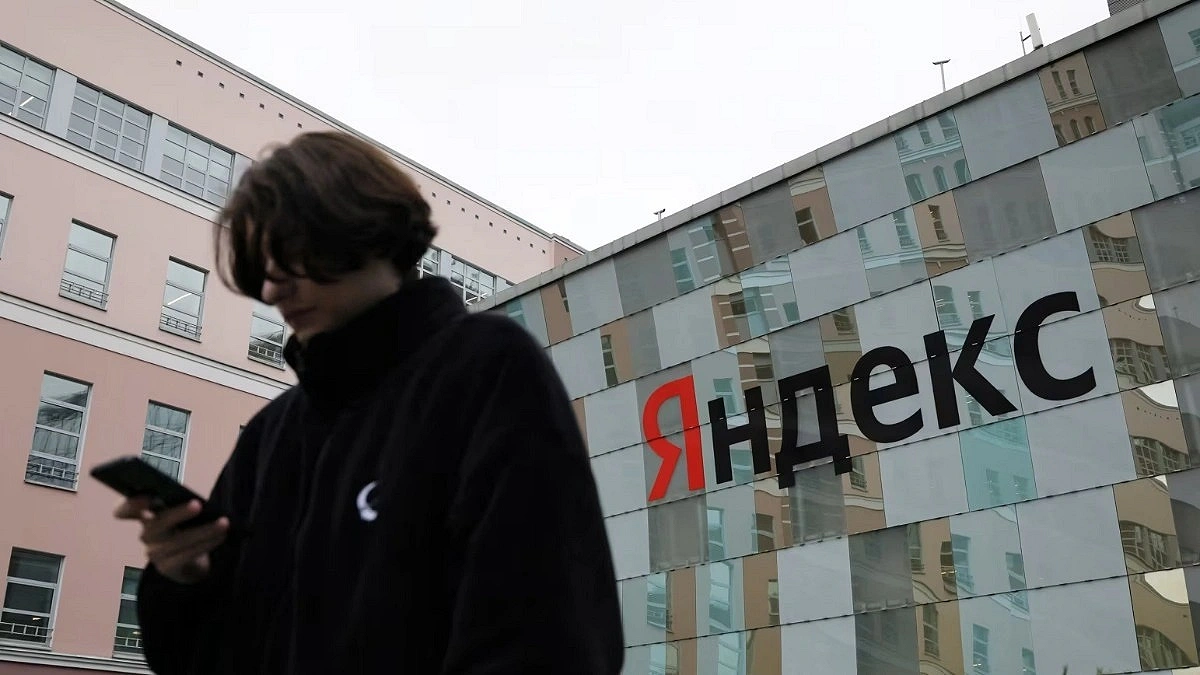
Photo: Reuters
“Something is always breaking. Something is always not working.” Anton, a 31-year-old resident of St. Petersburg, described his experience this way. One night, when he returned home, he found everything around him dark. His smart bulbs were not lighting up.
The bulbs were controlled through Yandex, the technology company known as “Russia’s Google.” The company provides internet-based services and digital products, including cloud services, a search engine, maps, artificial intelligence (AI), ride hailing and food delivery. In other words, Yandex operates like a combined system of services offered by Google, Uber and Amazon.
Anton said, “It is a strange feeling to be sitting in a dark room with no way to turn on the lights. It felt like the power had gone out, but the reason was quite unusual.”
Since October 8, three of Yandex’s five main data centers have been damaged in Ukrainian attacks. This has disrupted the daily lives of millions of users. Online transactions, business operations, searches, navigation, ride hailing and food delivery services have been affected in Russia and neighboring countries such as Kazakhstan and Belarus.
Ukraine’s attacks have exposed weaknesses in Russia’s domestic digital economy. Moscow has been encouraging its own technology sector to reduce dependence on Western technology. This initiative gained momentum after the war with Ukraine began, amid harsh Western sanctions and the departure of various companies from Russia. However, data centers in Russia have now become one of the major weak points in this digital system.
Kyiv said the attacks were retaliation for Russian strikes on Ukrainian data centers in September. Russia’s Defense Ministry had mockingly described those attacks as a “digital detox.”
Over the past year, the Kremlin has also increasingly disconnected internet access within Russia, citing “security” concerns. At the same time, it has restricted the use of virtual private networks (VPNs) and blocked popular messaging apps such as Telegram and WhatsApp.
Anton told CNN, “Every time I face something like this, it is extremely frustrating. In my case, every time, I think about how frustrated I am with [President Vladimir] Putin and how tired I am.”
He added that he felt people around him did not blame Ukraine when such attacks occurred. Instead, they wondered, “When will all of this finally end?”
“There is a sense of exhaustion among everyone. A general exhaustion with the war. Every time, I think again, damn, how exhausting everything is! It is really foolish that we have to live in a situation like this,” he said.
Ordinary Russians remain largely removed from the deadly horrors of the front lines. However, Ukraine has sought to send Russians a message about the consequences of the war by launching drone attacks deep inside Russian territory. Ukrainian President Volodymyr Zelenskyy has described these attacks as “long range sanctions” against the Kremlin’s actions in Ukraine.
The attacks have also had an impact inside Russia. Putin himself has acknowledged this in public statements. Strikes on oil refineries have caused widespread fuel shortages in Russia. Meanwhile, attacks on warehouses operated by Russia’s largest online retailers, Wildberries and Ozon, have put small entrepreneurs who depend on these platforms in a difficult position.
Russia’s largest bank, Sberbank, also said on Wednesday that one of its data centers in Balakovo in the Saratov region had been attacked. Meanwhile, the Kremlin has left private companies responsible for protecting critical infrastructure against Ukrainian drone attacks.
A 33-year-old taxi driver in Moscow said he and other drivers faced difficulties operating the Yandex Pro app after a third attack on a Yandex data center on October 11. They use the app to receive and manage ride requests from passengers. Concerned about his livelihood, the driver did not want to reveal his name.
He said, “At first, the app was not working properly. No orders would come in for hours. And when they did, there were often errors.”
He said the most serious problem was that drivers could not withdraw the money they had earned. As a result, it became difficult for them to cover car rental and fuel costs.
He said, “For many drivers, this is not just a technical glitch. It affects their ability to continue working and support themselves.”
Tatiana, a Moscow resident who spoke under a pseudonym, said she woke up on Tuesday to find that the 1.5 million rubles (about $17,830) she had saved in her Yandex Pay account had disappeared from view. The service is equivalent to Apple’s savings service in Russia. Tatiana had been saving the money to buy a car.
She said, “I was overcome with panic. I burst into tears. I tried to convince myself that perhaps I would never see that money again.” However, she hopes everything will eventually be resolved.
Yandex said in a statement that customers’ money was safe. The company is working to restore the app’s services following attacks on three data centers.
Ukraine is facing pressure to stop attacking Russia’s energy infrastructure and allow Russian diesel supplies to continue flowing to global markets, including from important allies such as the United States. However, Kyiv’s message is clear: it still has ways to make life miserable for the Kremlin.
Source: CNN
