

Trump says he has called off planned major strike on Iran to pursue deal

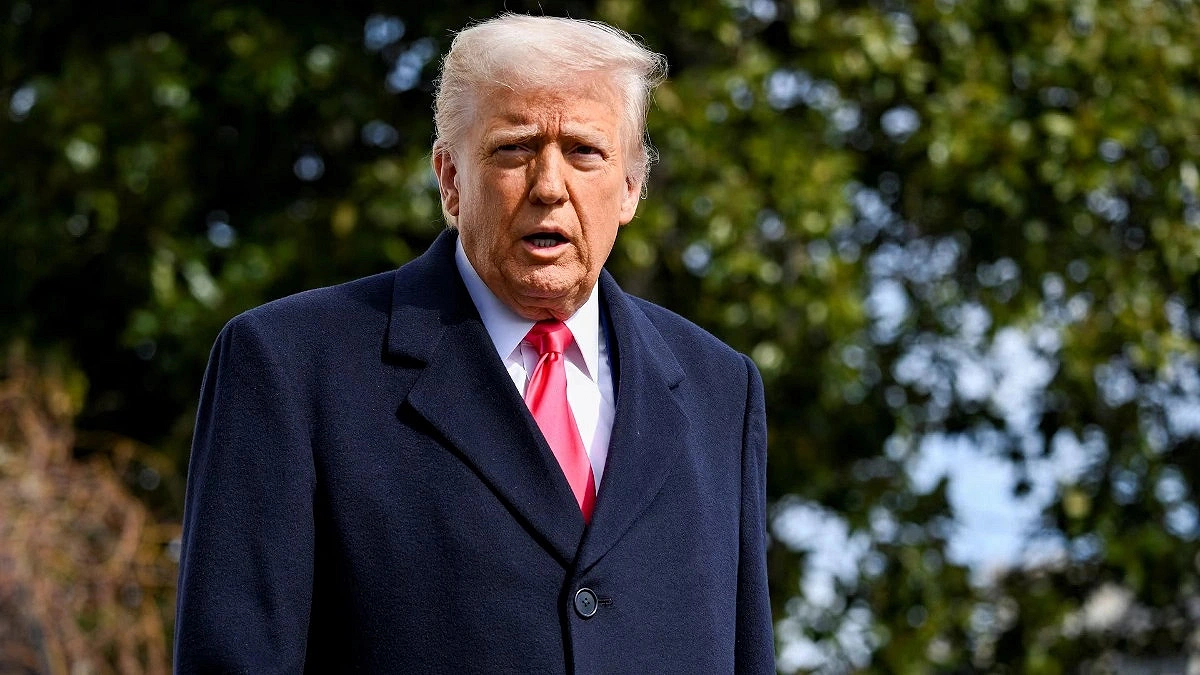
US President Donald Trump
In a dramatic last-minute reversal, former President Donald Trump announced that he has called off planned military strikes against Iran—on the condition that a nuclear and maritime agreement can be reached "rapidly."
Taking to his Truth Social platform, Trump declared that he had made the decision to "cancel the attack" contingent upon striking a deal "rapidly." According to his post, any such agreement would require Iran to immediately and fully open the strategic Strait of Hormuz—a critical chokepoint for global oil shipments—and bring a definitive end to what he termed "Iran's nuclear threat."
The announcement, which Trump said was coordinated with Israel, landed against a backdrop of intense speculation. Multiple U.S. media outlets had reported that Washington was on the brink of launching a new, aggressive wave of strikes against Iranian targets over the weekend—potentially one of the most severe bombing campaigns of the conflict.
In the same social media post, Trump projected overwhelming force, stating that the U.S. military was "locked and loaded," primed to unleash a level of "Military Terror, Strength, and Power" unseen since the Second World War. However, he credited a last-minute appeal from Iran and other Middle Eastern nations—who he said "asked" him to hold off—for giving diplomacy a final window. He even hinted that the framework of a Trump's overture. Earlier in the day, however, Iranian officials had accused the U.S. of deliberately inflaming regional tensions, warning that any nation in the region cooperating with American military action would be "engulfed by the flames of war."
The high-stakes diplomatic whiplash came as the U.S. State Department issued a security alert urging all American citizens across the Middle East to remain vigilant. The advisory warned of potential flight cancellations, airspace closures, and travel disruptions "should there be escalation."
Behind the scenes, sources told CBS News—the BBC's U.S. partner—that the U.S. and Israel had been actively planning devastating strikes aimed at Iran's energy infrastructure. The proposal was reportedly discussed during Trump's cabinet meeting on Friday, where, with reporters still in the room, he was overheard saying, "We'll be hitting them very hard. At some point, they're going to say, 'We just can't take it anymore.'"
Diplomatic pressure was also mounting from key regional allies. Axios and Reuters both reported that Saudi Crown Prince Mohammed bin Salman spoke with Trump on Saturday, expressing profound concern over the potential military escalation and its ripple effects across the Gulf.
The near-miss with conflict is the latest twist in a volatile back-and-forth that has intensified since a fragile April ceasefire unravelled in June. Since then, the U.S. has blockaded Iranian ports and launched retaliatory "heavy waves" of strikes—most recently in response to an attempted ballistic missile attack on American forces. Iran, in turn, has fired missiles and drones at U.S. assets across the region and repeatedly harassed shipping in the Strait of Hormuz, sending jitters through global oil markets. The conflict, which first erupted with U.S.-Israeli strikes on February 28, has already triggered sharp fluctuations in energy prices, underscoring the economic stakes of every new escalation—and every last-minute reprieve. (Source: BBC)