
WFP Forecast: Tens of Millions Face Acute Food Crisis

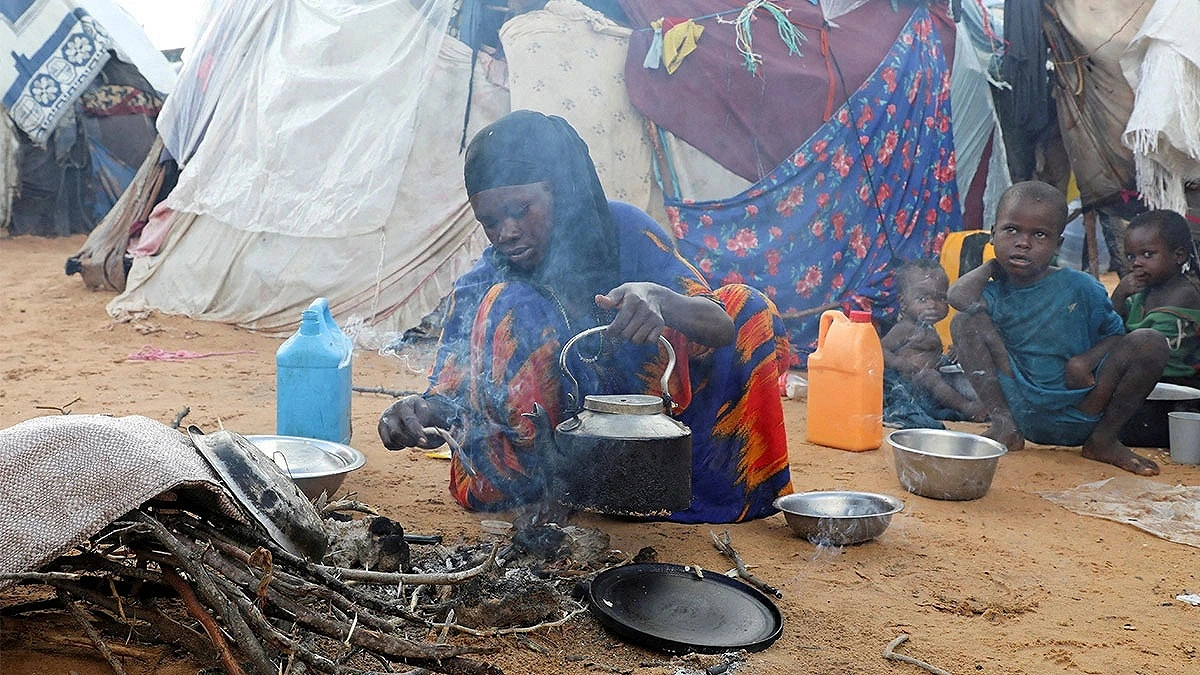
A Somalian refugee wpman under open sky prepares meals for her family. Photo: Reuters.
The ongoing intense conflict in the Middle East is pushing tens of millions of people toward famine. Rising fuel and transport costs have made food prices skyrocket. On the other hand, severe funding shortages are forcing aid organizations to reduce assistance. As a result, by the end of 2026, nearly 6.5 million people in Somalia could face a severe food crisis. In Afghanistan, that number could reach 17.4 million, while in Sri Lanka, it could reach 4.7 million. The United Nations World Food Programme (WFP) gave this forecast on Friday.
Following joint US-Israeli strikes in February of this year, the regional conflict surrounding Iran spread from the Persian Gulf to Lebanon. This disrupted shipping through critical waterways, including the Strait of Hormuz. Due to security concerns, ships are forced to use alternative, longer routes, severely disrupting global fuel supplies and supply chains.
In March, the WFP forecast that if crude oil prices remained around $100 per barrel through June, approximately 45 million people worldwide could face severe food insecurity. The organization states that these fears are now beginning to materialize. Since the beginning of March, international oil prices have remained above that level.
Countries like Afghanistan, Somalia, and Sri Lanka are most at risk. Due to rising fuel costs, escalating food prices, decreasing incomes, and disrupted commodity supplies, ordinary people in these countries are struggling to afford their cost of living.
WFP data indicates that by the end of 2026, nearly 6.5 million people in Somalia could face a severe food crisis, representing one-third of the country's population. Meanwhile, this number could reach 17.4 million in Afghanistan and 4.7 million in Sri Lanka.
If the current situation continues, an additional 2.5 million Somalis and 2.3 million Afghans could become food insecure. Both countries are heavily reliant on imported fuel and food, making them most vulnerable to this crisis. Additionally, another 1.3 million people in Sri Lanka could be at risk.
International aid agencies are also facing a major funding crunch. The WFP states that due to funding shortfalls, the number of people receiving their assistance globally could drop by at least 1.5 million in 2026. If the current crisis persists for another six months, an additional 9 million people could be deprived of aid.
Due to rising fuel prices, the cost of transporting aid in Afghanistan has increased up to fivefold. Furthermore, as aid trucks are forced to take alternative routes, delivery times have also increased dramatically. Where it previously took 10 days, it can now take up to 75 days.
In Somalia, rising aviation fuel prices have significantly increased the operating costs of the UN Humanitarian Air Service (UNHAS). This air service, which delivers aid safely to hard-to-reach and high-risk areas, is now being disrupted due to these extra costs.
