
Targeting Houthis conflicts with Islamic solidarity concept of Mecca Pact

Graphics: Agamir Somoy
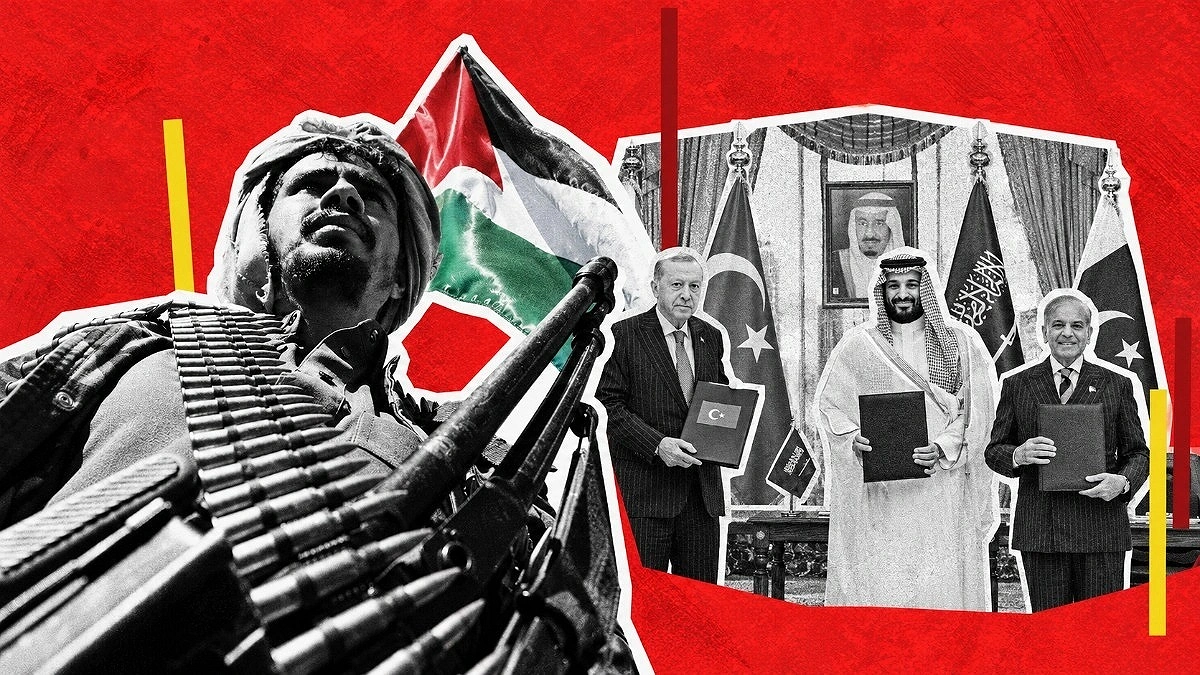
Targeting the Houthis instead of Israel as the first real test of the Mecca Joint Defense Pact somewhat conflicts with the concept of Islamic solidarity in which the pact was presented, said Betul Dogan Akkas, assistant professor of International Relations at Ankara University.
She told Al Jazeera, “The Mecca Defense Pact could be presented for the first time as a pact to protect the lands of Islam. It was not presented around Israel’s threat to Gaza or Palestine, although that would have been the more natural interpretation.”
She said, “If the pact is initially presented around the Houthi threat, that may not be good for its image and legitimacy in the long term.”
She said, “You are not targeting Israel or Western countries, but ultimately you are targeting a Muslim country, a Muslim nation. This makes the pact somewhat controversial and complicated.”
The Houthis are Zaidi Shia Muslims and are backed by Iran. Dogan Akkas said this is also making it more complicated to include other members in the pact as has been proposed for the future.
She said, “Once you say that the pact is open to other parties, and if your first real target ultimately is an Iranian proxy group, what kind of perception does that create about the future of the pact or where it will end up?”
Meanwhile, the “Mecca Defense Pact” between Turkey, Saudi Arabia and Pakistan could eventually develop into a broader alliance for the “Muslim world” that includes Iran. The speaker of Turkey’s parliament made the remarks Friday, Reuters reported.
He said, “We never see the Mecca Pact as a pact against Iran, and it should not be that way. Rather, we hope that the Mecca Pact will become a broader pact for the Muslim world. Iran can also join this pact. We hope it will become stronger with the participation of other regional countries.”
Sources: Al Jazeera, Reuters
