
Maiden meeting of member nations of the 'Mecca Pact' in Istanbul

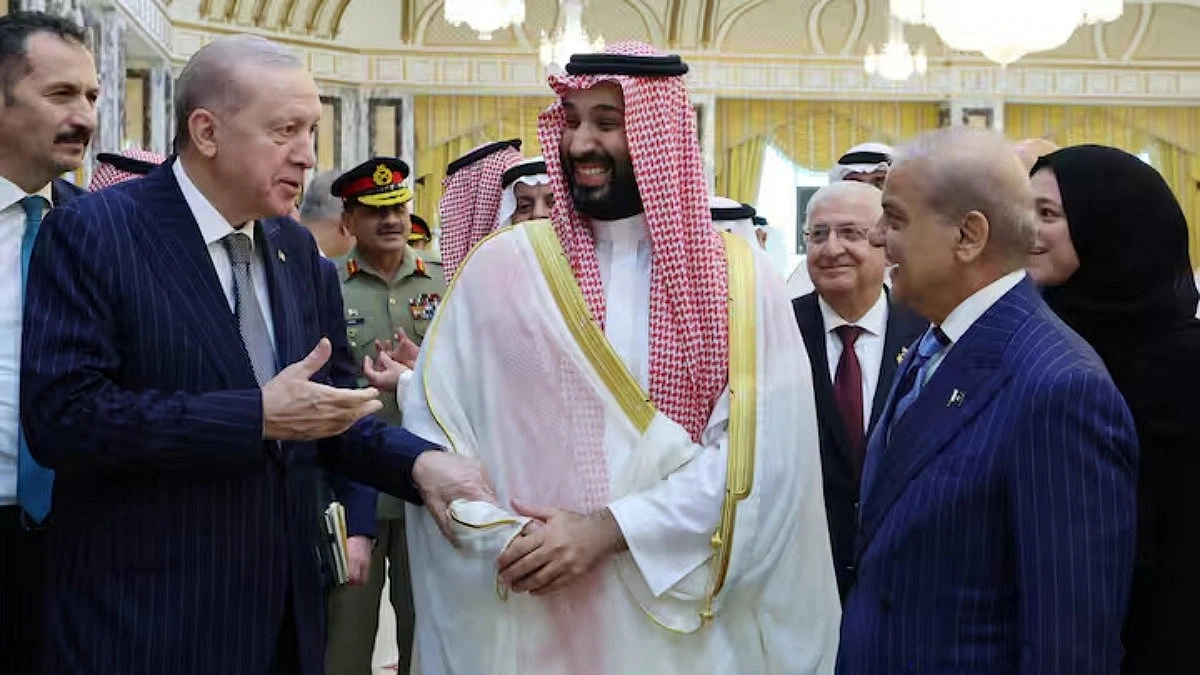
Turkish President Erdogan, Saudi Crown Prince Bin Salman, and Pakistani Prime Minister Shehbaz Sharif are conversing after the signing of a joint defense agreement in Mecca, Saudi Arabia, on August 7 – Reuters.
Amid escalating tension with Israel and ongoing conflict with Iran, Turkey, Saudi Arabia, and Pakistan are moving forward with forming a new military alliance. Senior military and diplomatic officials from the three countries participating in the "Makkah Joint Defense Pact" are convening in Istanbul on Monday for their inaugural meeting. Signed earlier this month, the treaty explicitly states that a armed attack against any single member nation will be considered an attack on all three.
The "Mecca Joint Defense Pact" was signed on August 7. It unites three Sunni-majority nations—all allies of the United States—who are increasingly alarmed by regional escalation and the war with Iran, which has already triggered missile strikes directed at Gulf oil-exporting states.
The main objective of the treaty is to strengthen the collective defensive capabilities of the three nations against any external aggression. In a clause reminiscent of Article 5 of the NATO treaty, the pact outlines that an armed attack on one member state will be treated as an act of aggression against all member states.
A Turkish Foreign Ministry official confirmed that the meeting in Istanbul will feature foreign ministers, defense ministers, and army chiefs from all three nations.
"International security issues will be at the forefront of the agenda," the official stated. Discussions are expected to focus on boosting defense capabilities, enhancing coordination among the armed forces of the three nations, and deepening cooperation in defense industries, including joint development and manufacturing of military equipment.
All three countries share growing concerns regarding the military postures of both Israel and revolutionary Shia Iran. Meanwhile, their long-standing ally, the United States, is struggling to stabilize the regional volatility that has sparked a worldwide energy crisis.
Six months after the US and Israel initiated military actions against Iran, negotiations remain deadlocked. In the interim, President Donald Trump's administration has intensified financial measures against Iran, framing the crackdown as an "Economic D-Day."
Turkey—which maintains the second-largest military force in NATO—clarified that this arrangement with nuclear-armed Pakistan and top oil exporter Saudi Arabia remains open to other nations, with Egypt being noted as a potential future member. However, Turkish officials emphasized that this pact is not intended to serve as a replacement for existing alliances.
