
Israel: Not Netanyahu—rival Eisenkot tasked with forming a new government

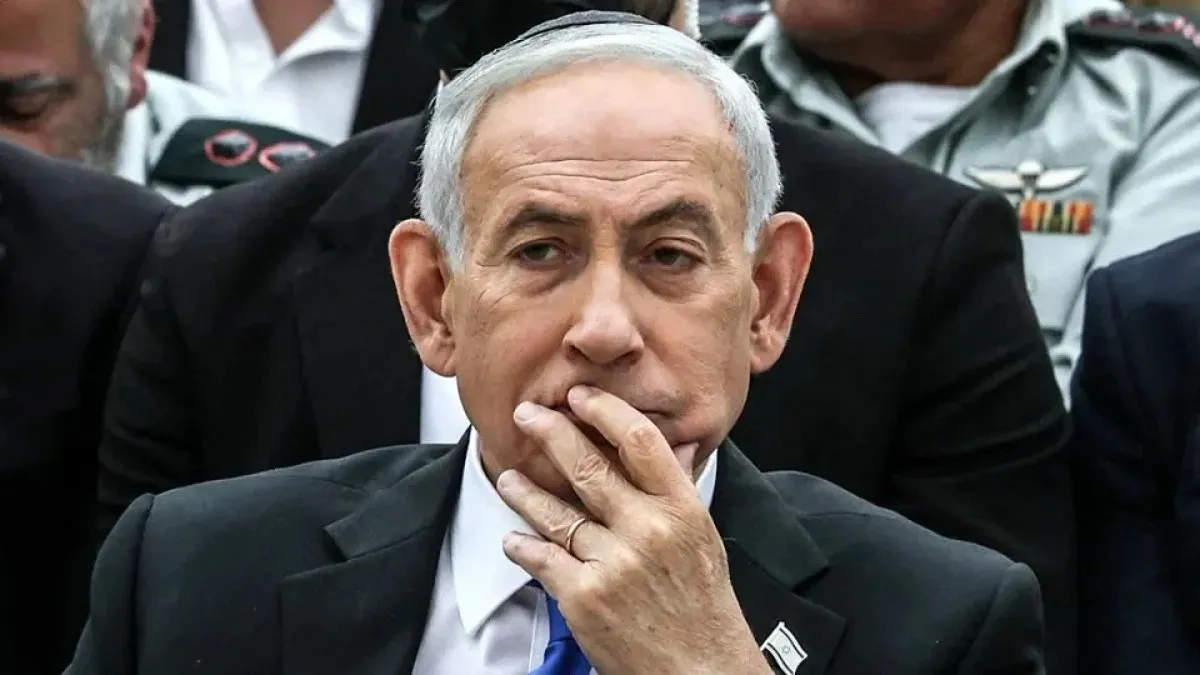
Israel's President Isaac Herzog has asked Gadi Eisenkot, the main rival of Benjamin Netanyahu to form the new government. Reuters.
Is Benjamin Netanyahu's downfall unfolding? In the parliamentary elections, Israel's President Isaac Herzog has bypassed him and tasked his main rival, Gadi Eisenkot, with forming a new government.
Eisenkot is a former Israeli military chief and leader of the Yesh Atid party.
A spokesperson for President Herzog said in a statement that Eisenkot was informed of the president's decision on Saturday evening local time. The president will formally hand him the responsibility of forming the government Sunday.
Israel's parliamentary election, the Knesset, was held on October 27. No party secured an absolute majority. Afterwards, Herzog held consultations with various political parties this week to determine who would get the opportunity to form the new government. Meanwhile, Netanyahu continued his efforts to form a coalition government.
A total of 61 lawmakers' support is needed to form a government. Eisenkot's Yesh Atid party has 67 lawmakers on its side. On the other hand, 46 lawmakers have expressed support for Netanyahu's coalition. Arab-led parties are also on Eisenkot's side.
Under the rules, Eisenkot will have 28 days to form a government. If necessary, this deadline can be extended by another 14 days. During this time, various parties will hold discussions and negotiations over their policy demands and ministerial positions. Eisenkot will try to garner the necessary support to run the government.
If Eisenkot fails to form a government, the president will invite another Knesset member to form a government. That person will also have 28 days under the rules. If they too fail, a majority of Knesset members can propose the name of a third candidate. However, that person will have 14 days to form a government. If a government cannot be formed within this period and political deadlock persists, the Knesset will be formally dissolved. New elections will be held.
Under the rules, this election must be organized within 90 days. During this time, a caretaker government will run the country. And Netanyahu will head the caretaker government.
The Knesset has a total of 120 seats. At least 61 seats are needed to achieve a majority. In the October 27 election, Eisenkot's four-party alliance won 48 seats. On the other hand, the alliance of right-wing and religious parties led by Netanyahu won 53 seats. Arab-led parties won a record 19 seats.
Although Eisenkot had earlier said he would not form a government with the Arab-led parties, if their support can still be secured, his alliance's seat count would stand at 67.
Likud Party leader Benjamin Netanyahu has served as Israel's prime minister for nearly 19 years. Over the past three decades, he has remained at the center of power, weathering various political crises.
