
Trump expects swift end to war as Iran talks advance

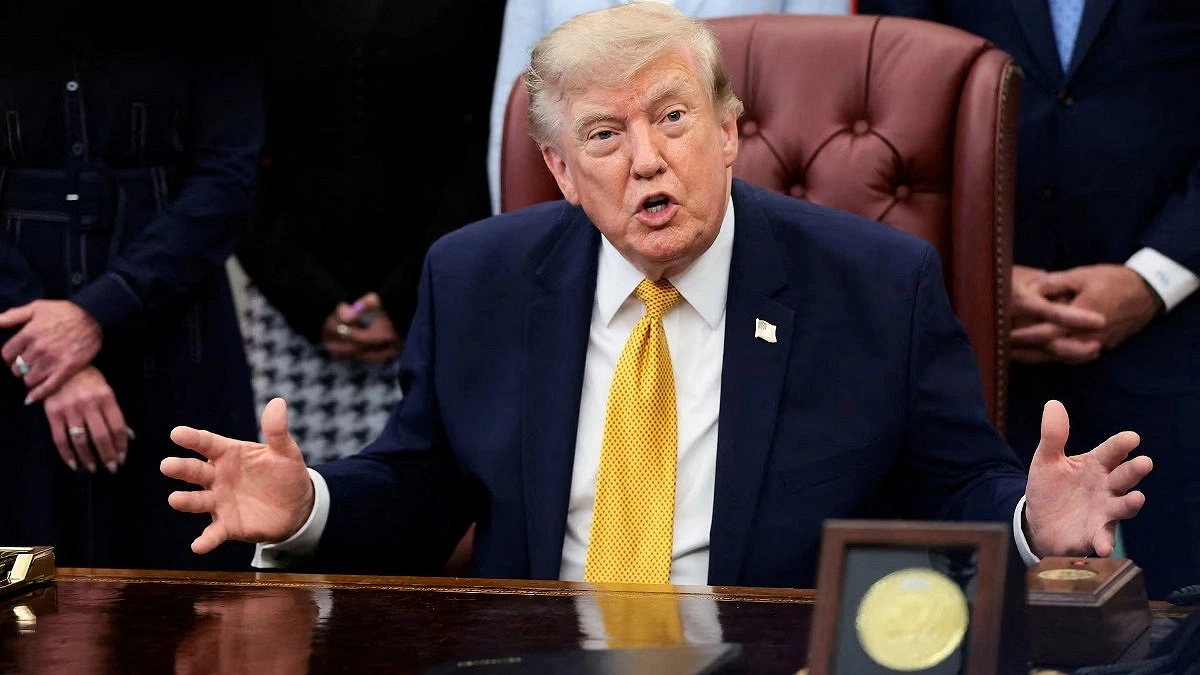
Photo: REUTERS
US President Donald Trump anticipates a swift conclusion to the war on Iran, remarking that he expects it to end “pretty soon.”
During a press briefing on Thursday regarding global and domestic energy prices, he expressed his belief that “they can go much longer.”
While diplomatic efforts to halt the US-Israel war on Iran face a stalemate, the US, Iran, and Oman are nearing a temporary agreement to reopen the Strait of Hormuz. Amidst these tensions, Iranian authorities have ramped up internal security measures across the nation, with a specific focus on Tehran.
Trump also brushed aside reports of ammunition shortages, claiming the US maintains “an unlimited supply” of military hardware. Speaking to the press in Washington, he insisted the country remains “in very good shape” and possesses “literally massive amounts of ammunition.”
Meanwhile, Iranian President Masoud Pezeshkian said the US has exerted “maximum” economic pressure, revealing that Iran suffers a daily loss of around 230 million cubic meters of gas because of US-Israeli strikes.
Yemeni forces confirmed that Houthi attacks involving ballistic missiles and suicide drones killed at least 18 soldiers. Houthi spokesperson Yahya Saree previously detailed these operations against Yemen’s Emergency Forces in Marib and Hadramout, saying the strikes eliminated personnel and wiped out weaponry and vehicles.
At the same time, the US State Department described the recently concluded Rome talks between Lebanon and Israel as “fruitful”.
Following a diplomatic meeting in Amman, Jordan, multiple countries denounced the intensifying Israeli assaults in Gaza. Hamas has called upon these nations to prevent Israel “from sabotaging the agreement” within the region.
Moreover, UNICEF reported that at least 300 children have perished in Gaza during the 300 days following the October 2025 “ceasefire,” which averages to one child death per day.
On the diplomatic front, Indian Prime Minister Narendra Modi held a telephone conversation with Israeli Prime Minister Benjamin Netanyahu to discuss the ongoing situation in West Asia.
These conflicts continue to impact the global economy, as oil prices maintain an upward trajectory, with Brent crude futures rising by 99 cents to reach $83.48 a barrel.
Conflict in the occupied West Bank also escalated as the Jerusalem Governorate told Al Jazeera that a large-scale Israeli raid in the Qalandiya refugee camp left at least 51 Palestinians injured.
Israeli Foreign Minister Gideon Saar lashed out at Turkish Foreign Minister Hakan Fidan after the latter accused Israel of creating instability in Syria.
Source: Al Jazeera (adapted)
