
80 men killed in six African countries over rumors of penis theft

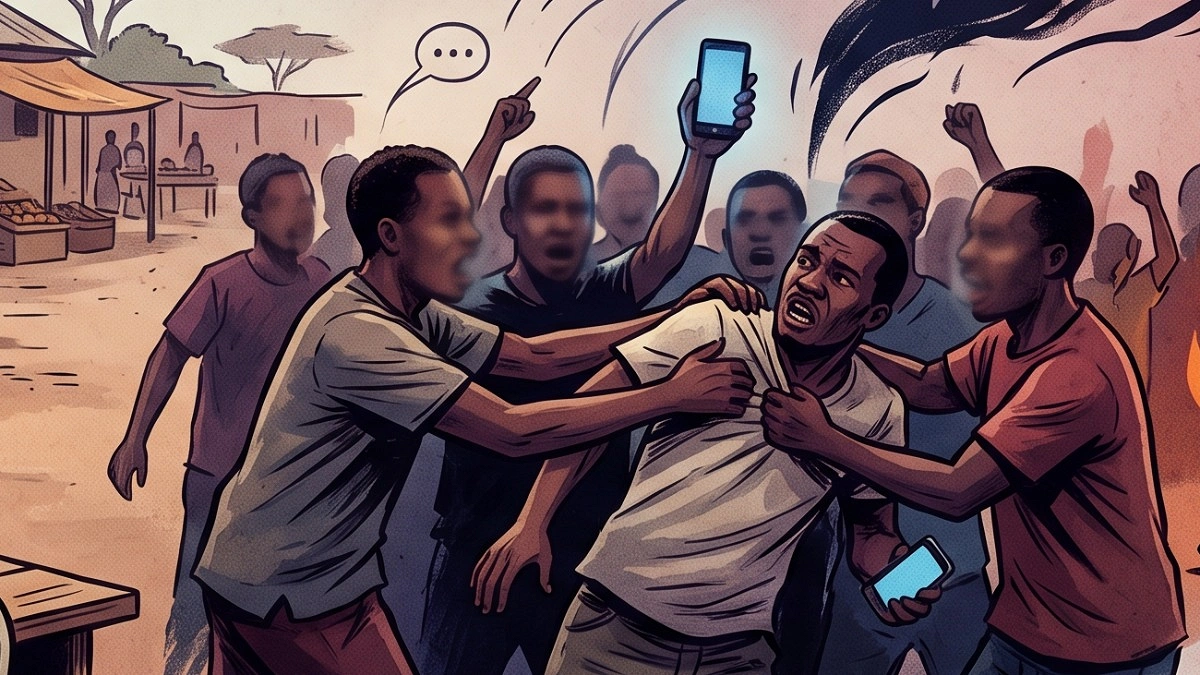
Picture: Generated by AI
More than 80 people have been killed between October last year and July this year over false rumors about genital theft in six African countries. The BBC Global Disinformation Unit reached the figure after analyzing data obtained from the police forces of the countries concerned.
The rumors claimed that a stranger could make a man’s genitals shrink or disappear by simply touching him on the back. False information spread on social media has further fueled the rumors.
According to a BBC report, mobs in several countries have attacked people suspected of being involved in such incidents. Several men have claimed that their penises and testicles shrank or disappeared after coming into contact with strangers. Angry crowds then demanded that the accused return the allegedly “stolen” genitals.
Such incidents are not new in some parts of Africa. Similar rumors have spread for years, particularly in areas where belief in witchcraft and superstition remains strong.
Tanzanian mechanic Bonifas Mgala was the victim of such an attack in April. He and a friend traveled to the border trading town of Tunduma to meet a buyer for a car sale. Before completing the deal, they sat down at a restaurant to eat.
After some time, a group of agitated people dragged them outside. They were then beaten. Mgala suffered an injury to his jaw and lost a tooth in the attack. He eventually lost consciousness. When he regained consciousness in a hospital two days later, he learned that his friend had died.
Mgala still has difficulty walking. He has been unable to return to work. He is staying at home with his wife and four children. Neighbors and friends are helping him with the cost of necessary medicines.
Mgala said, “If I had known beforehand how close I was to death that day, I would not have gone to that restaurant to eat.”
Photographer and businessman Michael Silavwe also witnessed another attack in Tunduma on the same day. He said fear in the area increased after videos about the alleged “stolen genitals” spread on TikTok and other social media platforms.
He said a man was beaten and then burned to death. The BBC Global Disinformation Unit has also verified a video of the incident. More than 100,000 people viewed the video on TikTok and Facebook.
The BBC has also verified videos of similar attacks in Mozambique and Kenya. Posts circulating on social media include videos of mob attacks, statements from alleged eyewitnesses, warnings about future attacks and various claims about incidents in different areas.
Mozambique has recorded the highest number of deaths linked to the rumors. The country’s police said in May that 55 people had been killed in six weeks. The victims included a police officer, a health worker and a government employee.
Mozambican President Daniel Chapo has condemned the rumors and killings. He said the claims were false and that the government had found no medical evidence that anyone had lost any part of their body.
The country’s Cabo Delgado province has faced instability for nearly a decade because of Islamist militancy. Two health centers in the province were also attacked in April. The health centers in the area later had to remain closed for several weeks while awareness campaigns were conducted.
The government said some of the fear among people could be linked to a psychological condition known as “koro syndrome.” People experiencing this condition may believe that their genitals are retracting into their bodies or becoming smaller.
Five people have been killed in recent violence linked to similar rumors in Kenya’s coastal counties of Kwale and Mombasa.
Mombasa County Commissioner Mohammed Noor accused some content creators of spreading the claims in an effort to gain more views and engagement. He said, “This kind of misinformation can easily lead to loss of life.”
Police later brought the situation under control and arrested several people. Among those arrested were a father and his son. They were sentenced to one year in prison.
Neighboring Malawi has also seen similar rumors trigger mob attacks. Eight people have been killed there.
According to writer Julien Bonhomme, smartphones and social media are playing a major role in spreading rumors quickly and reaching large numbers of people. Once a rumor spreads, it also becomes difficult to control.
His book, The Sex Thieves: The Anthropology of a Rumor, examines how rumors about genital theft spread and why people believe them.
According to him, videos circulating on social media can make such claims appear more credible to people. This is because videos make it seem as though the incident is happening directly in front of them.
Meanwhile, some social media content creators have urged people to remain cautious. However, in many cases it is unclear whether they actually believe the claims or are spreading them simply to gain popularity and engagement. Some have also promoted alleged charms and amulets claiming to protect people from “genital theft.” Some comedians have made videos mocking the claims.
A Meta spokesperson said the company is reviewing the content being shared and will take action if evidence of policy violations is found. TikTok did not respond to the BBC’s request for comment.
Mgala has recovered physically to some extent, but he is still troubled by the memory of his friend’s death. He said, “I am still deeply hurt when I remember that my friend’s death happened in such a meaningless way.”
Source: BBC (Adapted)


