
US Defense Secretary: Military action against Iran likely if diplomatic deal fails

Collected Photo
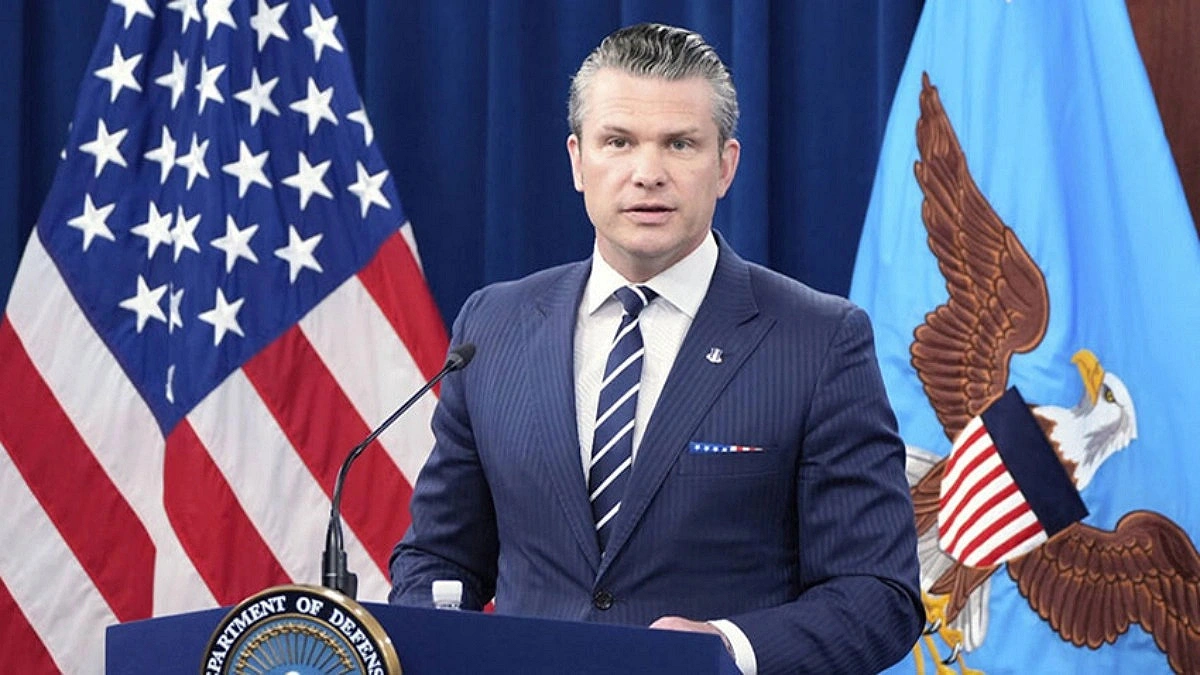
US Defense Secretary Pete Hegseth has said that the United States is prepared to launch military strikes again if diplomatic negotiations with Iran fail. He issued this warning precisely when diplomats from Washington and Tehran are trying to reach an agreement to end the ongoing conflict.
Speaking at the Shangri-La Dialogue, Asia's top security conference held in Singapore on Saturday, Hegseth said, "If necessary, the United States has the capability to strike again. We have full capacity to launch another campaign. Our arsenal is sufficient for this, and our military readiness is prepared not only in that region but across the globe."
Hegseth's remarks come at a time when the US and Iran are continuing talks aimed at extending the ceasefire and finding a long-term solution. At the same time, negotiators from Washington and Tehran are trying to bridge significant differences that stand in the way of a potential deal.
The US Defense Secretary said, "Despite military and diplomatic engagement regarding Iran, the United States has not diverted its attention from the Asia-Pacific region."
He stated, "We can do multiple things at once. Our defense industrial base is being further strengthened. Very soon, ammunition production will be increased two, three, or even four times so that our military plans in various regions of the world can be implemented smoothly."
According to Hegseth, President Donald Trump still prefers a diplomatic solution and wants a deal that ensures Iran will never be able to acquire nuclear weapons.
Earlier on Friday, Trump said he would make a final decision on a proposed plan to end the war with Iran in the White House Situation Room.
According to the proposal, the ceasefire that came into effect in early April of this year could be extended by another 60 days. This would give both sides additional time to reach a permanent agreement.
The war launched by the United States and Israel on February 28 has resulted in thousands of deaths, primarily in Iran and Lebanon. At the same time, due to Iran's effective control and restrictions in the Strait of Hormuz, significant pressure has been placed on the global energy market. This has increased oil prices in international markets, creating new uncertainties in the world economy.
