
Heatwave is India’s invisible genocide

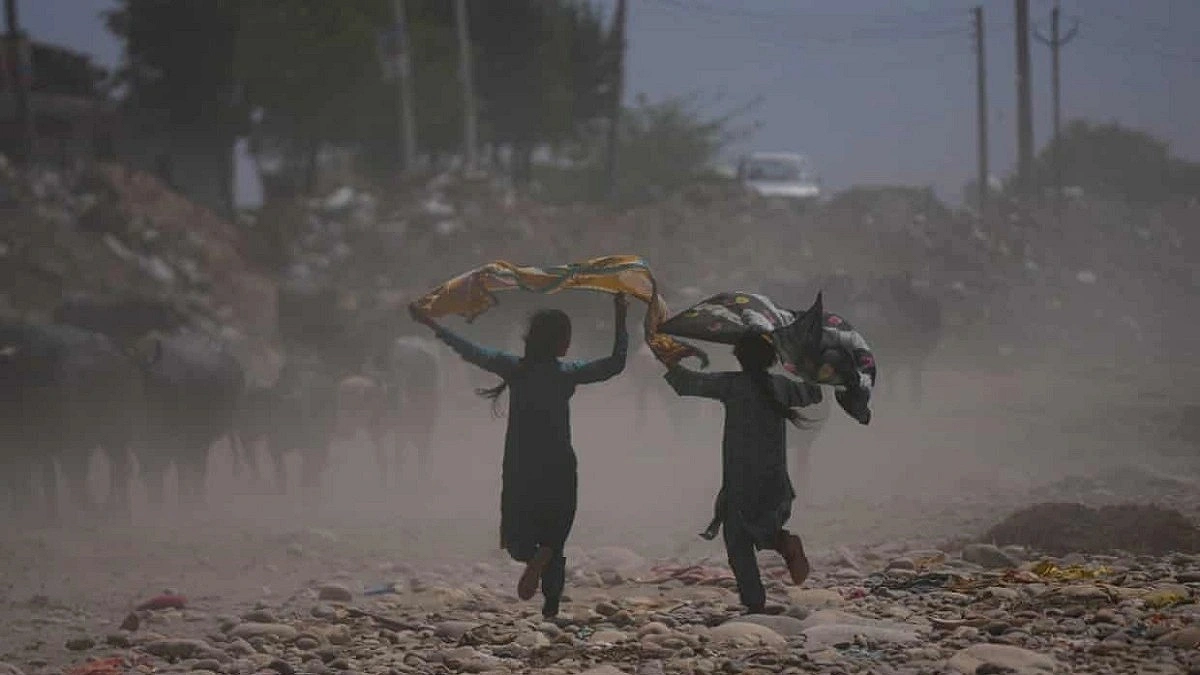
Collected Photo
Only 35 years old, Palli Mahalakshmi had been working from dawn on the roof of a multistory building under construction in Chennai. Above her head was a blazing sun like a ball of fire, while concrete heat surrounded her from all sides. Within a few hours, her body gave way. Her coworkers immediately took her to a hospital, but she could not be saved. Mahalakshmi’s husband, Krishna Rao, still cannot believe that everything ended so quickly. His wife was the main and only support of the family. His life, along with their two children, is now uncertain. According to doctors, her death resulted from working for a prolonged period in excessive heat. However, the cause of death was recorded differently in official documents. As a result, Mahalakshmi’s name will never appear on the official list of heatwave deaths in the country.
This is the harsh reality of India, where the actual number of deaths caused by extreme heat remains unknown.
Experts say it is difficult to prove that someone died from heatstroke. In most cases, heart disease, kidney failure, breathing difficulties and other physical complications are cited as the cause. As a result, the actual cause remains concealed.
India’s weather patterns have been changing rapidly over the past several years. Temperatures are breaking records every year. In many states, the mercury has reached 48 to 50 degrees Celsius. The expansion of concrete in cities, the decline of forests and trees, and inadequate housing conditions in slum areas are making the situation even more dangerous. Construction workers, agricultural laborers, street vendors, delivery workers and cleaners are among those facing the greatest risks. Stopping work means losing income, so even knowing the risk to their lives, they have to go out into the sun.
Therefore, Mahalakshmi’s death is not an isolated incident. Rather, it is an example of a reality in which the true picture of heatwave deaths remains hidden behind government records. According to experts, the gap between official figures and the actual situation is so large that it is also having serious implications for policymaking.
Researchers claim that official statistics are much lower than the actual picture. This is because most states do not have a single, mandatory method for identifying heatwave related deaths. In some places, authorities rely on doctors’ reports, while in others, the relationship between the heat and the death is not investigated at all. As a result, thousands of deaths remain unrecorded in government records.
Public health experts have also expressed concern over the situation. They say heatstroke is not the only problem. Excessive heat places stress on almost all the organs in the human body. As a result, the risk increases many times for people who are already ill, elderly or malnourished.
A recently published study by the University of California and Berkeley has also reinforced these concerns. Ashok Gadgil, one of the members of the research team, said that he and his colleagues had sought data from the Indian government for more than a year to determine the actual picture of the deaths, but they did not receive complete information.
According to government figures, 460 people died from heatwaves in 2024 and 84 deaths were recorded in 2025. However, researchers claim that the actual number is much higher. A recently published report on Delhi also warned that the “feels like” temperature in the capital exceeded 52 degrees Celsius in 2025. This year, the Ministry of Finance also recognized heatwaves as a national disaster for the first time.
Heat Action Plans have been introduced in various states across India, but experts say their effectiveness remains limited in practice. In some places, early warnings do not reach people, while in others, there is not even enough safe drinking water or rest centers. Despite instructions to suspend work during the intense midday heat at construction sites and in agricultural fields, most workers cannot follow them in reality. This is because there are no wages if they do not work.
Poverty lies at the center of this crisis. Those who do not have air conditioning in their homes, adequate electricity, safe housing or even the freedom to choose their working hours are suffering the most. The impact of climate change is therefore not equal for everyone. The greatest price is being paid by marginalized working people in society.
Experts say simply publishing temperature records is not enough. What is needed is accurate collection of death data, training for doctors on the issue, mandatory workplace safety regulations, adequate shade and safe drinking water at workplaces, and effective social protection for poor working people. Otherwise, as temperatures rise every year, deaths will also increase. Yet a large part of those deaths will remain invisible in government records.
Mahalakshmi’s work equipment still lies at her home. Her children still ask, “Did mother really die just because of the heat?”
Her family may know the answer to that question. But in official statistics, she is simply another ordinary death like so many others.
In this era of climate change, India’s biggest challenge is not only controlling temperatures. The real challenge is saving the people who keep the country’s economy running every day while standing under the sun.
