
EU membership to come with 10-year probation period

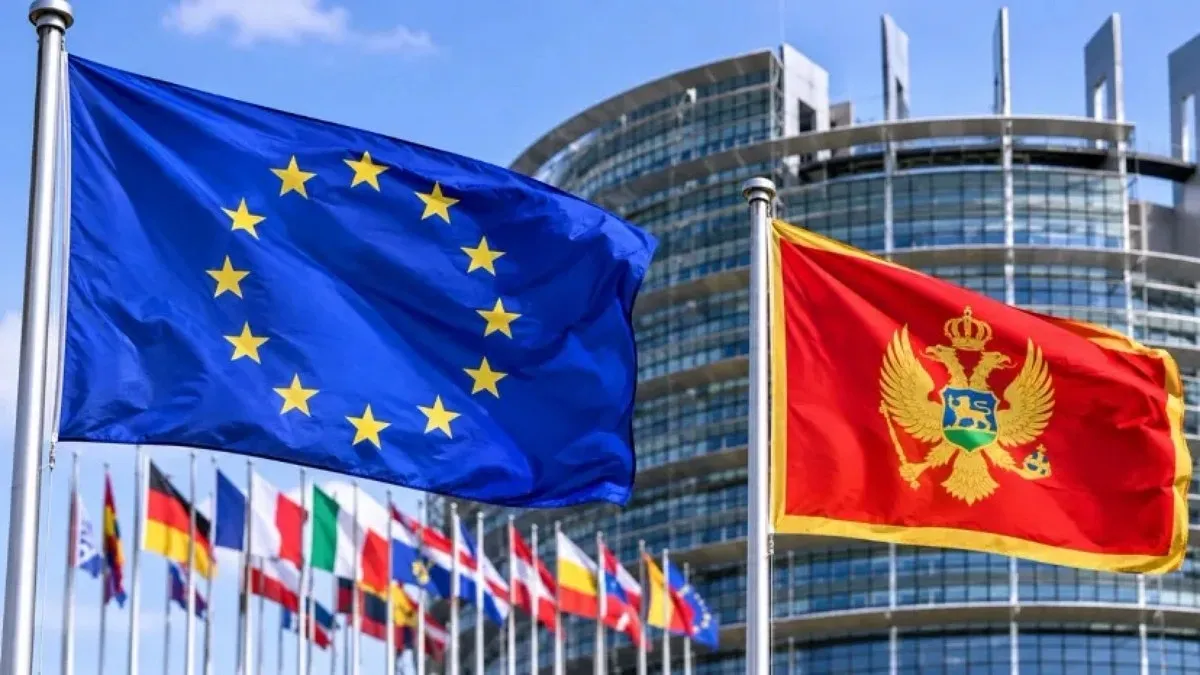
File Photo
The European Union (EU) is moving towards a new policy change in its enlargement process. Countries joining the bloc in the future may have to undergo a 10-year probation period after becoming members.
During this period, member states could suspend the voting rights of a new member if it violates democracy, the rule of law or the bloc’s fundamental principles. Montenegro, which is awaiting EU membership, is set to become the first test case for the new arrangement.
At a meeting of EU ambassadors in Brussels on November 19, a proposal to reduce the probation period from 15 years to 10 years received widespread support. The proposal, led by Ireland, also allows the period to be extended by another five years if necessary.
The European Commission’s earlier proposal called for a 15-year probation period for new members. However, several member states, including Italy, which support the EU accession of Western Balkan countries, opposed such a lengthy period. Their argument was that a 15-year timeframe could hardly be considered a temporary arrangement, European media outlet Euronews reported.
The new initiative stems from the EU’s own political experience. In particular, longstanding disagreements between the bloc and the government of Hungarian Prime Minister Viktor Orbán have forced policymakers to reconsider their approach.
Hungary has faced allegations of undermining democratic values and the rule of law. It has also obstructed the bloc’s decision-making process by exercising its veto power on several important issues, including Ukraine. Brussels now wants to establish stronger safeguards to prevent any new member from creating a similar situation in the future.
The European Commission first formally proposed such safeguards in October. Its plan includes provisions to restrict funding and voting rights in cases of serious violations of the bloc’s rules. Several countries, including Germany, France, the Netherlands, Belgium and Luxembourg, have also supported stronger measures to ensure that new members uphold their democratic commitments.
However, although support for a probation period is growing, disagreements remain over which violations should lead to the suspension of voting rights. Montenegro and several other countries believe that such decisions must be based on specific and objective criteria.
Questions remain particularly over how violations of the principle of mutual cooperation and good faith among EU members will be determined. Some member states fear that vague criteria could create opportunities to exert political pressure on new members.
Another concern for Montenegro is the possibility that the new arrangement could create a two-tier membership system within the EU. According to officials in the country, if new members remain at risk of losing their voting rights for an extended period even after accession, they will not enjoy equal status with existing members.
On November 3, Montenegro’s Minister for European Affairs, Maida Gorcevic, also made it clear that her country would not accept second-class membership under any circumstances. However, Montenegro is not opposed to effective safeguards to protect EU values.
Ireland has also proposed a compromise on how the safeguards would be implemented. Under its proposal, decisions on the matter would be taken through qualified majority voting instead of unanimity. This means support would be required from a majority of EU member states representing at least 65 percent of the bloc’s total population. This would reduce the possibility of a measure being blocked by the objection of a single country.
Meanwhile, Montenegro remains the frontrunner among countries seeking EU membership. The country applied to join the bloc in 2008 and formally began accession negotiations in 2012. At the EU-Montenegro Accession Conference held in Brussels on November 19, two additional negotiating chapters on taxation and regional development were provisionally closed.
In total, work on 25 of the country’s 33 negotiating chapters has been completed. Montenegro aims to conclude negotiations on the remaining chapters by December 2026. It also has the prospect of becoming the EU’s 28th member by 2028.
The European Commission has set a target of signing an accession treaty with Montenegro by June 2027. Discussions are underway to include the legal basis for the new safeguards in Chapter 35 of the treaty. However, it has not yet been finalised whether the arrangement will apply only to Montenegro or become mandatory for all countries seeking EU membership in the future, including Albania, Moldova and Ukraine.
According to analysts, the EU initiative is an effort to protect the bloc’s democratic foundations and decision-making capacity. However, it could also create new challenges for the enlargement process. There are concerns that candidate countries may lose interest if they are required to remain under similar political and institutional conditions for an extended period even after meeting strict reform requirements before accession.
The EU must therefore strike a balance that protects the bloc’s fundamental values while ensuring that new members enjoy equal status.
