
Trump-Xi Lavish State Dinner: What was on the Menu

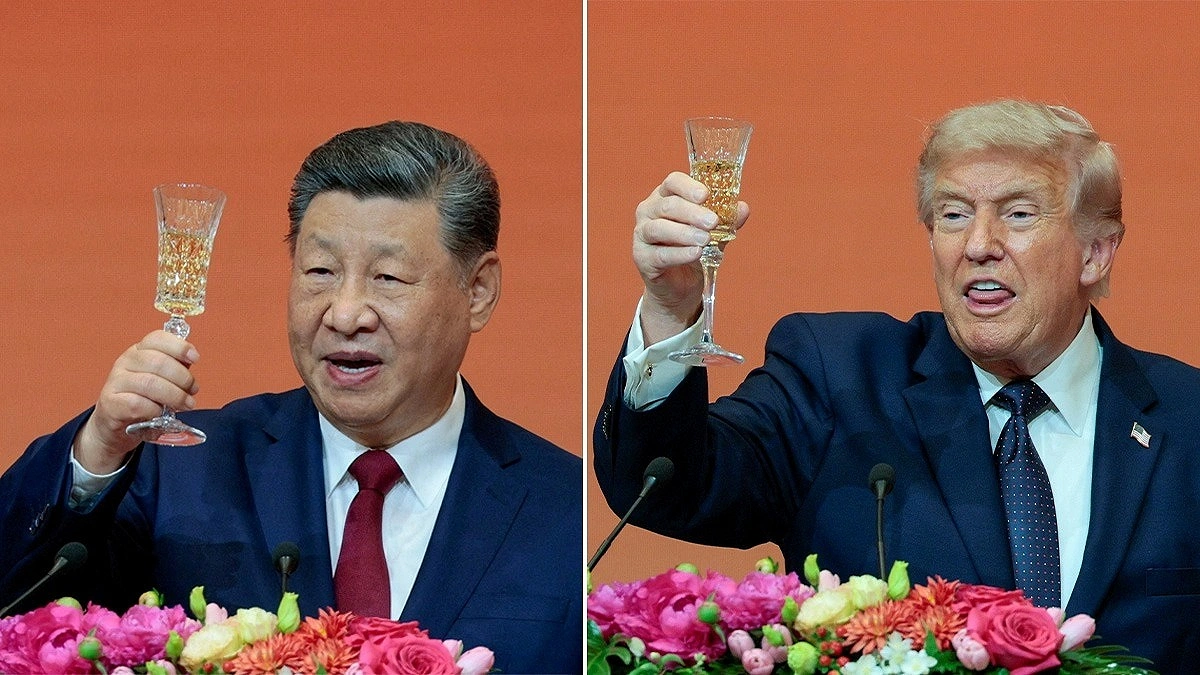
Photo: Reuters
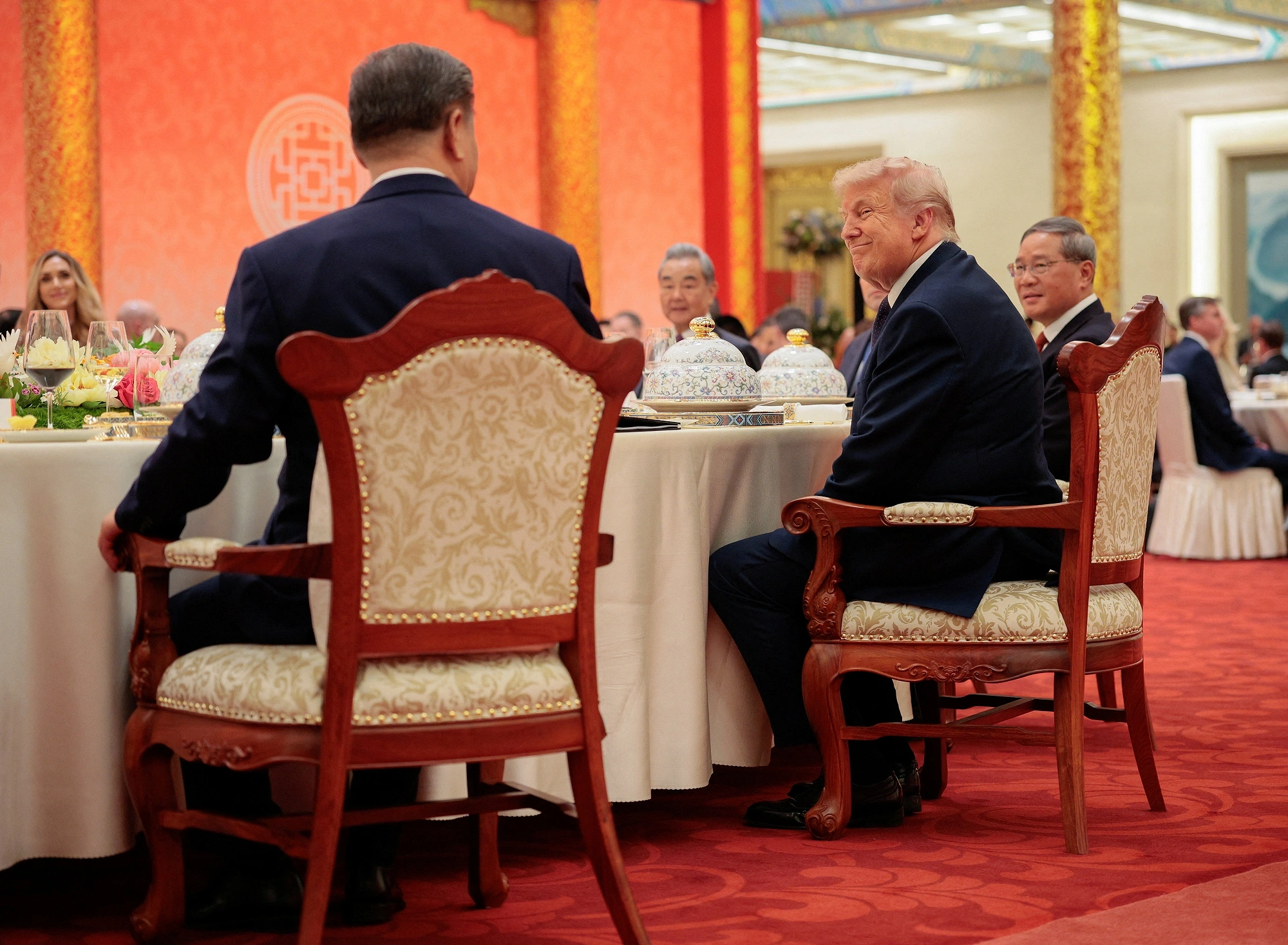
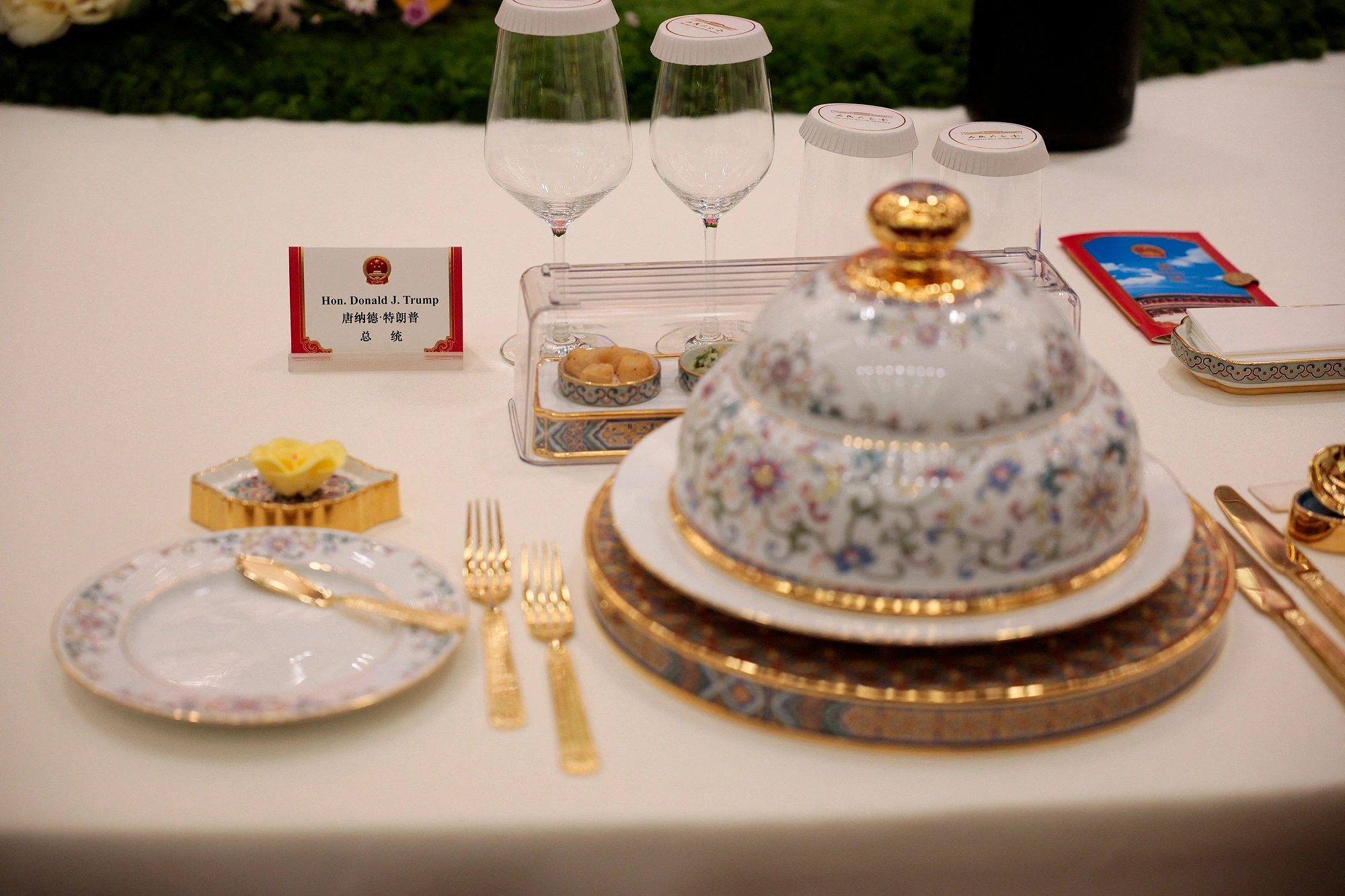
The menu at a lavish state dinner in Beijing on Thursday for President Donald Trump and Chinese President Xi Jinping reflected a subtle layer of diplomacy.
Chinese state banquets typically feature Huaiyang cuisine, a culinary tradition from the Shanghai region known for its light flavors, precise knife work and seasonal ingredients.
Following a meeting aimed at improving bilateral ties, organizers designed the menu to signal diplomatic flexibility. It included Beijing roast duck, a signature Chinese dish, and beef ribs, seen as a nod to Trump’s preference for well-cooked steak.
American guests were also served dessert, including tiramisu, fruit, ice cream and shell-shaped pastries.
China has long used food symbolically at major state events and in hosting foreign leaders. Historical famines and periods of political instability once led to widespread food rationing, making food a strong cultural symbol of status and prestige.
Food as Diplomatic Symbol
In recent years, state visits to China have produced notable food-related moments. In 2023, former US Treasury Secretary Janet Yellen joked about eating ‘magic mushrooms’ at a restaurant in Beijing’s Yunnan province. In 2011, then–U.S. Vice President Joe Biden ate fried liver at a modest Beijing eatery.
China has also named dishes after visiting foreign leaders. A chicken dish was created during Henry Kissinger’s secret 1971 visit. State banquet menus have later been widely replicated in local restaurants.
Chef Shi Qiang, head chef at Gui Hua Lou, a high-end Huaiyang restaurant in Shanghai, said the cuisine is broadly appealing.
“One of the greatest strengths of Huaiyang cuisine is its wide acceptance. Its flavors are easy for most people, including foreign guests, to appreciate,” he said.
Huaiyang cuisine is one of China’s eight major regional culinary traditions and has featured in several major diplomatic events.
It was served at the founding banquet of the People’s Republic of China in 1949, at the country’s 50th anniversary celebrations in 1999, and at a 2002 banquet hosted by then-President Jiang Zemin in honor of US President George W. Bush.
Signature dishes include lion’s head meatballs, Yangzhou fried rice, sweet-and-sour squirrel fish, and Wensi tofu made from finely shredded tofu.
The cuisine relies on ingredients from the Yangtze River basin, including freshwater fish, eel and bamboo shoots, and uses minimal spices to preserve natural flavors.
Food writer Christopher St. Cavish, based in Shanghai, said Huaiyang cuisine is ideal for banquets.
“It is not as heavy as northern Shandong cuisine, not as spicy as Sichuan food, and not as reliant on unusual ingredients as Cantonese cooking,” he said.
“In simple terms, it is ‘safe’ food-like serving chicken at a state banquet in Washington. No one is offended, nothing is too spicy, and nothing feels too unfamiliar,” he added.
Source: Reuters (adaptive)
