
Decision on Sheikh Hasina’s extradition will be made ‘by Indian court’

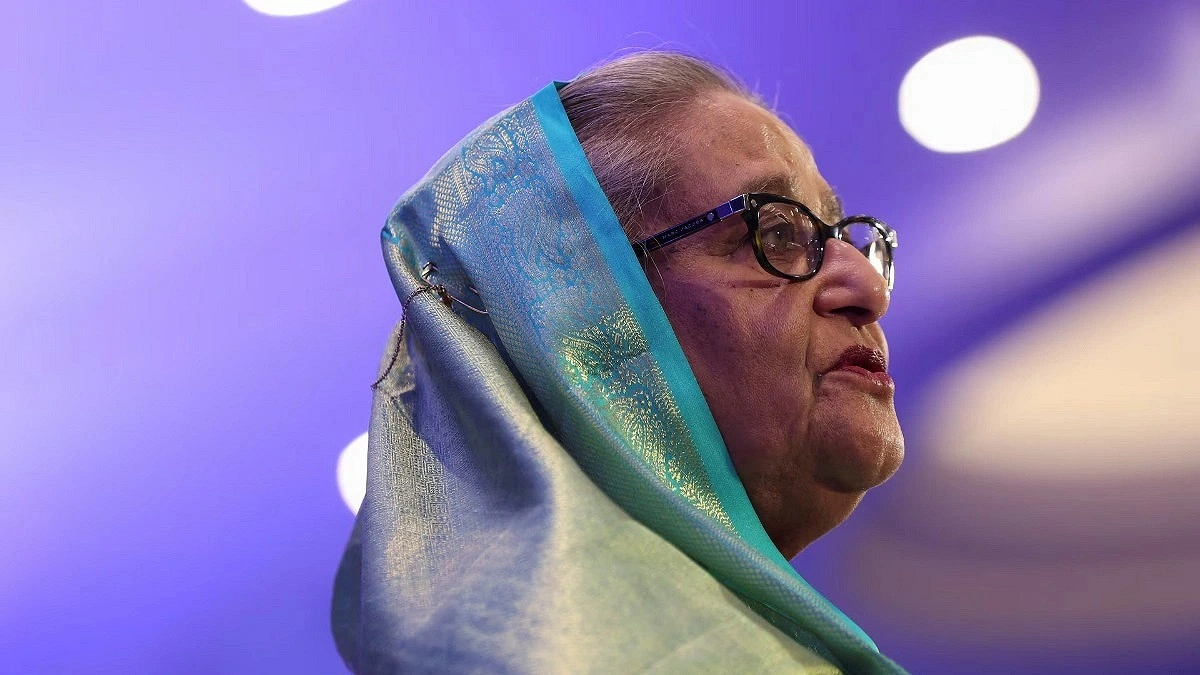
Ousted Bangladeshi Prime Minister Sheikh Hasina. Photo: Reuters
The government of Tarique Rahman has once again requested the extradition of ousted Bangladeshi Prime Minister Sheikh Hasina. However, senior Indian government officials said such an extradition request must be presented before the country’s judiciary and that the final decision will be made by the court. They also said discussions on the matter are ongoing between Dhaka and New Delhi.
A senior Indian official, speaking on condition of anonymity, said the decision on Sheikh Hasina’s extradition would ultimately be made by the court. It would not be a political or diplomatic decision. The judicial process would first have to determine whether the crimes Sheikh Hasina has been accused of in Bangladesh are also considered crimes under Indian law.
Another official said Sheikh Hasina herself has said she plans to return to Bangladesh by December this year. Asked about the timing of her return during a news conference on August 5, she referred to the 1971 Liberation War and said, “December is our month of victory. So, I want to return in December.”
Sheikh Hasina has been sentenced to death in Bangladesh, while her party, the Awami League, remains banned.
Indian officials said the request to extradite Sheikh Hasina cannot be viewed separately from the current diplomatic communications between Delhi and Dhaka. A spokesperson for India’s Ministry of External Affairs had earlier said the matter was being reviewed according to established procedures and that any new information would be shared.
Officials of India’s Ministry of External Affairs said Bangladesh’s extradition request included all necessary legal documents required under the extradition treaty signed between the two countries in 2013.
Sheikh Hasina has been living under protection and security at an undisclosed location in Delhi for nearly two years following the mass uprising in Dhaka in August 2024. At a virtual news conference in Delhi on August 5, she said she remained “determined” to return to Bangladesh.
Current and former lawmakers of the ousted Awami League have claimed that Sheikh Hasina has continued to regularly communicate with party leaders and activists in Bangladesh while staying in India. They said she also holds direct meetings with them from time to time.
They said 78-year-old Sheikh Hasina plans to return to Dhaka toward the end of the year.
Meanwhile, diplomatic discussions between the two countries are ongoing over Sheikh Hasina’s extradition. In November 2025, Bangladesh’s International Crimes Tribunal convicted Sheikh Hasina of crimes against humanity and sentenced her to death. Dhaka has been demanding her extradition based on that verdict.
However, Awami League leaders said that if the extradition process begins in an Indian court, the verdict would be challenged on various legal grounds. One of their main arguments would be that the verdict was issued during Bangladesh’s interim government, which was led by Muhammad Yunus at the time.
India and Bangladesh signed an extradition treaty in 2013. The treaty states that there is an “obligation” to return individuals who have been convicted, accused or judicially sentenced and whose presence is required for the execution of a sentence.
The treaty also states that when an offense is extraditable, the matter is to be resolved through the judicial authorities of the respective country.
Article 6 of the treaty states that offenses of a “political character” are not covered by extradition. However, the article also specifies that 12 types of offenses, including murder, culpable homicide, assault, use of firearms and incitement to murder, will not be considered political offenses.
India’s Extradition Act of 1962 is also important in this regard. Under the law, the Consular, Passport and Visa Division, or CPV Division, of the Ministry of External Affairs serves as the nodal office for extradition matters. Considering the relevant extradition treaty or arrangement, the government may appoint a magistrate to conduct an inquiry if it considers it necessary.
Under the law, if the investigating magistrate believes there are sufficient grounds to return the person concerned to the requesting country, the magistrate may recommend extradition. On the other hand, if the inquiry finds insufficient evidence to support the foreign state’s extradition request at the preliminary stage, the magistrate may release the person.
Therefore, the final decision on whether Sheikh Hasina will be sent back to Bangladesh now depends on the legal process before the Indian court.
Source: The Indian Express (Adapted)
