
Navi Pillay
Mandela’s ally and a voice for justice for Palestinians and Rohingya

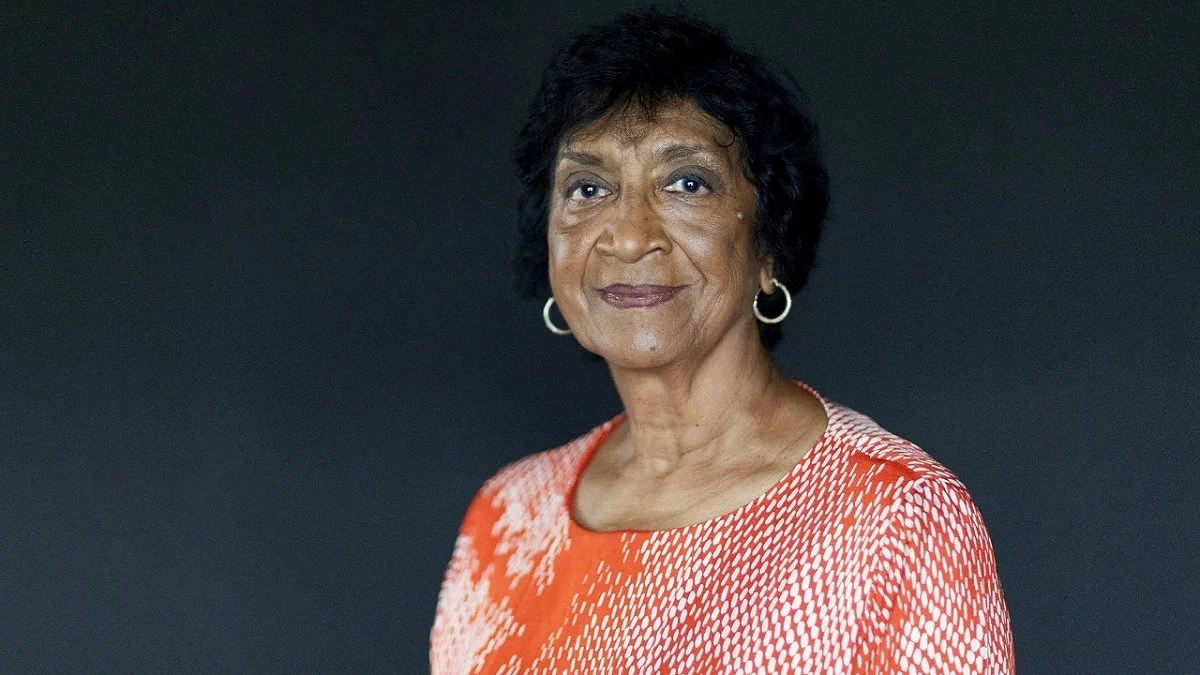
Navi Pillay
She once stood alongside those who fought against apartheid in South Africa, a struggle associated with the name of Nelson Mandela. She later helped adjudicate the Rwandan genocide and served as the United Nations human rights chief. She came to the center of global political debate after a UN commission of inquiry released a report accusing Israel of committing genocide in Gaza. The international judge, Navi Pillay, is also involved in the genocide case against Myanmar over its treatment of the Rohingya.
In a world were speaking out against powerful states, demanding accountability for war crimes and investigating allegations of genocide are becoming increasingly difficult, Pillay continues to work for international law and justice. In recognition of her work, the 85-year-old South African jurist was named the recipient of the Nobel Peace Prize on Friday.
Pillay grew up in a poor family during South Africa’s apartheid era. She studied at the University of Natal, earning her undergraduate degree in 1963 and a law degree in 1965.
In 1967, she established her own law firm, becoming the first woman to practice law in Natal Province. In 1995, she was appointed the first nonwhite woman judge of South Africa’s High Court.
She later earned a Master of Laws degree and a Doctor of Juridical Science degree from Harvard Law School.
An Ally in Mandela’s Struggle
Pillay began her legal career during South Africa’s apartheid regime. During this period, she worked on cases involving anti-apartheid activists and political prisoners. One of the most significant events of that era was the Rivonia Trial of 1963 and 1964. Nelson Mandela and seven other activists were sentenced to life imprisonment on sabotage charges. The trial drew international condemnation, including from the UN Security Council.
Pillay’s legal work later became connected to Mandela’s imprisonment on Robben Island. In 1973, she challenged a decision by prison authorities and successfully secured rights and improved conditions for political prisoners held there.
She was also part of the defense team in a case brought under the Terrorism Act in 1971 and 1972. The case sought to bring allegations of illegal and abusive interrogation methods to light.
Pillay’s legal work during apartheid helped improve the living conditions of political prisoners and protect their rights.
Historic Role in the Rwandan Genocide Trials
The trials of those responsible for the Rwandan genocide represent one of the most significant chapters in Pillay’s international legal career. Following the 1994 genocide against the Tutsi population in Rwanda, the United Nations established the International Criminal Tribunal for Rwanda to prosecute those responsible.
Pillay was appointed a judge of the tribunal in 1995. She served as its president from 1999 to 2003. One of the most notable cases in her judicial career was the trial of Jean Paul Akayesu.
Akayesu, the former mayor of Taba, was charged with genocide and crimes against humanity. On September 2, 1998, the tribunal found him guilty of genocide, direct and public incitement to commit genocide, rape and several other crimes. The ruling marked the first time an international tribunal recognized that rape and sexual violence could constitute acts of genocide under specific circumstances.
The ruling established a historic precedent in international criminal law by recognizing sexual violence not merely as a consequence of war but also as a crime committed with the intent to destroy a population, in whole or in part. Pillay’s work at the Rwanda tribunal subsequently contributed significantly to the development of international criminal and human rights law.
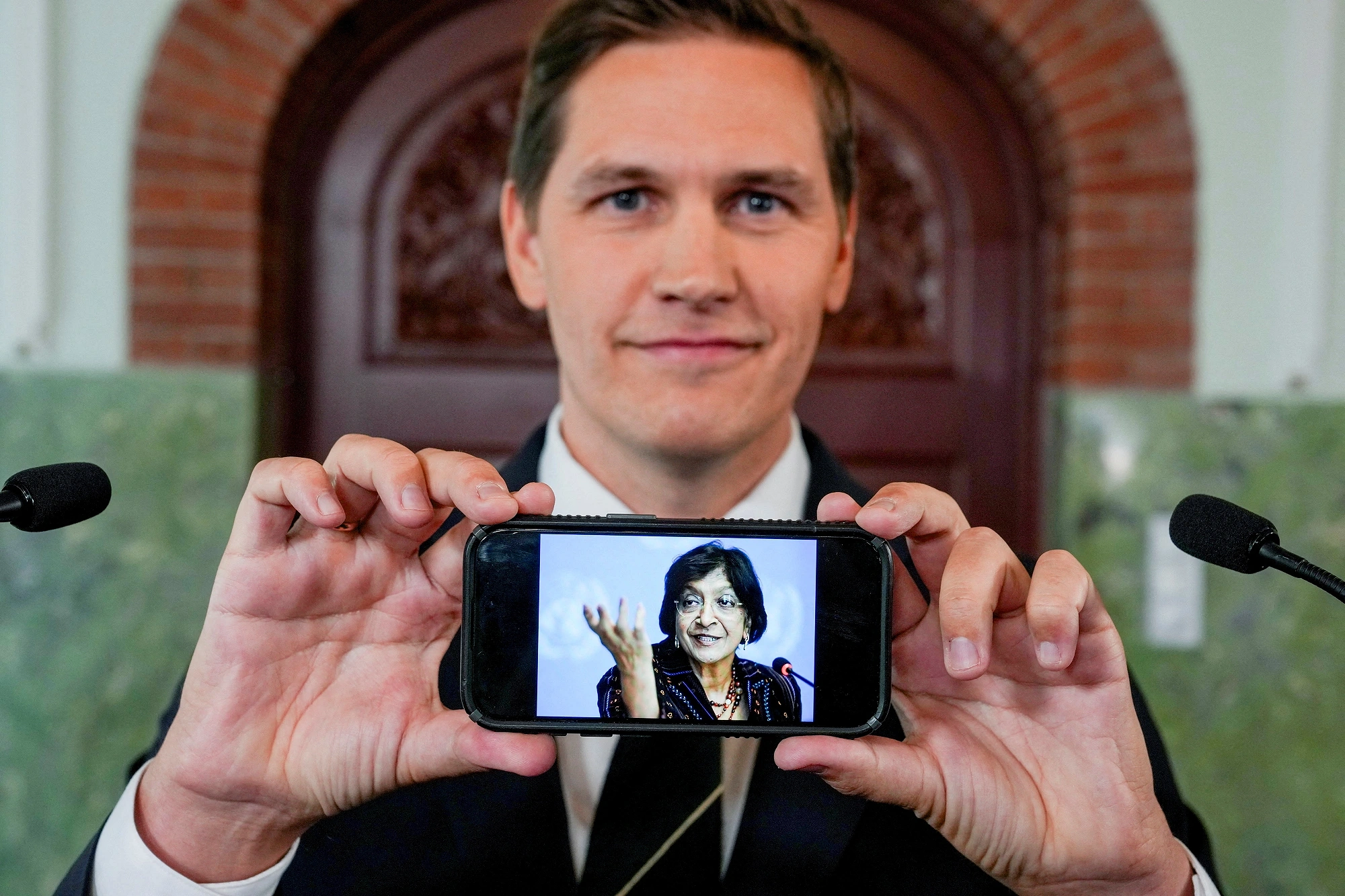
Yorgen Watne Frydnes, head of the Norwegian Nobel Committee, displays a photograph of Navi Pillay. Photo: Reuters
Genocide Allegations in Gaza
Pillay’s role in addressing Israel’s military campaign in Gaza and its impact on Palestinians has been one of the most widely discussed aspects of her international human rights work. Following the Hamas led attack on October 7, 2023, Israel launched a military campaign in Gaza that killed large numbers of Palestinians, displaced hundreds of thousands of people and destroyed extensive residential areas and civilian infrastructure.
Against this backdrop, the UN Independent International Commission of Inquiry investigated allegations of violations of international law. Pillay led the commission. On September 16, 2025, the commission announced that it had concluded that Israel had committed genocide against Palestinians in Gaza.
The commission found evidence of four of the five categories of acts listed in the Genocide Convention and said they were committed with the intent to destroy the Palestinian population, in whole or in part. The commission also assessed statements by several senior Israeli officials as being related to incitement to genocide.
In an address to the Third Committee of the UN General Assembly on October 28, 2025, Pillay also raised concerns about genocide in Gaza, forced displacement and Palestinians’ rights relating to land and housing.
From Rohingya Suffering to the Courtroom
Pillay has long spoken out against persecution and discrimination against the Rohingya in Myanmar. During her tenure as UN High Commissioner for Human Rights from 2008 to 2014, she raised concerns about violence against the Rohingya, systematic discrimination and their citizenship crisis. In particular, following the violence in Rakhine State in 2012, she called for measures to protect the Rohingya and investigations into allegations of human rights violations.
Pillay later became involved in the Rohingya crisis as it moved into international legal proceedings. In 2019, Gambia filed a genocide case against Myanmar at the International Court of Justice (ICJ). Pillay serves as an ad hoc judge nominated by Gambia in the case.
During hearings in January 2026, she asked Myanmar’s representatives to provide examples of measures taken by the country’s military to protect the Rohingya. The central question in the case is whether Myanmar’s actions against the Rohingya violated the 1948 Genocide Convention.
Indian Roots
Navi Pillay was born on September 23, 1941, in Clairwood, Durban, to a family of Indian Tamil descent. Her ancestors traveled from India to South Africa as indentured laborers. In the 19th century, the British brought large numbers of workers from India to the Natal region to meet labor demand in the sugar industry. Many of their descendants later settled permanently in South Africa.
Pillay grew up in a society where people of Indian descent also faced racial discrimination. Her father, Narainsamy Naidoo, was a bus driver, while her mother, Santhama, managed the household. The family had eight children and faced financial hardship. Despite their limited means, her mother refused to compromise on her daughters’ education.
Growing up in Clairwood, Durban, an area designated for people of Indian descent, Pillay witnessed discrimination from an early age. Those experiences later helped shape her career as a lawyer and human rights advocate.
Sources: Reuters, NDTV, South African History, UNICTR and ICJ
