
24-hour strike disrupts daily life
Italy gripped by worker and student protests
- Rallies held in more than 100 cities demanding higher wages and increased investment in public services, affecting education, healthcare and transport
- Protests also draw widespread media attention

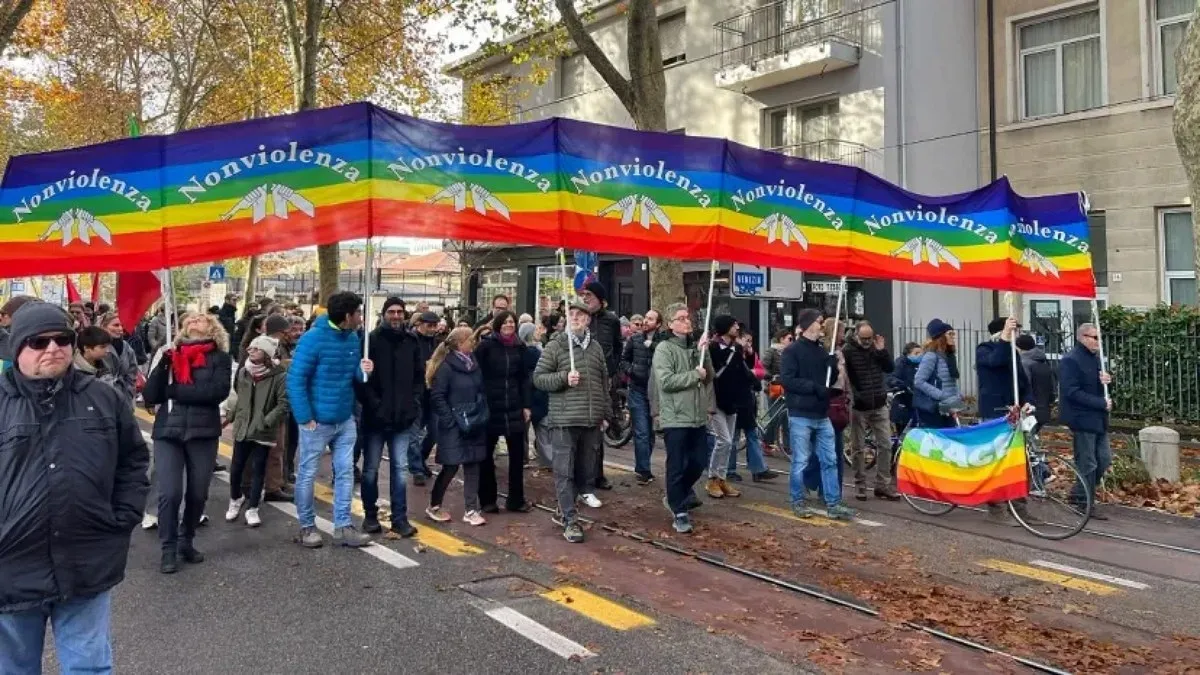
Photo: Agamir Somoy
A wave of protests and a nationwide general strike have swept across Italy, with demonstrators demanding higher wages, control over the cost of living, pension protection and increased government investment in education and healthcare.
Thousands of workers, students and people from various professions took part in the 24-hour strike called by the country’s largest labor union, the General Confederation of Italian Labour (CGIL), on Friday.
Marches, rallies and sit-in programs were held in more than 100 cities, including the capital Rome, to protest the economic and budgetary policies of Prime Minister Giorgia Meloni’s government.
According to a report published by Reuters, thousands of workers and students took to the streets in several Italian cities demanding higher wages and increased government spending on public services. Employees from both the public and private sectors joined the strike, including workers from educational institutions and the healthcare sector.
The labor union’s key demands include higher wages, the renewal of collective labor agreements, pension adjustments in line with inflation, opposition to plans to raise the retirement age and increased government investment in healthcare, education and other public services.
The union has alleged that the government’s proposed 2027 budget does not include sufficient measures to address the cost-of-living crisis facing ordinary people. Despite rising inflation and the increasing prices of essential goods, workers’ real incomes are not rising at the same rate. Concerns have also been raised over youth employment, the housing crisis and social security.
Students also joined the movement alongside workers, demanding lower education costs, better housing facilities and guarantees of future employment opportunities for young people. Another major demand was increased investment in healthcare, education and social security instead of higher military spending.
Strike disrupts daily life and public services
The 24-hour strike disrupted education, healthcare, local public transportation, taxi services, ports and other public services in several Italian cities.
Bus, tram and metro services faced restrictions in different cities. However, some transportation services remained operational in accordance with scheduled emergency services and guaranteed service hours.
Although air and rail transport were excluded from the CGIL strike, a separate railway strike has been scheduled from Friday night through Saturday.
The nationwide protests and strike have also received extensive coverage in Italy’s national media. Reuters, ANSA, La Repubblica and other news outlets have published detailed reports and live updates on the strike, protest situation, transportation disruptions and the government’s economic policies.
As a result, the workers’ and students’ movement has gone beyond street demonstrations and become one of the major topics of national media discussion. Disruptions to normal daily activities in different cities and the difficulties faced by ordinary citizens have also received significant attention in media reports.
The movement has renewed discussions in Italy about economic policies, the cost of living, government spending allocations and social security. In particular, allocations for public services and measures to increase people’s purchasing power in the 2027 budget are gaining importance in political and economic discussions.
According to analysts, the strike in Italy is not merely about workers’ demands for higher wages and better pensions. Rather, it reflects broader public concerns over the cost of living, social inequality, the future of the younger generation and the quality of public services.
Differences between the government and labor unions over the 2027 budget could become a significant issue in Italy’s political and economic discussions in the coming days.
