
China’s ‘smart strategy’ for driving cars on alternative energy
- China surpasses the United States to become the world’s top automobile producer
- Nearly 360 million vehicles are now on China’s roads
- 42 percent of electricity generated comes from ‘green energy’

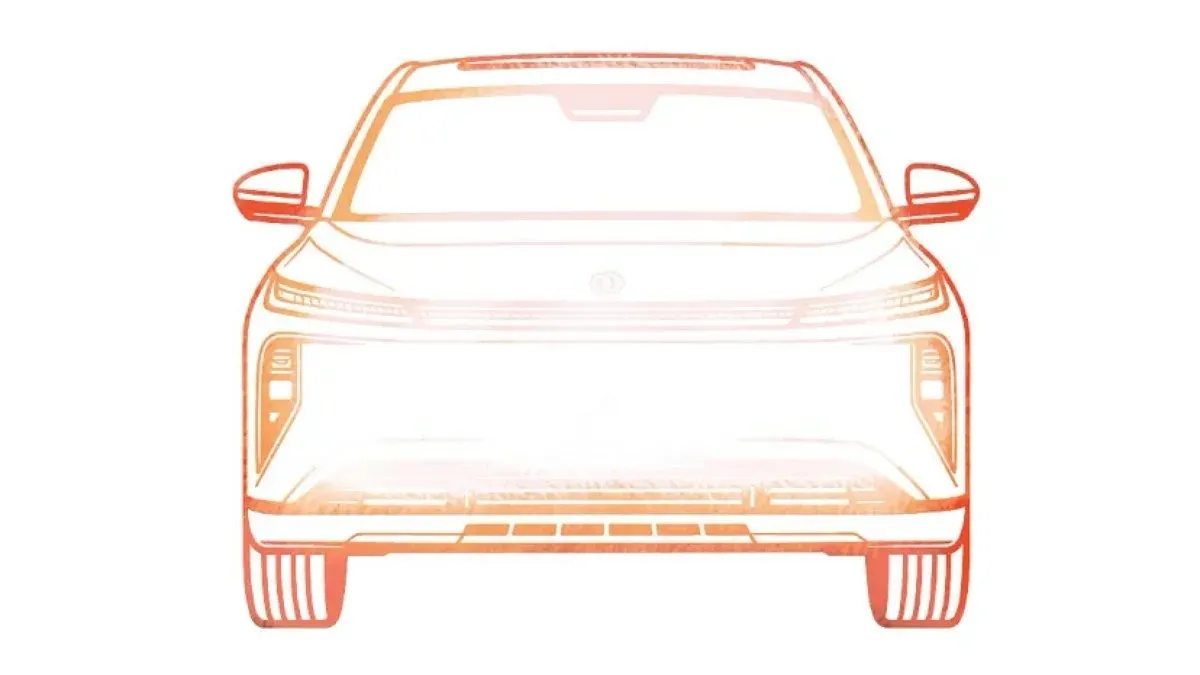
Graphics: Agamir Somoy
Thirteen years ago, I first landed at Tokyo Airport in Japan’s capital. After collecting my luggage and stepping outside, I began looking for colorful, modern cars on the beautiful and well-organized roads. But to my surprise, I could hardly spot such vehicles on the streets of Japan, a country home to four of the world’s leading automobile manufacturers at the time. I felt disappointed, yet curious. Where were their cars?
During the 40-minute drive from the airport to the hotel, I saw very few cars on the roads. When I entered the hotel in the evening, I could see railway tracks from my room. Trains were passing by in the blink of an eye, packed with people. What was going on? The Japanese make cars but travel by train. Toyota, Mitsubishi, Suzuki, Honda and so many other brands. On the roads of Bangladesh, Toyota has unofficially become the ‘king of cars.’
Japanese cars dominate roads across Asia, Europe and America. They also enjoy a near monopoly in the market. Such dominance in the global trade system has added a sense of luxury to the Japanese people’s world of pride and boosted their confidence. But for how many more years? It will not be long before this pride faces a major setback.
The statement may sound a little awkward. However, statistics show that the white and red flag is now flying high among the world’s leading automobile producers and users. That flag belongs to China. The country is now moving along a path of glory. Innovative strategies, cutting edge technology, eye catching designs, affordable prices, durability, strength and beauty come together like the rhythm of a classic song. The high tempo and rhythm of these cars will offer drivers vibrant and enjoyable memories.
Am I using too many metaphors? Not at all. After visiting China 11 years later, I spent the last week of October immersed in a world of automotive dreams in Shanghai, Guangzhou, Hangzhou and Suzhou. Let me share a few memories.
The minibus that came to pick us up from the airport looked like a Toyota Alphard, one of the most expensive models of the brand. In Bangladesh, it is comparable to business class on an airplane. The Chinese call this minibus a ‘long car.’ It is just as spacious as the Alphard. Both its exterior and interior look are distinctive.
There is no conventional dashboard in front of the driver. It is entirely an LED screen. Front and rear cameras display everything on the road ahead and behind. The speed mode appears on the screen. The seats are spacious and feature comfortable leather designs. The sound system is crystal clear. Wi-Fi is also available.
Our driver, Leo, was sitting beside us. I asked him how much it cost. Three hundred and fifty thousand RMB (Chinese currency). That is Tk 7 million in Bangladeshi currency. Hearing the price, Bangladeshi businessman Jahangir Alam, who was traveling with us, immediately said, ‘So beautiful! I don’t know how much tax it would cost in Bangladesh. But I want to buy one.’
On the morning of our departure from Guangzhou to Bangladesh, I was astonished to see the vehicle that had arrived to drop us off at the airport. As soon as the Chinese driver turned on the car with the key, both side doors automatically lifted upward. The rear luggage compartment opened in the same way. We loaded all our luggage and got in. The driver pressed the key again. Everything closed instantly.
We had seen such tricks in Hollywood movies and in the current era of AI. But this time, we were passengers in that very car. It felt wonderful. This was another happy memory for a Bangladeshi journalist.
China is now one of the world’s fastest growing economies. Having surpassed the United States, known as the leader of the global economy, China has now become the world’s top automobile producer as well.
In 2025 to 2026, the United States produced 10.2 million vehicles, while China’s production reached 34.5 million. Japan produced 8.4 million.
China is not only the largest producer but also the biggest user of vehicles. Over the past decade, the growing middle class in China has pushed annual car sales to between 30 million and 35 million units. Nearly 360 million vehicles are now on China’s roads. That is almost twice Bangladesh’s population of 180 million.
China is focusing on renewable energy and electric vehicles. Statistics show that nearly 60 to 66 percent of newly sold vehicles are now hybrids. The market share of traditional fuel powered vehicles, including petrol and octane models, has fallen to between 33 and 40 percent.
More than 45 million electric vehicles are on China’s roads. As a result, the use of petrol, octane and diesel is declining significantly. Pressure on fuel supplies is also easing.
Although the recent US-Iran war has signaled a global fuel crisis, China remains largely unaffected at this critical moment. This is because the country is meeting its enormous energy needs through technology and innovative strategies.
Solar panels have been installed on the roofs of every factory in China. Fuel is not a crisis for China. Rather, the country has transformed it into an industrial sector.
Another major reason behind the Chinese government’s policies and strategies reaching such a sophisticated level is its huge population. Cheap labor. Secure employment. The country must prioritize the living standards of 1.4 billion people.
Many Chinese students go to Europe, America and Australia for higher education. While students from other countries consider settling abroad after graduation, Chinese students return home even before their examination results are published.
China’s language barrier in product sales, salesmanship and international communication is rapidly diminishing. The fluent English spoken by flight attendants on Chinese airlines is surprising. They did not have such proficiency just a few years ago.
Speaking about language proficiency, Ibtisam Ifaz, a Bangladeshi student at Monash University in Melbourne, Australia, said, ‘Among the international students here, the Chinese are the most numerous. They move around in groups. They do not socialize much with people from other countries. They return home as soon as their exams are over. I saw the same thing while studying in London. They do not want to take advantage of employment opportunities abroad.’
China generates 3,377 million kilowatts of electricity annually. According to the US Energy Information Administration, the United States is the world’s second largest electricity producer. However, its output is less than half of China’s at 1,284 million kilowatts. India ranks third with 531 million kilowatts.
China produces 33 percent of the world’s electricity. Its energy sources include coal, gas, hydropower, solar, wind and nuclear power. Of these, 42 percent comes from clean sources, known as ‘green energy.’
How much conventional fuel would be needed to run nearly 360 million vehicles? If one considers that, even the complex equations of economics would become tangled. However, the thinkers of the modern Chinese state have designed a system through which the country will rule the world with electricity.
Otherwise, why would a car brand be named ‘BYD’? The essence of the name is ‘Build Your Dreams.’
The global picture of fuel extraction from mineral resources shows Venezuela in South America at the top. The country extracts nearly 300 billion barrels of oil annually. Saudi Arabia in the Middle East ranks second with 267 billion barrels. Iran ranks third with 202 billion barrels.
China is not among the top 10 countries in this list. The United States ranks ninth with production of 75 billion barrels.
Despite not being among the leading producers or extractors, China ranks second among the world’s 10 largest consumers of mineral fuels. It needs 16 million barrels of oil every day. The United States, which ranks first, consumes 20 million barrels.
One reason behind China’s position as the world’s second largest consumer despite not being a producer is energy. The advance preparations it has begun to tackle energy challenges will make it a ‘market leader’ in this sector in the future.
Hundreds of Airbus and Boeing aircraft at airports. Thousands of passengers. Crowds and noise in the morning, evening and night. Yet there is no interruption anywhere. Everything continues seamlessly, steadily and efficiently.
Trained staff guide passengers through the airport. Baggage checking is automated. Immigration is even more advanced. In-flight service is much better.
If someone falls asleep, they are not awakened to be served food. Instead, a sticker is placed on the seat. Staff wait until the passenger wakes up. Then a flight attendant approaches with a smile and asks, ‘Your meal is ready.’
The food package is handed over, and the sticker attached to the seat is removed. I read the sticker. It said, ‘Sorry, you were resting. We did not disturb you.’
Let me conclude with a small example.
I was traveling by road from Hangzhou to Suzhou. During the one-hour drive, one thing clearly stirred my thoughts. Miles after miles of electricity transmission lines stretched along both sides of the road. Each tower along those transmission lines looked like a giant.
According to the latest World Trade Organization report published in October 2026, China is ahead of the United States by $1,591 billion in export trade. China’s exports stand at $3,771 billion.
The United States ranks first in import trade, followed by China. China imported $917 billion less than the United States, with its imports totaling $2,588 billion.
Countries that rank high in global business and trade, the economy, social security and military strategy are the ones that rule the world. China is competing with the superpower United States on equal footing. Its business and trade practices resemble a silent revolution driven by aggressive yet modern technology.
China’s multifaceted, diverse and rapidly advancing activities, along with its business and trade policies and strategies, bring to mind a line from poet Sukanta Bhattacharya’s poem The Song of Revolt:
‘Who can stop this progress now? Who has the power?’
