
Mossad-CIA look for Mojtaba Khamenei, Iran's counter-strategy

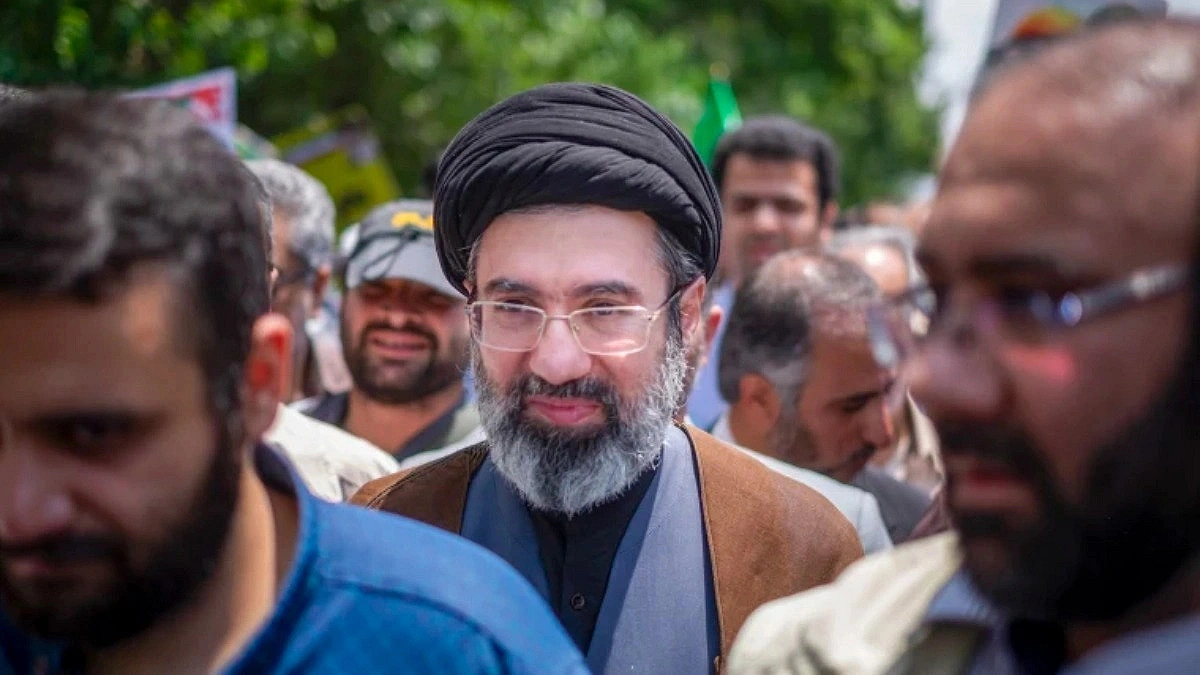
Iran's Supreme Leader Mojtaba Khamenei. File photo.
Israel's intelligence agency Mossad and the US Central Intelligence Agency (CIA) are continuing their efforts to locate Mojtaba Khamenei. However, Iran is employing one tactic after another to keep him hidden. This is the claim made in a report by the British daily The Sunday Times.
According to the report, Mojtaba has not used a mobile phone or computer for over 150 days. To keep his location secret, multiple lookalikes are also being used.
The Times reported that that although the matter is not discussed publicly, a significant portion of Mossad and CIA's time and effort is being spent on trying to track down Mojtaba.
The report further said the two intelligence agencies are trying to identify his location both jointly and separately. He has not appeared in public since his father was killed in late February. The report also noted that Mojtaba was injured in that attack.
Over the past six months, conflicting information has emerged about his physical condition. Some sources say he sustained light to moderate injuries but is still capable of leading. Other sources claim he was seriously injured, even suffering amputations, leading to assertions that he is now merely a nominal leader, controlled by other powerful groups in Tehran.
According to The Sunday Times report, Mojtaba's silence is the biggest obstacle to finding him.
The report claims that Mojtaba is currently staying in an underground bunker. It also states that he does not leave the bunker during the day over a fear of being detected by US intelligence satellites.
The Times claims that before his father was killed, the US and Israel used various cyber tactics to locate Khamenei. They hacked Tehran's traffic cameras to identify the vehicles of Khamenei's bodyguards and associates.
Through this, the US National Security Agency (NSA) and Israel's Unit 8200 were able to determine the location of Khamenei and other top officials on February 28. The attack was subsequently carried out based on that information, the report claims.
However, in Mojtaba's case, the previous technology-reliant methods are not proving useful. As a result, The Times reported that to find him, they now have to rely more heavily on information from spies and informants inside Iran—essentially, intelligence from operatives stationed in Iran.
The report also claims that some intelligence circles suspect Mojtaba may have been killed in the February 28 attack, or succumbed to injuries, later. However, the Revolutionary Guard is propagating that he is alive.
For this reason, Mossad and the CIA are now trying to confirm whether Mojtaba is truly alive. The report mentions that if he is alive, he could be hiding in underground tunnels in Tehran or in a military bunker near the city of Qom, roughly 50 kilometers from the capital.
The Times claims that Mossad, through its network inside Iran, is now primarily focusing on verifying Mojtaba's survival and pinpointing his location.
Rami Igra, former head of the Captives and Missing Persons Division at Mossad, told The Times that although Mojtaba is not using a phone, he is communicating through other means—for example, written messages on paper could be delivered via multiple layers of couriers. If he is found, it will likely be through human intelligence (agent information). However, Tehran is also aware of this risk.
The report draws a parallel with Al-Qaeda leader Osama bin Laden, noting that the CIA identified his location by tracking a courier who carried messages to him.
Rami Igra commented that the only way to find Mojtaba is to recruit someone who has contact with him as an intelligence asset.
The Times further reported that Avner Abraham, a former senior Mossad officer, claimed that the Iranian government is using multiple lookalikes to keep Mojtaba's location hidden.
Whether due to fear of assassination or serious injury, Mojtaba did not attend his father's funeral or burial, even though a massive crowd was present at the event. Although written messages have been issued in his name, no audio or video message featuring his voice has been released so far.
A former senior US security official told The Times that in the effort to locate the new supreme leader, human intelligence is the greatest asset. However, he expressed doubt about America's capability in this regard. In his view, Israel's spy network in Iran is comparatively stronger, and therefore, it will likely play a more significant role in the operation to find Mojtaba.
Meanwhile, joking about what the US and Israel could do if Mojtaba's location is confirmed, a former US intelligence official said that many Iranian leaders have been removed recently. Therefore, before making any decision regarding Mojtaba, they must be certain that his successor believes in Iran's democratic future.
