
Iran Celebrates Eid Under the Shadow of War

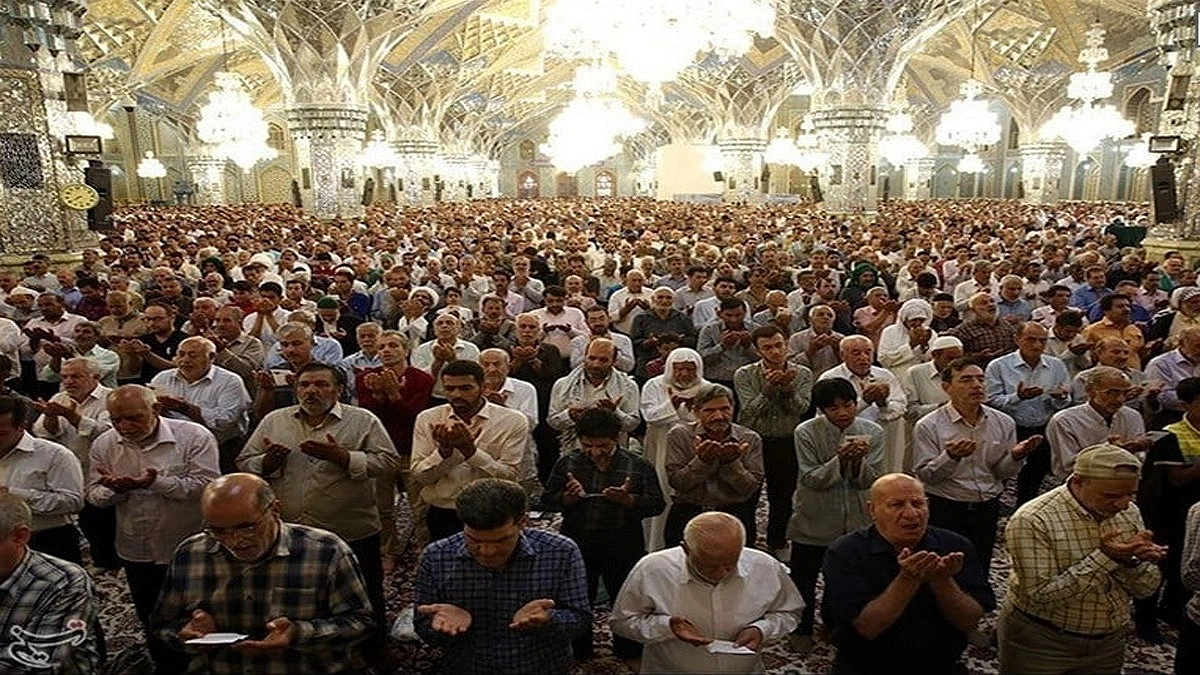
Eid-ul-Azha Congregation at a Tehran Mosque.
Iran, a country of about 92 million Muslims, has a population where more than 99 percent follow Islam, with a significant majority adhering to the Shia school of thought. For centuries, Islamic culture, Ashura mourning rituals, the spirituality of Ramadan, and the spirit of Eid-ul-Azha sacrifice have been deeply embedded in Iranian social life. However, Eid-ul-Azha in 2026 was not only a religious celebration for Iranians; it also became a symbolic expression of faith, patience, and social unity amid fears of war, insecurity, and uncertainty.
This year, on May 27 (10 Zul-Hij, 1447 Hijri), Iran observed Eid-ul-Azha. Rising tensions involving Israel and the United States in recent months, along with regional conflicts, security concerns, and economic pressure, have left a deep impact on people’s lives. Yet large gatherings at mosques and open grounds in Tehran, Mashhad, Qom, Tabriz, Isfahan, and other cities showed that despite ongoing crises, religious sentiment continues to unite Iranian society.
In the capital Tehran, the main Eid congregation took place at the Tehran University premises, where a large number of worshippers gathered. Ayatollah Seyyed Ahmad Khatami led the prayer. Alongside the general public, political leaders, military officials, and senior state representatives also joined the congregation. After the prayer, worshippers offered special prayers seeking peace for the Muslim world, liberation for Palestine, an end to conflict and war, and stability and security for Iran.
At this time, Iranians were also seen standing together in collective supplication after Eid prayers.
Eid prayers in Iran carry distinct characteristics. According to Shia jurisprudence, additional takbirs and special qunoot supplications are performed during Eid prayers. Typically, multiple qunoot prayers are recited in the two rakats of Eid prayer, which differs slightly from the practice followed by Sunni Muslims. In modern Iran, large Eid congregations are widely organized under state sponsorship.
Eid in Iran also reflects a blend of religious devotion and social culture. Families wear new clothes, visit relatives, pay respects at graves, and seek forgiveness from one another. Greeting elders, giving gifts to children, and sharing meals with family members are important parts of Iranian Eid traditions. In religious cities such as Qom and Mashhad, large crowds are also seen at shrine complexes during Eid.
Qurbani, or animal sacrifice, remains a central symbol of Eid-ul-Azha. However, Iran follows somewhat different regulatory and administrative procedures for carrying out sacrifices. Home slaughter is generally discouraged and, in many cases, illegal. Due to health regulations, environmental concerns, and urban management policies, the government encourages slaughtering animals in designated facilities. As a result, long queues are seen at approved slaughterhouses in the early hours of Eid. Many people complete their sacrificial arrangements in advance through online platforms or religious institutions.
In Shia society, special importance is given to prayers, intentions, and salutations upon the Ahl al-Bayt during the time of sacrifice. However, in terms of core Islamic principles, the purpose and method of qurbani remain the same as in Sunni practice—performed for piety, sacrifice, and seeking Allah’s pleasure. The distribution of sacrificial meat among the poor is also supported through widespread social initiatives, with mosques, charitable organizations, and waqf institutions distributing meat to underprivileged families.
Food also plays a significant role in Iran’s Eid culture. Dishes such as kebabs, khoresh, saffron rice, and various meat-based items are served on Eid tables. However, due to the ongoing economic crisis, many families were unable to organize expensive celebrations this year. Still, within limited means, people tried to maintain family ties and social bonds.
The fear of war had a visible impact on this year’s Eid. Security was tightened in many areas, and additional forces were deployed around key installations. Although many citizens expressed concern over war risks, rising prices, and future uncertainty on social media, they also emphasized trust in God and national unity.
Analysts believe that religious festivals in Iran are not merely ritual events but also serve as a means of rebuilding national morale and social cohesion. In times of political pressure and war risk, religious gatherings play an important role in maintaining psychological stability.
The core message of Eid-ul-Azha is sacrifice, patience, and complete submission to Allah. Amid war uncertainty, economic hardship, and global tensions, this year’s Eid in Iran reflected that very message. Beyond the sacrifice of animals, what stood out was human resilience, social unity, and the determination to endure hardship.
