
Severe controversy over removal of loudspeakers from mosques in WB, India
- Preparations to move to the High Court

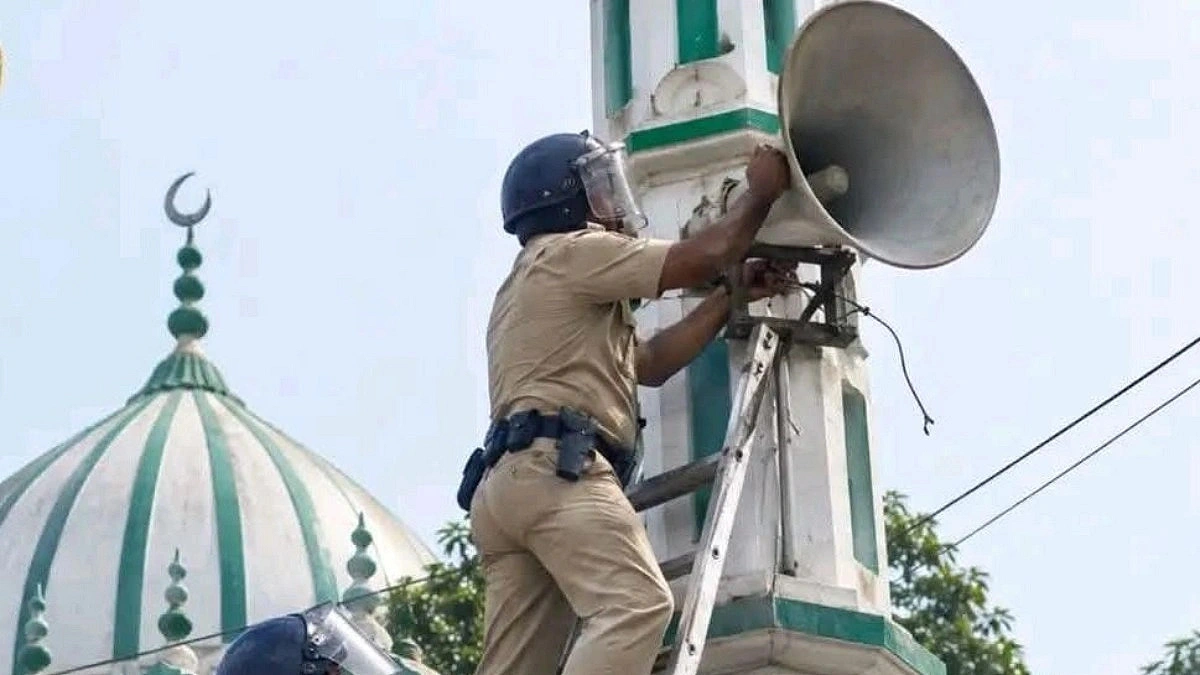
Photo: Agamir Somoy
Political tensions are increasingly escalating over the removal of loudspeakers from various mosques in West Bengal, citing compliance with noise pollution control regulations.
Minority representatives have alleged that while the stated reason is noise pollution control, in practice, religious institutions of a particular community are being disproportionately targeted.
Three Members of Parliament have approached Union Home Minister Amit Shah over this occurence. Meanwhile, the opposition camp is also preparing to move to court.
On Thursday, three NCPI MPs—Khalilur Rahman, Abu Taher Khan, and Yusuf Pathan—met Amit Shah and raised the issue of loudspeaker dismantling from mosques. Their argument was that if Supreme Court directives and administrative rules are to be implemented, they cannot be applied separately to one particular religion. The same rules must be enforced across all religious institutions.
The MPs questioned whether loudspeakers are used only in Muslim religious places. They are also used in various Hindu religious sites and events. So why are mics being repeatedly removed from mosques without taking similar action at those places? They demanded that there should be no discrimination in the enforcement of laws based on religious identity.
Meanwhile, the government has also given a counter-statement, presenting statistics on the mike removals. According to figures provided by Chief Minister Shubhendu Adhikari (BJP), a total of 8,203 loudspeakers have been removed from mosques and 1,096 from temples across the state. The government claims that this step has no connection to targeting any specific religious community. The measures are being taken strictly in compliance with noise pollution control rules.
The Chief Minister also stated that police have been given all necessary directives to enforce the court orders. The administration's goal is to ensure that prescribed sound limits are not exceeded. The government's position is that when rules apply to everyone, the question of bias in their enforcement should not arise.
However, the opposition is not at all satisfied with the government's explanation. On Friday, Leader of the Opposition Ritabrata Banerjee raised the microphone issue during a meeting with Chief Minister Shubhendu Adhikari at the Legislative Assembly. He was accompanied by Opposition Chief Whip Akhruzzaman. After the meeting, Ritabrata said that religion is deeply intertwined with people's lives. Therefore, it is crucial to maintain equality and sensitivity when making decisions related to religious practices.
He also informed that he has already discussed the matter with eminent lawyers Bipul and Arup. Ritabrata stated that if necessary, they will approach the High Court as early as next week.
He alleged that although the process of removing mics began based on old government directives, in reality, its impact is falling more heavily on one community. He further stated that they have no objection to implementing court orders. However, there must be no discrimination in its application based on religious identity.
As a result, the controversy sparked by the removal of mosque loudspeakers is no longer limited to just the question of noise pollution control. It has become intertwined with issues of religious rights and equality in the application of administrative rules. All eyes are now on where this debate over microphone removals will ultimately lead in state politics.
