
Trump rules out nuclear weapons, ground troops against Iran

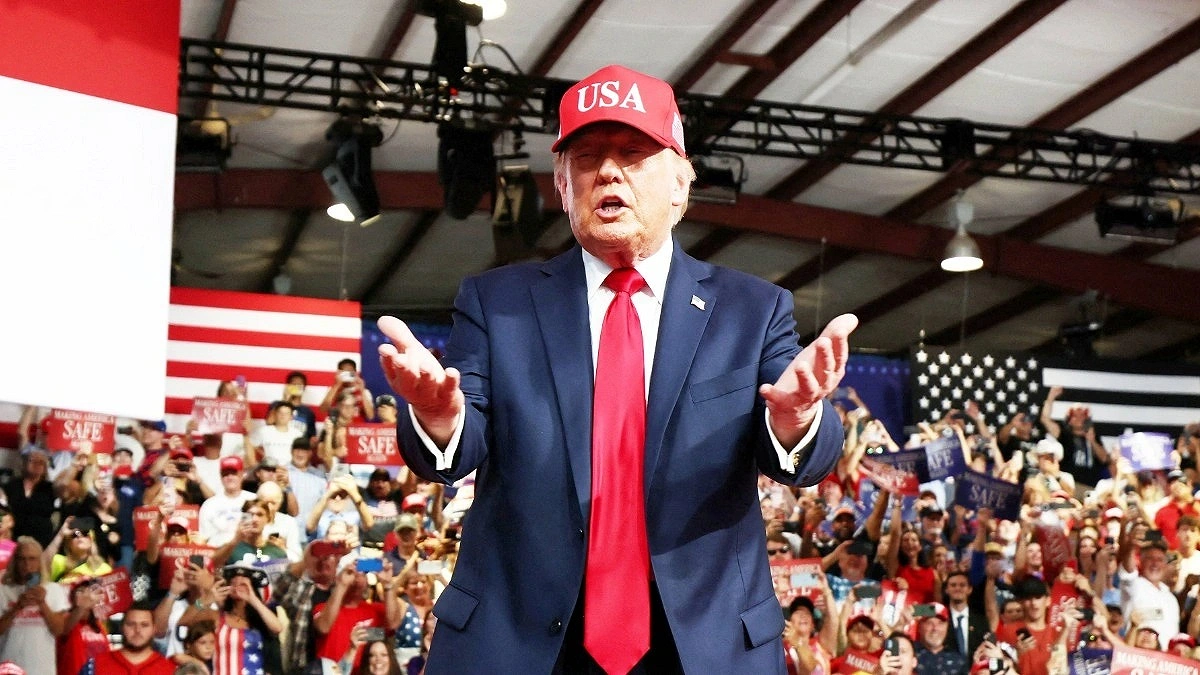
Photo: REUTERS
US President Donald Trump said he “would not use” nuclear weapons against Iran, while clarifying that he did not see “putting US troops on the ground”.
During an interview on Thursday with a conservative media reporter for Newsmax, Trump reaffirmed his stance against deploying ground forces or nuclear armament.
Saudi Arabian forces intercepted and shot down a drone amid the escalating regional friction. Trump also revealed that the US maintains ongoing discussions with Russia and China regarding denuclearization.
Earlier, Trump suggested that no intelligence sharing occurs among Russia, China, and Iran. He confirmed active negotiations with both Moscow and Beijing regarding potential denuclearization frameworks.
Meanwhile, reports surfaced on Thursday indicating that Trump is weighing various military strategies against Tehran, including the potential deployment of the Massive Ordnance Air Blast (MOAB) bomb.
Functioning as the largest nonnuclear weapon in the American military arsenal, the 21,000-pound (9.4-tonne) ordnance was last detonated in Afghanistan in 2017.
While the Pentagon awaits a direct presidential order prior to executing any strike, potential authorization for the MOAB remains under consideration. Throughout the week, Trump consistently utilized forward-looking statements to outline upcoming maneuvers concerning Iran.
Although Trump pledged to refrain from launching strikes on Iran prior to the November 3 midterm elections, he actively evaluates all strategic options.
On the ground, Iranian Health Minister Mohammad Reza Zafarghandi reported that US and Israeli aerial strikes destroyed at least 78 ambulances following the outbreak of fighting in late February, said Iran’s Fars news agency.
Zafarghandi announced that the government is adding a new fleet of 84 ambulances nationwide.
He added, “Replacing damaged ambulances and renewing the ageing ambulance fleet are serious necessities for the healthcare system under current conditions,” referring directly to the ongoing hostilities.
Iranian Army Commander-in-Chief Amir Hatami declared via Iran’s Mehr News Agency that the Strait of Hormuz “is under the full supervision of the army and the IRGC.”
Elaborating on the maritime standoff, Hatami said, “The Strait of Hormuz will remain closed until the enemy respects the rights of the Iranian people. Not a single enemy vessel has dared to enter the Sea of Oman to this day, except for three vessels that came and were fired upon by us. We took decisive action, and today they know that traffic is very, very limited.”
Washington confirmed that American forces continue providing security support for commercial ships navigating the strategic corridor. On Thursday, the US military’s Central Command issued a statement confirming that the US “and regional partners control the strait as commercial vessels continue to transit despite unwarranted IRGC aggression.”
Source: Al Jazeera (adapted)
