
Fire at Canada military base kills 4, injures dozens

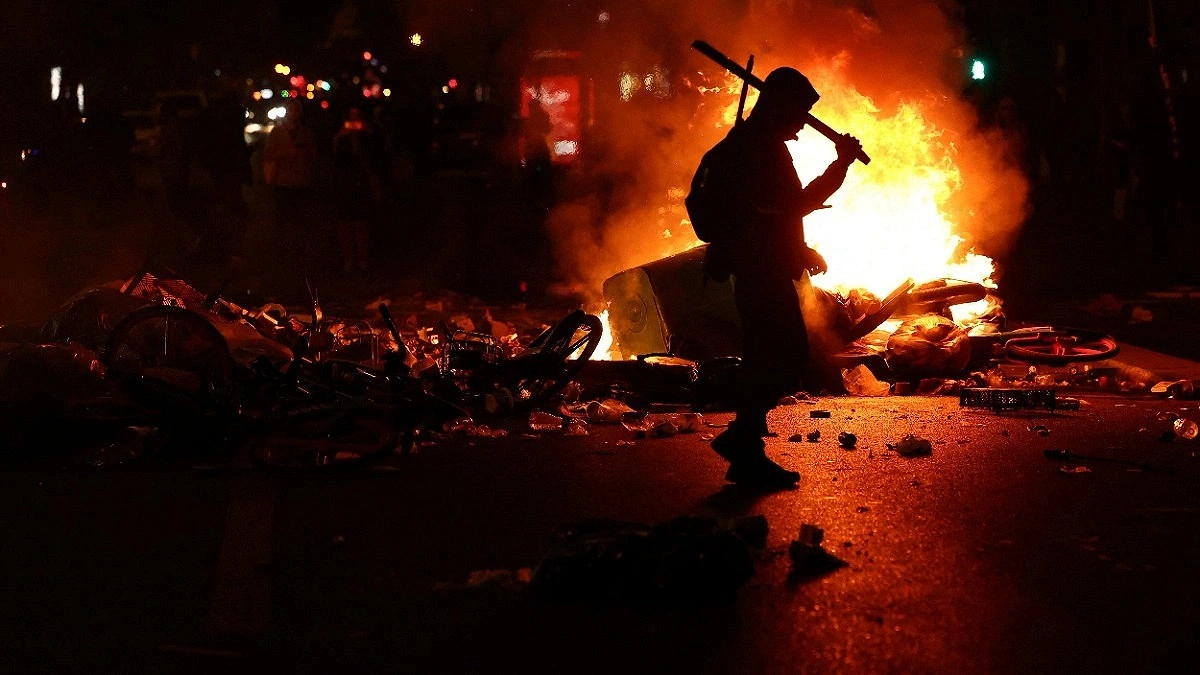
Photo: REUTERS
A devastating fire at Canadian Forces Base Wainwright in Alberta killed four Canadian military members and injured dozens of others during a major training exercise.
Speaking from Ottawa on Sunday, Prime Minister Mark Carney addressed the nation and described the tragedy as “one of the worst tragedies for the forces on Canadian soil in peacetime”.
The blaze erupted around 16:00 local time on Saturday at one of Canada’s busiest military training bases before emergency crews successfully contained it. Although authorities have not yet determined the exact cause of the fire, officials emphasized that it does not appear connected to “terrorist activity”.
Expressing deep national grief, Carney said, “The nation is in mourning for those brave members of our armed forces who we have lost.”
BBC confirmed the identities of the four deceased service members as Sgt Morgan Wong, Pte Shaun Farrell, Pte Aidan Goulding, and Pte Hayden Lykkemark.
At a Sunday evening press briefing, Alberta Premier Danielle Smith announced that medical facilities are treating 39 injured individuals, with at least 19 remaining in critical condition. Wainwright Mayor Bruce Pugh told the BBC that fire and rescue crews remain stationed at the scene to suppress any potential flare-ups.
During the briefing, Maj-Gen Wade Rutland reported that infantry members were conducting “high-intensity combat training with live munitions” at a grenade range and attack range, where 10 soldiers practice attacking a simulated enemy.
Rutland explained, “There was a multitude of ordnance moving through the Wainwright training area,” which included a grenade launcher, grenades, small arms, and ammunition. A separate grass fire ignited around 1 kilometer (0.6 miles) away and swept toward the attack range, while investigators continue looking into its origin.
Rutland noted, “What I would say is there was multiple training activities happening throughout the training area at the time. Uncommonly strong winds caused the fire to spread rapidly and shift direction towards the range administrative area.”
Mayor Pugh told the BBC that residents heard cannon fire echoing from the base on Saturday before it suddenly ceased, noting that cannon fire is a normal occurrence at the installation. Reports quickly emerged that local emergency services rushed to respond to an “all hands on deck” crisis.
Carney praised military and emergency crews who battled the inferno “throughout the night” under “some of the worst conditions imaginable”. Officials specified that the injured personnel were located on the attack range and comprised both reservists and soldiers from the Princess Patricia’s Canadian Light Infantry.
In an official statement issued early Sunday, the Canadian Armed Forces affirmed that “while the incident remains under investigation, at this time, there are no indications that it was the result of any terrorist activity.” Rutland reiterated at the news conference, “We do not believe this [incident] to be a result of any oil and gas infrastructure nor any outside interference.”
Located roughly 210 kilometers (130 miles) east of Edmonton, Alberta’s capital city, Wainwright serves as a premier installation for live-fire training exercises that hosts personnel from Canada and allied nations.
On a typical day, the base supports approximately 690 military personnel and 300 civilian workers. Warren Thirsk, an emergency department doctor at Edmonton’s Royal Alexandra Hospital, informed broadcaster CBC that the influx of casualties “completely overwhelmed” local healthcare facilities in Wainwright.
Royal Alexandra Hospital in Edmonton received transferred patients after initially declaring a code orange disaster-response protocol for high-casualty incidents, a status that medical leadership has since stood down.
The provincial health agency released a statement on Sunday confirming it dispatched 30 units directly to Wainwright, including 22 ground ambulances, six fixed-wing aircraft, and two rotary wing units.
The agency said, “It is anticipated that care for patients impacted by this incident will be intensive and will add to existing high demand on acute care in Alberta,” while confirming that medical staff are treating victims across multiple facilities in the province.
STARS, the regional air ambulance service, mobilized aircraft and medical crews from Edmonton, Saskatoon, and Calgary to assist in the emergency response. Brandon Simmons, a long-term care resident at the Wainwright Health Centre, told Reuters that when hospital staff announced the code orange, nurses immediately dropped their work, grabbed stretchers, gurneys, and medical gear, and sprinted to the main entrance.
Simmons reported that ambulances arrived continuously “throughout the night”. Describing the frantic scene, Simmons recalled, “I heard people screaming inside of those vehicles that will never end up being out of my mind,” adding that the chaotic situation felt “like a scene from a war movie”.
Source: BBC (adapted)
