


Iran warns neighbors not to side with the US

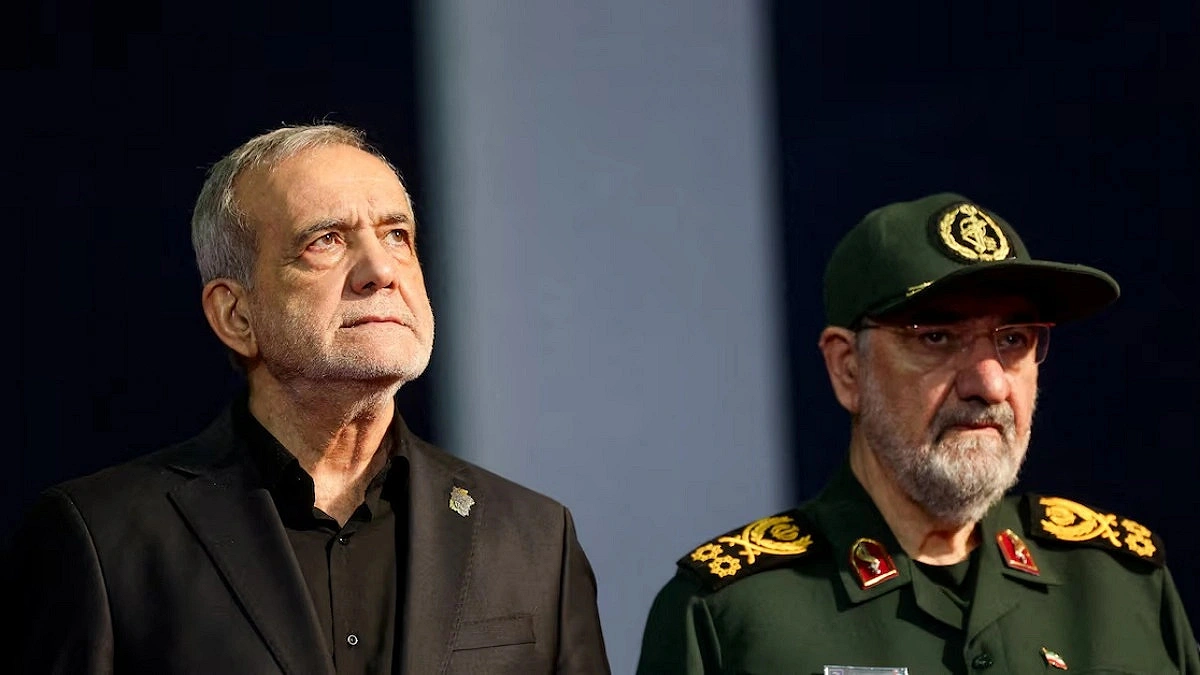
Mohsen Rezaei, Secretary of the Supreme National Security Council, with the President of Iran. Collected photo.
Tehran will consider any neighboring country that joins the United States' "economic war" against Iran as an enemy. Iran has even threatened to carry out strikes inside those countries if necessary.
The warning was issued by Mohsen Rezaei, Secretary of Iran's Supreme National Security Council, in an interview with the state-run broadcaster IRIB on Saturday (local time).
He said, "We are telling all neighboring countries: do not join the US economic war. Otherwise, we will consider you enemies."
Iran's threat comes after Donald Trump announced a new strategy of applying economic pressure.
Earlier, on Wednesday, US President Donald Trump announced the launch of the "toughest economic campaign ever" against Iran.
Trump also said that any country that provides any kind of support to Iran will face "severe economic consequences."
The following day, US Treasury Secretary Scott Bessent also issued a threat, saying, "Either you are with us, or you are against us."
Rezaei said that Tehran's strategy regarding neighboring countries will proceed in three stages. First, an attempt will be made to reduce tensions.
He said, "First, we will negotiate. Then, we will try through friendly language to keep them away from the US. Because we truly do not wish to escalate the war."
Rezaei further stated that countries that still remain alongside the US will be given time to change their position. If they do not change their stance after that, Iran will take action.
In his words, "In the third stage, we will certainly take steps."
Rezaei claimed that the US is trying to create divisions among the Iranian people through economic pressure. He also alleged that the US is attempting to incite protests and thereby force an end to the war through such means.
Talks to end the war between Iran and the US have stalled in recent months. On June 17, a proposal was made through a memorandum of understanding to quickly and permanently halt military operations. However, that has not been implemented.
One of the major flashpoints in this conflict is the Strait of Hormuz. This vital waterway, running along Iran's coast, is used to transport vast quantities of oil and various other goods.
After the war began, Iran quickly halted traffic through the strait. This drove up prices of commodities like oil and fertiliser. Countries in the Middle East that depend on Hormuz also began looking for alternative trade routes.
However, Rezaei warned that if regional countries join the US economic war, Iran could also attack alternative routes for transporting oil from the Gulf.
On Saturday, Iran's Foreign Ministry also criticised the new US measures. Tehran claims that these steps are an attempt by the US to impose its "extraterritorial sovereignty" over UN member states.
Meanwhile, there are reports that Iran is considering expanding the scope of its attacks beyond the Middle East. Some US allies in Europe that support Trump's military operations could also be potential targets of Iran, according to various media outlets.

