
Trump administration's request to set aside 20,000 votes rejected by Supreme Court

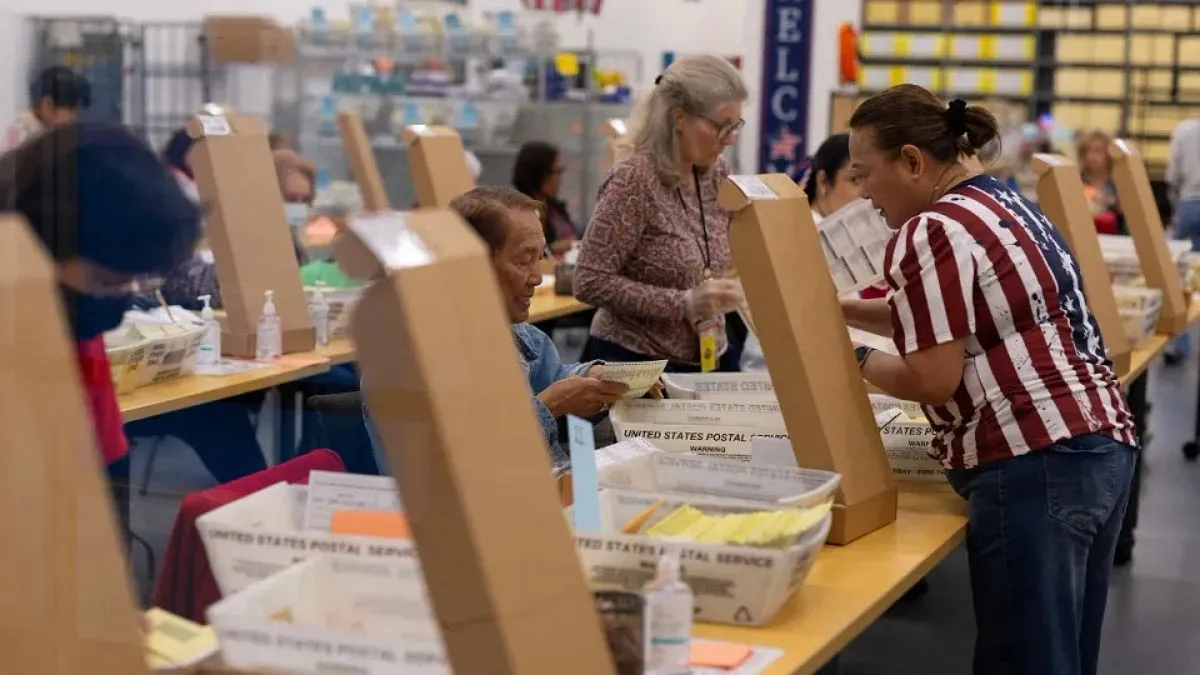
Reuters photo.
The US Supreme Court has rejected the Trump administration's request to set aside 20,000 mail-in ballots in the state of California. On Monday, the court dismissed the application in a one-sentence order without providing any explanation. No justice expressed dissent on the matter, reports Al Jazeera.
The Trump administration claimed that some of the voters who cast these ballots may not be US citizens. Therefore, it argued, the votes should be separated and investigated. However, California authorities and organizations working on immigrant rights have questioned the authenticity of the list provided by the administration. They allege that the administration is attempting to deprive legitimate voters of their voting rights.
Last month, the Trump administration filed a lawsuit against California. It alleged that under the state's universal mail-in voting system, ballots were sent to 20,000 suspected non-citizens. In California, ballots are automatically sent to all registered active voters.
However, last week, federal district court judge David Carter ruled that California could accept these ballots just like any others. He said the administration's request conflicted with the constitutional principle of states' control over elections. The appeals court also rejected the administration's request on Friday by a 2-1 vote.
The Trump administration then approached the Supreme Court on Monday. But within hours, the highest court dismissed the application. California Attorney General Rob Bonta said the attempt to interfere in the state's elections had been rejected by courts four times.
Although the case has not formally concluded, the Supreme Court's order is considered significant ahead of Tuesday's election. Both sides have stated that once the vote-counting process begins, it will not be possible to separate the ballots.
Reuters adds:
The US Constitution assigns the responsibility of administering elections to states, though the federal government has some oversight. The lawsuit marked a rare federal intervention in the voting process and signaled a willingness by the administration to contest the election results in court.
The administration already sought to restrict voting by mail — a mode of casting ballots used more often by Democratic-leaning voters — but the Supreme Court in September rebuffed that effort. And a federal judge on Sunday dismissed the administration's lawsuit concerning the US Senate race in Alaska.
The list of 20,000 registered voters was amassed by the US Department of Homeland Security and sent to California officials and to Los Angeles County officials.
The Justice Department sued in federal court on October 15, claiming California is unlawfully preventing its enforcement of a 1996 US law that makes it a criminal offense for noncitizens to vote in federal elections. The department said California's action violated the Constitution's Supremacy Clause, which holds that federal law generally preempts state law.
California has said that the state's safeguards against noncitizen voting are robust and that the lawsuit threatens to deprive 20,000 people of their right to vote based on vague accusations. The administration's process for scrutinizing voter lists to identify noncitizens is flawed and likely rife with errors, it said in court papers.
California has 52 seats in the House of Representatives, more than any other state. Democrats need a net gain of four House seats to win a majority in the chamber.
'BEND TO THE WILL'
US District Judge David Carter in Los Angeles denied the administration's request on October 28.
"Never before in American history has the federal government, on the eve of an election, sought to coerce a state and local government to abandon their own constitutional elections procedures and bend to the will of the executive branch," Carter wrote.
Carter raised concerns over the reliability of the administration's data, noting that people recently flagged by the federal government as noncitizens on voter rolls in other states have repeatedly turned out to be naturalized US citizens.
"If the executive can discount votes and threaten an ongoing election due to unproven allegations, then our democracy is in danger," Carter wrote.
The San Francisco-based 9th US Circuit Court of Appeals also refused on Friday to block the ballots, emphasizing the state's power over election procedures and California's "comprehensive statutory scheme to ensure the integrity of its elections," including a system for canceling registrations if a voter is shown to be ineligible.
