


Treatment over, back to prison, new speculation in Pakistan
Did Imran douse rumors of a deal?

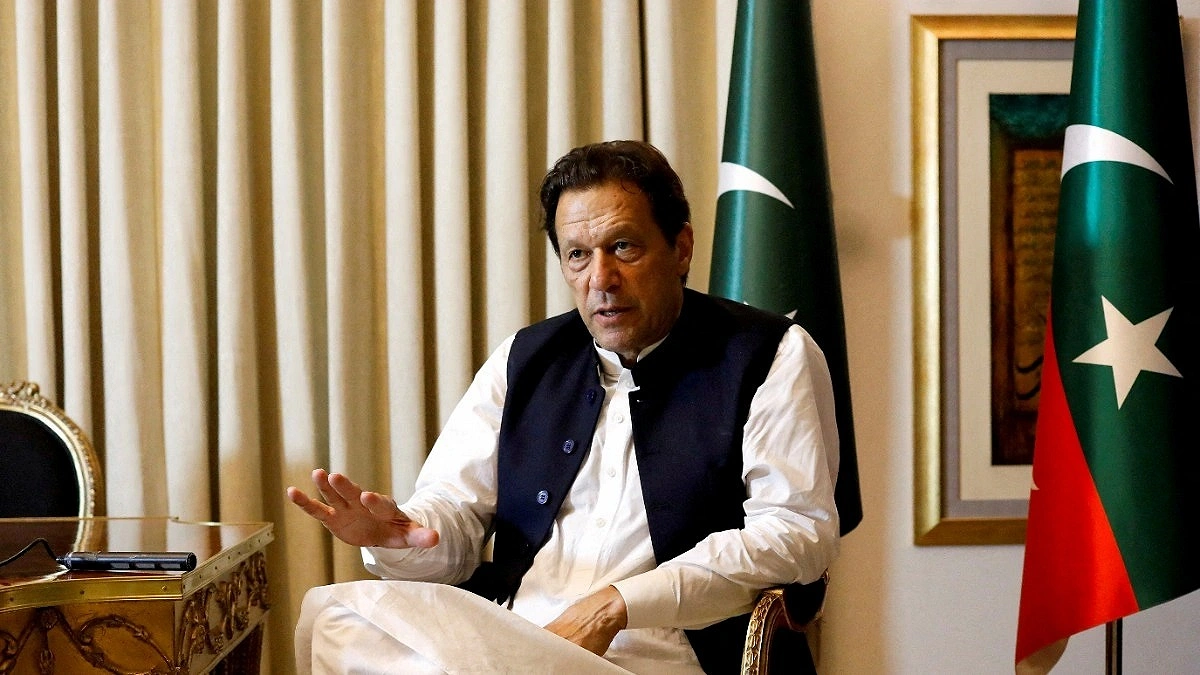
Photo: Reuters
After nearly three years, Pakistan’s Supreme Court ordered that Imran Khan be taken out of prison for medical treatment. Could that hospital trip have become the first step toward his release from prison? As speculation peaked in Pakistan, Imran Khan returned to Adiala Jail after undergoing several hours of medical examinations. One of his close associates now views that return as a political move. He claims that unlike Nawaz Sharif, Imran did not seek an opportunity to leave the country through medical treatment. Instead, by returning to prison, he politically “checkmated” Field Marshal Asim Munir.
The incident began on August 18. Pakistan’s Supreme Court ordered that 73-year-old Imran be taken from Adiala Prison in Rawalpindi to the private Shifa International Hospital in Islamabad. The court also ordered that he receive treatment there for several days and undergo examinations by a specialized medical board including his personal physician Dr. Faisal Sultan. It also ordered increased opportunities for regular meetings with his family and phone calls with his two sons.
But events took a different turn late Thursday night. Instead of Shifa, Imran was taken to the government run Pakistan Institute of Medical Sciences, or PIMS. Specialists examined his eyes, heart and overall physical condition. The government said he was found to be “medically fit” and was returned to Adiala Prison at around 5:00 am on August 21.
The government said a security situation had developed because of gatherings of PTI supporters on the way to Shifa Hospital and outside the facility. For that reason, security agencies decided at the last moment to take him to PIMS. The government said this was not a political decision.
But Imran’s party has rejected that explanation. PTI alleged that the Supreme Court’s order was clear and required treatment at Shifa Hospital with his personal physician present. However, his doctor Faisal Sultan remained waiting at Shifa. The party has warned that it will approach the Supreme Court over what it described as contempt of court.
Amid the confusion, a News18 report presented a striking explanation from one of Imran’s close associates. He claimed that Imran had shown no interest in staying in the hospital for a long period and was prepared to return to prison after completing the necessary examinations. According to him, Imran sent a clear political message through this decision. He was not pursuing a “deal” to leave prison under the pretext of medical treatment.
This is where the comparison with Nawaz Sharif comes in. In 2019, former three-time Prime Minister Nawaz fell ill while serving a prison sentence in corruption cases. He initially received six weeks of bail for medical treatment and returned to prison after that period ended. Later, after receiving bail again on medical grounds in October, he traveled to London by air ambulance on November 19, 2019, for treatment. He remained outside Pakistan for a long period before returning to the country in 2023.
Therefore, the close associate’s “not Sharif” remark was essentially referring to that later trip to London. His argument is that if Imran had used the hospital as a long-term route out of prison, speculation about a secret deal with the military establishment would have grown stronger. Instead, by quickly returning to prison, he weakened that narrative.
However, the matter is not that simple. Over the past several days, other signals have emerged regarding a possible normalization of relations between Imran and the military. His close associate Zulfiqar Bukhari told Reuters that if Imran is released, he will not engage in any confrontation with the military or Asim Munir that could harm the country. He also spoke of the possibility of Munir extending a “hand of reconciliation.” At the same time, he made it clear that there are currently no formal talks between PTI and the military.
The Supreme Court’s order to send Imran to the hospital came shortly after that statement. As a result, speculation spread in Islamabad about whether a path toward a settlement was opening after three years of intense hostility.
Imran’s recent “concessions” over his medical treatment are being viewed as a possible signal in Pakistan’s broader power struggle. Political analysts believe Munir may be keeping open the option of using Imran and PTI as political pieces again to maintain pressure on the PML N and PPP.
Imran’s supporters had also developed hopes before he went to the hospital. But the decision to take him to PIMS instead of Shifa, the exclusion of his personal physician and his return to prison within a few hours have made the situation even more complicated.
His sister Uzma Khan said she found her brother to be physically relatively stable. However, Imran told her that he had faced “extreme injustice and torture” during his long imprisonment. The government rejected the allegation and said there was no evidence of torture or denial of medical treatment in the medical and prison records.
Imran has been imprisoned since August 2023. He has faced multiple cases. He says all of them are politically motivated. The Pakistani government denies the allegation. His current imprisonment is primarily based on a conviction in a corruption case.
His conflict with Asim Munir has also been at the center of Pakistani politics in recent years. After losing power in 2022, Imran increasingly spoke out against the military. He has also personally criticized Munir in strong terms. The military has consistently denied allegations of political interference.
Therefore, Imran’s return to Adiala Jail early Friday was not simply the return of a prisoner from a hospital to prison. PTI now wants to portray it as a symbol of political resistance as well.
However, it is too early to say whether Munir has been “checkmated.” Imran remains in prison. There has been no official decision on his release and there is still no confirmed evidence of any agreement with the military.
But one aspect of his close associate’s statement is politically significant. Imran appears to be trying to show that if his release comes, it will not come through “a secret deal through the door of medical treatment.” Instead, it should come through a political and legal struggle. In Pakistan’s political chessboard, whether that is truly a “checkmate” or simply another move in a much longer game remains to be seen.

