Israel: Ex army chief Eisenkot now on the path to becoming PM
- What Is His Position on the Palestine Question?

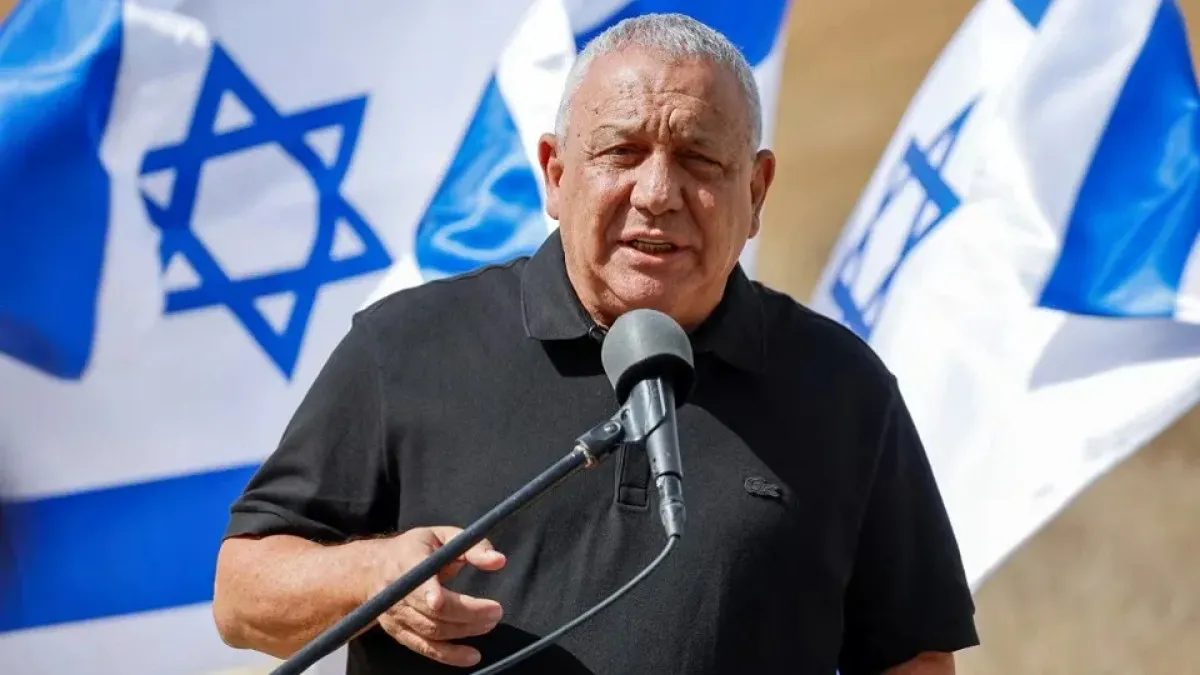
Israel's former army chief Gadi Eisenkot. Reuters.
He was Israel's army chief for four years. He played an important role in military operations in Lebanon and Gaza, a hardline military policy against Hezbollah, and countering Iran's regional influence. Later, entering politics, he joined the opposition camp against Prime Minister Benjamin Netanyahu.
Now, after receiving the support of Arab and other parties in the election, former army chief Gadi Eisenkot has been called upon to form a government. However, while the opportunity to become prime minister has opened up before him, complex political equations also lie ahead. And on the Palestine question, his position is not very different from Netanyahu's policies.
Son of a Moroccan Immigrant Family
Gadi Eisenkot was born on May 19, 1960, in the city of Tiberias in northern Israel. His parents had immigrated to Israel from Morocco. When Eisenkot was a child, the family moved to the southern city of Eilat. That is where he grew up.
In Israeli society, he represents the Mizrahi, or Jewish population of Middle Eastern and North African origin. Since European-origin Jews have long had a greater influence in Israeli politics, this identity of his is considered politically important. If he becomes prime minister, he will be the country's first prime minister of Mizrahi origin.
At the age of 18, in 1978, Eisenkot joined the Golani Infantry Brigade of the Israeli Defense Forces. After that, he served in various important positions in the military for more than four decades.
In the 1990s, he became commander of the Golani Brigade. Later, he served as the military commander of the West Bank, the army's Operations Division, and the Northern Command. From 2013 to 2014, he was the deputy chief of the army.
On February 16, 2015, Eisenkot took charge as the 21st Chief of the General Staff, or army chief, of the Israeli Defense Forces. He retired in January 2019 after completing his four-year term. His total career in the military was 41 years.
The Lebanon War and the 'Dahiya Doctrine'
One of the most discussed aspects of Eisenkot's military identity is the "Dahiya Doctrine." When he was in charge of the Israeli army's Northern Command after the 2006 Lebanon War, the concept of this military strategy came forward. It was named after the Dahiya suburb of Lebanon's capital, Beirut.
The core idea of this strategy is that in the event of a conflict with Hezbollah, massive and disproportionate military force would be used in areas under their control. This includes the threat of destroying civilian infrastructure. Eisenkot's argument was that the use of such force could make the opponent understand the cost of war.
However, according to critics, such a policy of targeting civilian infrastructure could create a serious conflict with international humanitarian law. Israel, however, disagrees with such allegations.
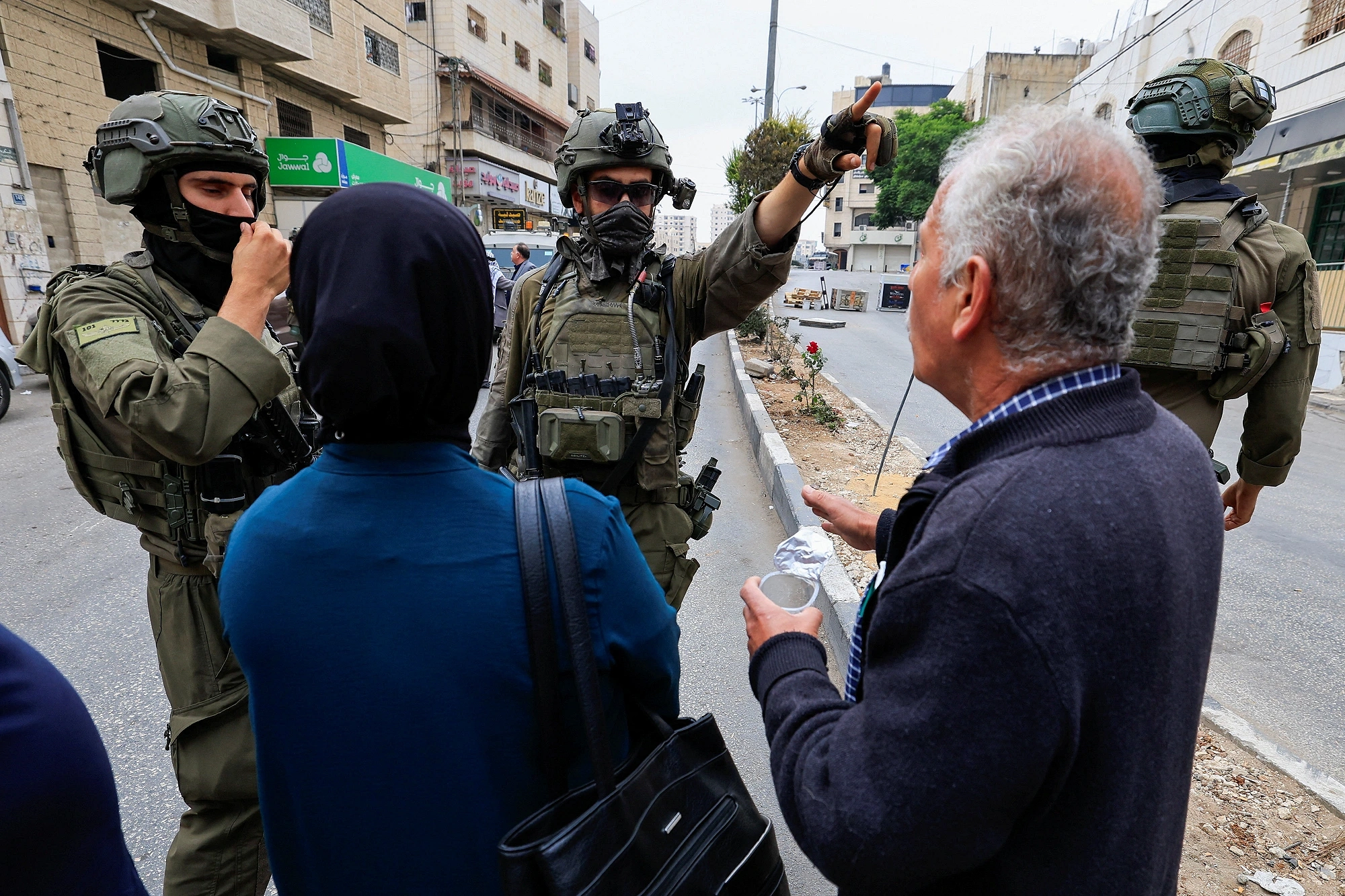
The Israeli army is restricting the movement of two Palestinian individuals in the West Bank. File photo. Reuters
During his tenure as army chief from 2015 to 2019, he focused on countering Hezbollah's military preparations along the Lebanon border. In December 2018, under his leadership, Israeli forces launched "Operation Northern Shield." The objective of the operation was to identify and destroy tunnels built by Hezbollah to infiltrate Israel across the border.
He also has military experience regarding Gaza. He took charge as army chief after the 2014 Gaza war. During his tenure, the role of Israeli forces in suppressing Palestinian protests along the Gaza border in 2018 and military operations against Iran-backed groups in Syria also came up for discussion. After Hamas's attack on October 7, 2023, when Israel launched its military operation in Gaza, he again became involved in the political and military decision-making sphere.
From Military Uniform to the Political Arena
After retiring from the army, Eisenkot served in various private and social organizations for some time. In 2022, he entered politics by joining the National Unity Party led by Benny Gantz. That same year, he was elected to Israel's parliament, the Knesset.
After Hamas's attack on October 7, 2023, when Netanyahu formed an emergency national unity government, Eisenkot also joined it. He served as an observer in the wartime cabinet. However, his disagreements with Netanyahu over conducting the war in Gaza, the release of hostages, and the strategy for ending the war continued to grow.
In June 2024, Eisenkot left the government along with Benny Gantz. His allegation was that Netanyahu was making decisions that prolonged the war and was giving more importance to political interests than bringing the hostages back. In September 2025, he separated from Gantz's party and formed his own political party, "Yesh Atid." In Hebrew, the word "Yesh Atid" means straight or just.
What Is the Position of the Yesh Atid Party?
Yesh Atid has presented itself as a party representing the centrist and broad population. The party's declared goals are—keeping Israel as a Jewish and democratic state, strengthening national security, reducing economic inequality, and restoring people's trust in state institutions.
The party is in favor of mandatory military or national service for everyone. That is, it has spoken of bringing ultra-religious Jews and Arab citizens under military or civilian national service. Their program also includes promises to increase the independence of the judiciary, the rule of law, constitution-making, public education, and administrative efficiency.Eisenkot has criticized the Netanyahu government's efforts to reform the judiciary and its attempts to increase political control over state institutions. However, on the Palestine question, his position is not like that of leftist or pacifist politicians.He has opposed the establishment of an independent state for Palestinians. While he is in favor of maintaining Israel's control over the West Bank, he has opposed unilaterally annexing the entire territory to Israel. He has also spoken of abiding by the law regarding settlement expansion.His position on Gaza is even tougher. He has said he wants to end Hamas's rule within 18 months. If that is not possible through the disarmament of Hamas and the transfer of power according to U.S. President Donald Trump's ceasefire plan, he has spoken of destroying the group's military wing through military operations. That is, even if a government is formed under his leadership, there is no indication of a major change regarding the withdrawal of Israeli soldiers from Gaza or the establishment of an independent state for Palestinians.Success in the Election, but Obstacles to Forming a GovernmentIn the October 27, 2026 election, Eisenkot's Yesh Atid party won 21 seats in the 120-seat Knesset. The party stands second on its own. The four-party opposition alliance led by him won 48 seats. On the other hand, Netanyahu's alliance won 53 seats. Neither side achieved the majority of 61 seats needed to form a government.After the election, Eisenkot participated in consultations with parties with President Isaac Herzog to gain support for forming a government. The two Arab-majority political alliances also supported him. As a result, he moved ahead in receiving the responsibility of forming a government. On November 7, the president tasked him with forming a new government. He has been given 28 days for this; if necessary, the time can be extended by another two weeks.
However, this is where his biggest political complexity lies. Without the support of the Arab parties, his alliance's seat count is far below a majority. Yet Eisenkot himself has set strict conditions regarding making the Arab parties partners in the government.
According to him, no party can participate in his government without agreeing to the principles of recognizing Israel as a Jewish and democratic state, mandatory national service, and eliminating Hamas's military and governing power. He has said that currently none of the Arab parties meet these conditions.
Forming a unity government with Netanyahu's Likud Party is also difficult for him. Because Eisenkot has stated his position of not forming a government under Netanyahu's leadership. As a result, he will have to find a path through accepting the support of Arab parties, forming a minority government, or some other political compromise.
Possible Challenges and Risks If He Becomes Prime Minister
The biggest challenge before Eisenkot will be ensuring the necessary majority to form a government. There are disagreements within his own alliance over accepting the support of Arab parties. Again, the plan to bring ultra-religious Jews under military service could create conflict with religious parties. As a result, questions will remain about the stability of the alliance even after the government is formed.
Security and Palestine policy are also major challenges. His military past, the Dahiya doctrine, and his commitment to militarily eliminating Hamas's governing power indicate that he may maintain a tough security policy on the Gaza and Lebanon questions. His opposition to the establishment of an independent state for Palestinians and his position of maintaining Israel's control over the West Bank could also complicate a political solution to the conflict.
On the other hand, criticizing Netanyahu's government, he has promised to protect the independence of the judiciary, freedom of the press, and democratic institutions. But although he has long experience in the military, his experience in national-level politics is comparatively less.
After entering politics in 2022, within just four years he has stood at the prospect of becoming prime minister. As a result, his political skills will be tested in managing alliances, handling conflicts between religious and secular groups, and running the post-war state.
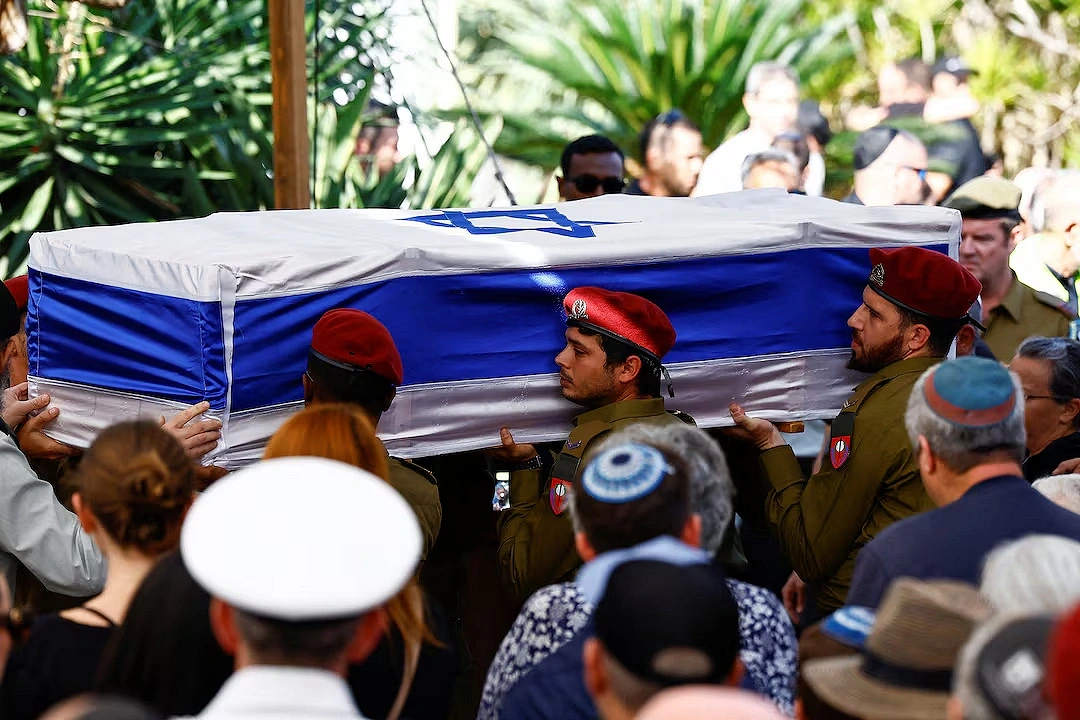
Eisenkot has also paid a heavy price of war in his personal life. In December 2023, his son Gal was killed in Israel's military operation in Gaza. Two of his nephews were also killed in the same war. This family loss has taken an important place in his political statements. He has said that this loss inspires him to work more for the country.
The body of Eisenkot's son killed in the Gaza war. File photo. Reuters.
Through a long career in the military, experience in conducting wars, and bringing together a section of anti-Netanyahu public opinion, Eisenkot has come to an important position in Israeli politics.
But the success of his government formation will depend on achieving a majority in parliament and managing the disagreements of the alliance. And even if he can become prime minister, the big question will be how much his military and political position on the Palestine question brings about a change in Israel's policy.