
U.S. Homeless population records largest drop in nearly two decades, but attribution dispute heats up
- Half of the decline occurred in four cities—New York, Chicago, Boston, and Denver
- Homelessness among veterans dropped by nearly 8%.

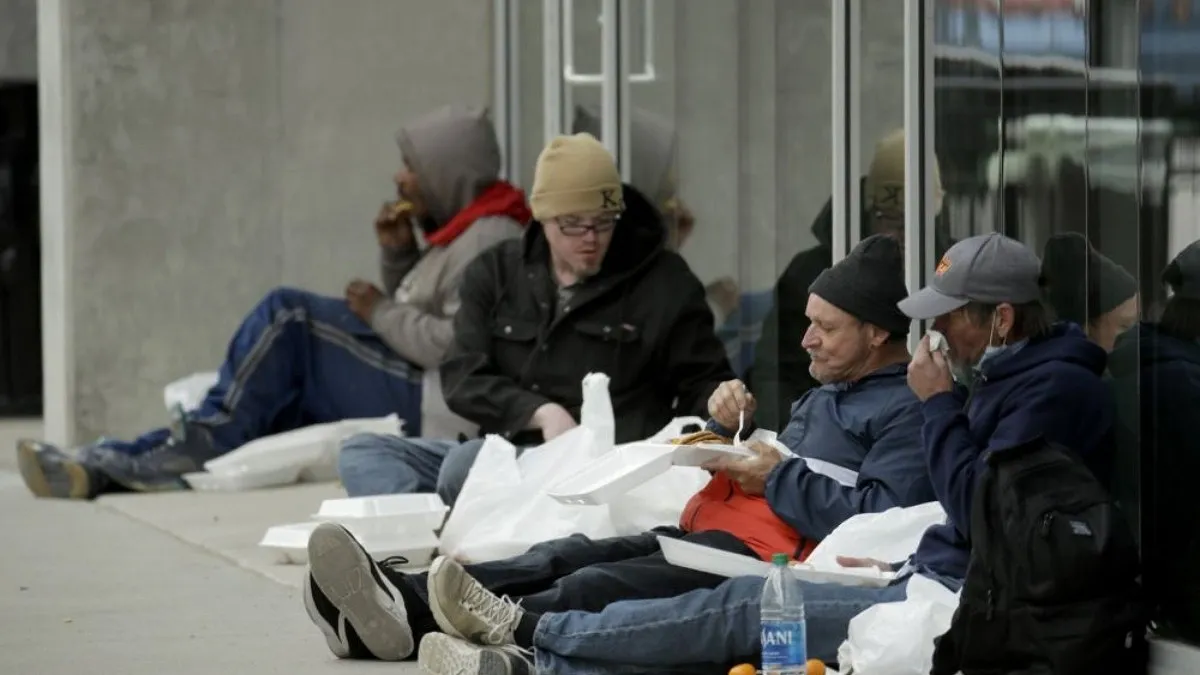
Collected Photo
The U.S. Department of Housing and Urban Development (HUD) data shows that the United States did experience the largest decline in homelessness in nearly twenty years in 2025, with the homeless population decreasing by more than 6%, a reduction of over 47,000 people, marking the second consecutive year of decline.
However, this ostensibly positive data has sparked fierce partisan debate over "who deserves the credit," as the Trump administration and homeless advocacy organizations hold completely opposite views on the causes of the decline, reports The New York Times.
Data and Background: Decline Amidst Still-High Levels
This statistic comes from the "Point-in-Time Count" conducted each January by local organizations across the country, which is currently the closest approximation to a national homelessness figure in the United States. Although the total number has declined, the report notes that homelessness levels remain far higher than pre-pandemic levels. The 2025 count shows a homeless population of 698,425 people. In terms of subcategories, the number of people in shelters decreased by more than 7%, the unsheltered homeless population declined by nearly 5%, and homelessness among veterans dropped by nearly 8%. However, chronic homelessness did not improve, instead rising by approximately 1%.
Attribution Dispute: Policy Credit vs. Temporary Factors
The Trump administration wasted no time in claiming credit. In a press release, HUD Secretary Scott Turner attributed the decline to "President Trump's actions to secure the border, remove criminal illegal immigrants from our streets, and restore safety to our communities". HUD hurriedly released this press release on Friday evening, reportedly after learning that two nonprofit organizations had already completed data analysis and were preparing to publish their own reports.
In contrast, advocacy organizations such as the National Alliance to End Homelessness and Community Solutions argue that the real driver of the decline is the "Housing First" policy promoted by previous administrations, which prioritizes providing permanent housing for homeless individuals without preconditions such as sobriety or treatment, and has accumulated nearly two decades of peer-reviewed evidence showing high retention rates among chronically homeless individuals with severe mental illness or substance use disorders.
Community Solutions' analysis found that nearly half of the decline occurred in four cities—New York, Chicago, Boston, and Denver—that were major destinations for asylum seekers in 2022, where shelters were once overwhelmed by an influx of migrants. Most of these individuals have since left, which to some extent explains the "ebb and flow" phenomenon in the data rather than policy effectiveness. However, Adam Ruege, author of the organization's report, also emphasizes that among the 182 local organizations with data, 57% recorded declines, indicating this is a broader trend and "the country has turned a corner".The report particularly notes the enormous differences in homelessness trends across different regions. Affluent Montgomery County, Maryland, saw a 26% decline, while Fairfax County, Virginia, just across the Potomac River, saw a 3% increase. Among large cities, Los Angeles rose by 1%, Seattle by 8%, and Las Vegas by 14%; but San Francisco and Honolulu both declined by 8%. The largest percentage decline occurred in western North Carolina, where homelessness dropped by approximately two-thirds during the recovery process following Hurricane Helene—a change clearly unrelated to policy.The deeper controversy lies in the fact that the administration taking credit for the decline is simultaneously attempting to dismantle the policies that may have produced these results. The Trump administration has pushed to significantly cut "Housing First" program funding, shifting resources toward short-term programs that require treatment participation, and supports camping bans and forced treatment measures. Advocacy organizations warn that if "Housing First" is weakened while its achievements are used for political cover, next year's data may tell a completely different story—policy effects typically take years to manifest, while credit can be claimed immediately.It is worth noting that the Trump administration waited until several months later than usual to release last year's data, which also showed a decline of approximately 3%. Nonprofit organizations apparently released their own analyses early precisely to avoid another delay. This data release itself has become a microcosm of the policy debate.
