
Trump's shadow looms over Lula-Bolsonaro electoral battle in Brazil

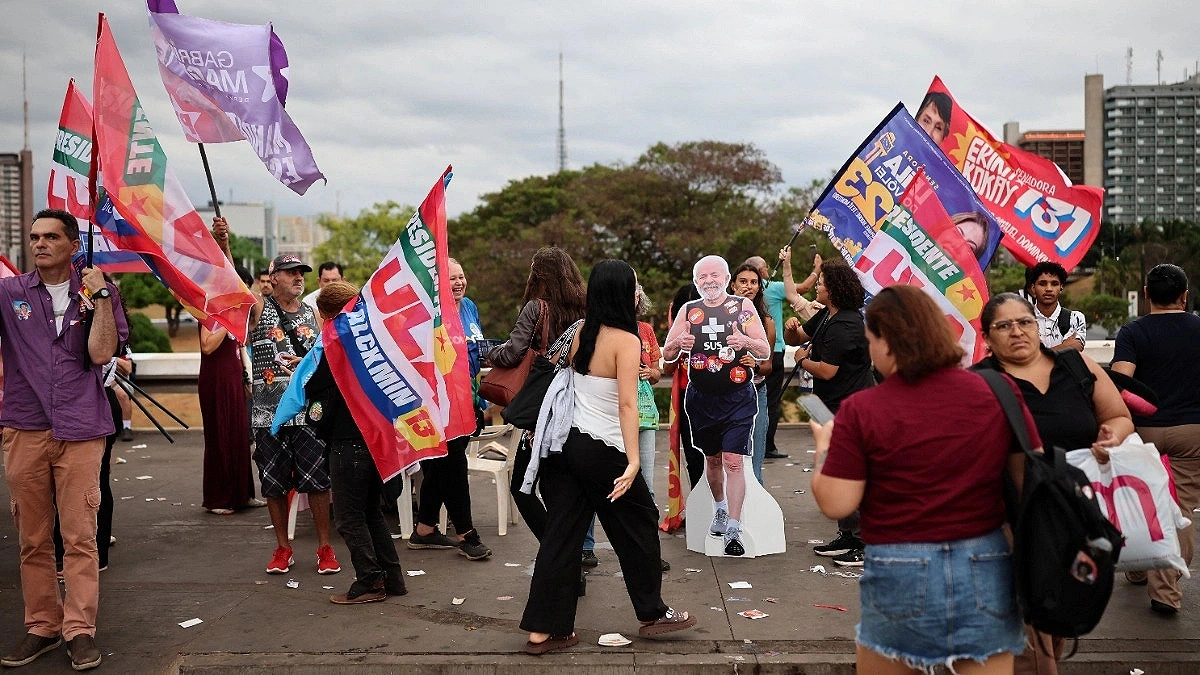
October 2, 2026: Supporters of Workers' Party (PT) candidate President Luiz Inácio Lula da Silva participate in his election campaign ahead of the general election in Brasília, Brazil. Photo: Reuters
Brazil holds the first round of its presidential election today, Sunday (local time). Nearly 160 million voters will participate, with legislative elections in various states also taking place simultaneously. However, the entire election revolves around two figures: left-wing President Luiz Inácio Lula da Silva and right-wing Senator Flávio Bolsonaro.
This election is not merely about a change of power for Brazil. Questions about what kind of politics and economic policies the country will follow, how close its relationship with the United States will be, and what position Brazil will take on the international stage are all tied to the vote.
Lula wants to advance Brazil as part of a multipolar world order. He favors maintaining relationships with China, Europe, and other powers alongside the United States. On the other hand, Flávio Bolsonaro has positioned himself in close alignment with U.S. President Donald Trump and in favor of conservative politics.
Old Political Camps Face Off Again
Four years ago, Lula narrowly defeated Jair Bolsonaro to become president. Since that election, Brazilian politics has become even more divided. Jair Bolsonaro's supporters attacked Congress, the Supreme Court, and the Presidential Palace in January 2023. Jair Bolsonaro was later sentenced to 27 years in prison for plotting an insurrection to overturn the 2022 election results.
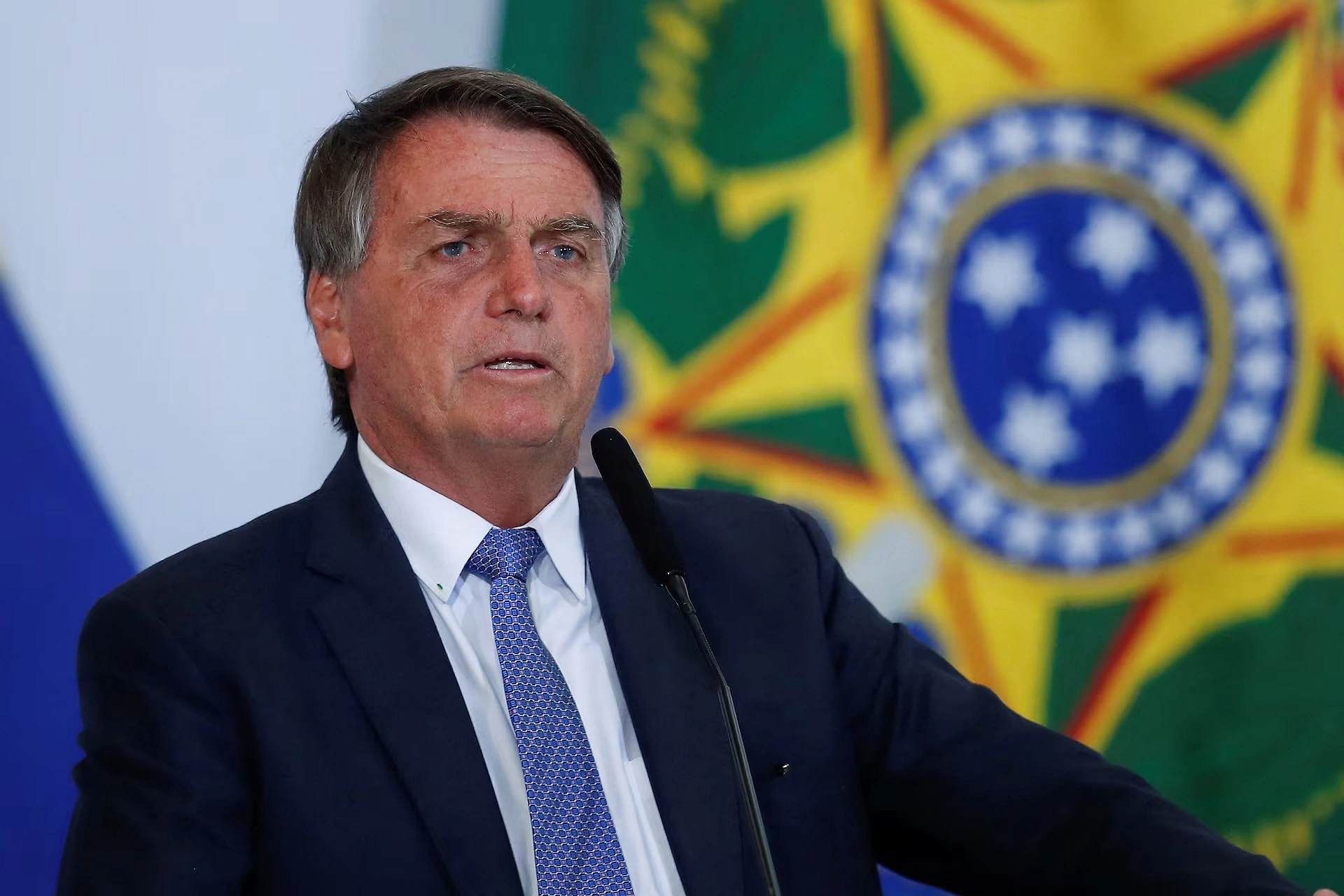
Senator Flávio Bolsonaro. Reuters.
This time, he could not run as a candidate himself. But his influence in the election is clear. His eldest son, Flávio Bolsonaro, is the leading candidate of the right-wing camp.
His father's presence has been visible in various ways during Flávio's campaign. An AI-generated video of Jair Bolsonaro was even used at the event announcing his candidacy. As a result, this election has largely become another round of the "Lula versus Bolsonaro" political battle.
Why Jair Bolsonaro Matters So Much
Jair Bolsonaro is now under house arrest. Due to court restrictions, his use of social media and public statements are also limited.
Nevertheless, he remains an important leader for a large portion of right-wing voters. Flávio has brought his father's political legacy to the forefront to retain that support.
Flávio is a 45-year-old lawyer. He has been a senator since 2019. He has spoken in favor of a tough stance on crime, loosening gun ownership rules, and reducing government controls on farmers.
He has also strengthened ties with Christian conservative voters and the agricultural sector. He has also conveyed a message of close relations with the United States.
Lula's Long Political Journey
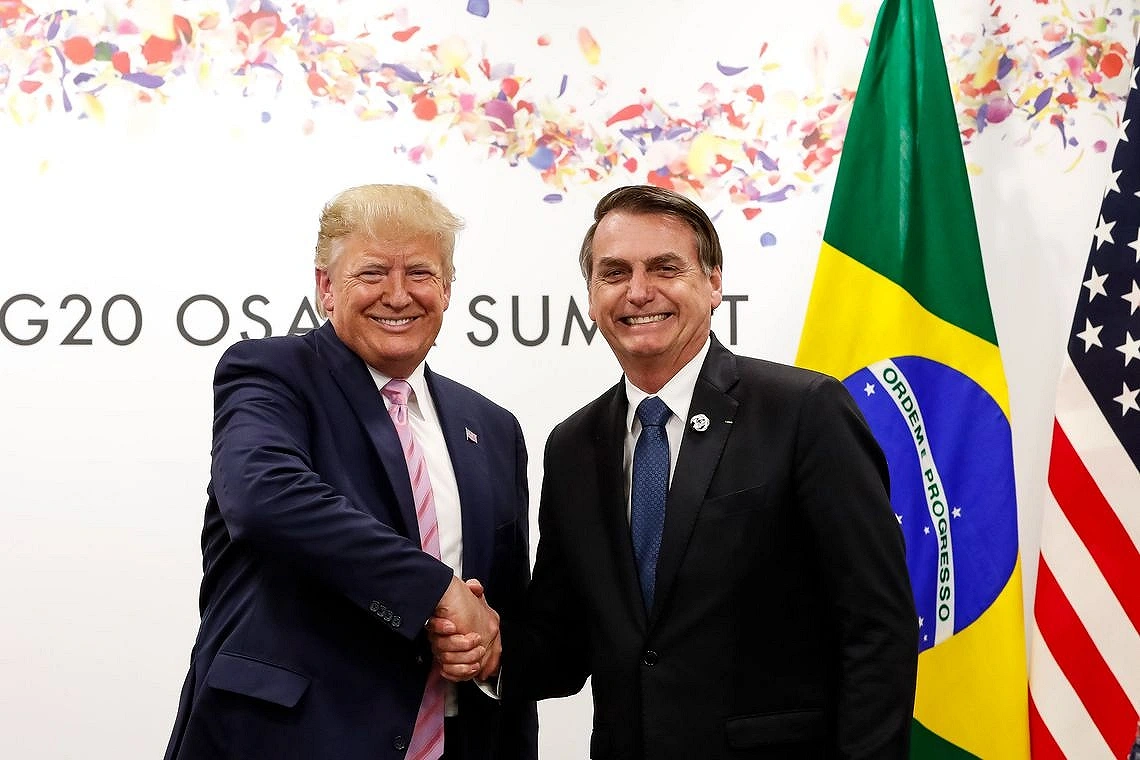
US President Donald Trump and Brazil Senator Jair Bolsonaro. Reuters photo.
The 80-year-old Lula is Brazil's most well-known left-wing leader. After serving two consecutive terms as president from 2003 to 2010, he returned to power for a third time in 2023.
During his first two terms, a cash assistance program called "Bolsa Família" played an important role in reducing poverty. Millions of people emerged from poverty. His popularity also increased significantly at that time.
But later, his party became embroiled in major corruption scandals. Lula himself was imprisoned on corruption and money laundering charges. His convictions were later annulled in 2021. This opened the path for him to participate in the 2022 election.
This time, he is trying to become president for the fourth time. However, Lula had previously said his third term would be his last. Despite his age and long political career, his party has again nominated him as its candidate.
Economic and Environmental Pressures Facing Lula
Lula's supporters are highlighting his social programs and poverty reduction policies. His government also claims that deforestation in the Amazon has decreased. Based on satellite data, it has been claimed that deforestation in the Amazon during the first six months of 2026 was the lowest in the past decade.
However, there is also criticism regarding the environment. Environmentalists have raised questions about the approval of oil exploration in the ocean area near the mouth of the Amazon River.
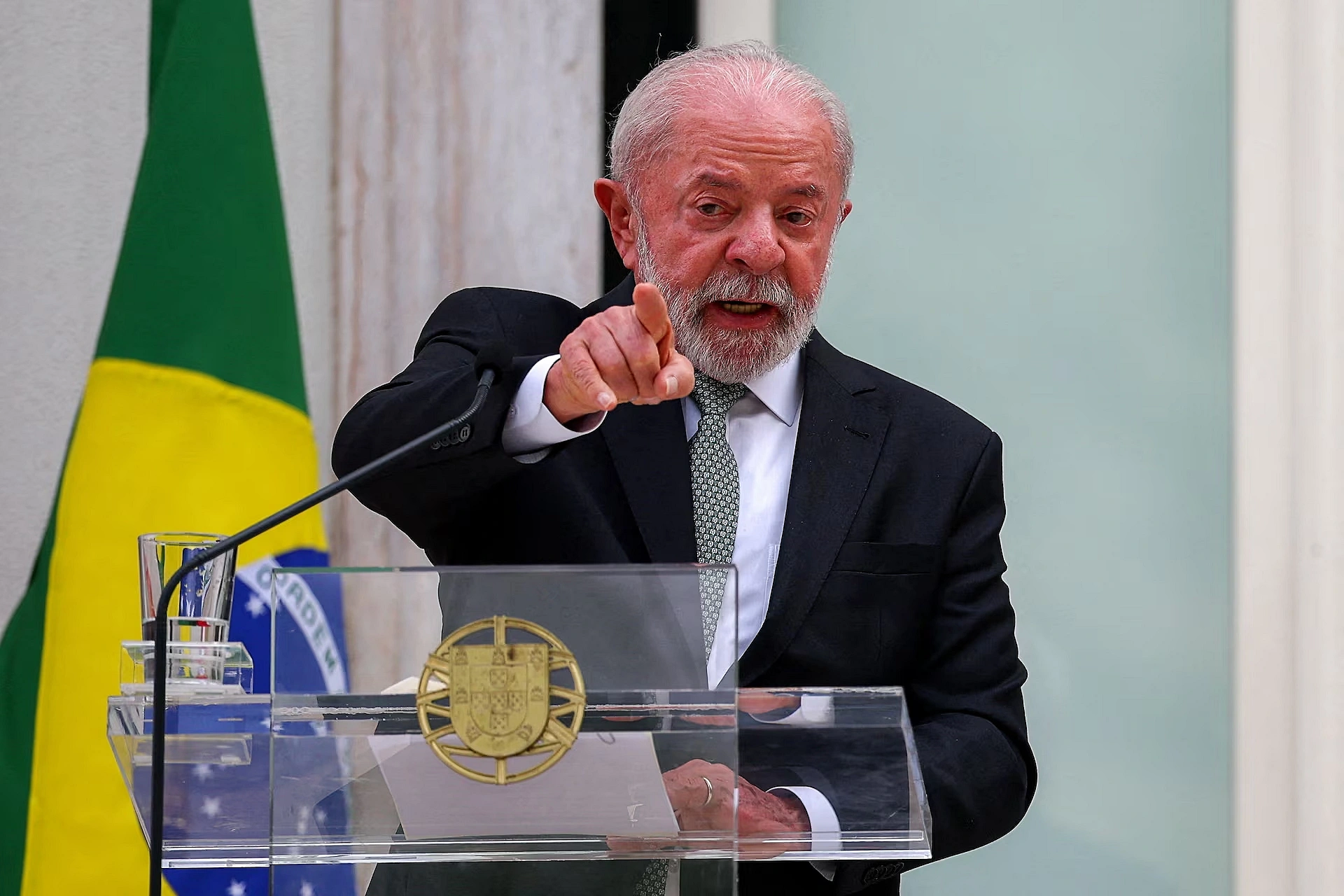
President Luiz Inácio Lula da Silva. Reuters photo.
Lula's argument is that Brazil must gradually move away from fossil fuels. But revenue from oil is important for financing that transition.
In other words, Lula faces the question of balancing environmental protection on one hand with economic growth and energy revenue on the other.
After Crime, Corruption Is Now a Major Issue
Just months before the election, crime and security were the main concerns of Brazilian voters. But recently, a major financial scandal has shifted that discussion.
At its center is banker Daniel Vorcaro. He was associated with Banco Master. Authorities are investigating the institution over allegations of large-scale financial fraud.
After information about Vorcaro's contacts with Flávio Bolsonaro was revealed, the matter became a major issue in electoral politics. Investigators are also looking into allegations of corruption and money laundering against Flávio. He has denied any wrongdoing.
However, the impact of the scandal has not fallen only on Flávio. Information about Vorcaro's contacts with Supreme Court Justice Alexandre de Moraes has also come to light. Moraes has denied any wrongdoing.
This is where the matter has become more politically complicated. Moraes was the judge in Jair Bolsonaro's case. As a result, the right-wing camp has been criticizing him for some time.
Flávio is using this issue in his election campaign. His argument is that voting for Lula means supporting Moraes as well.
What Is the Real Question Before Voters
For a section of Brazilian voters, this election is therefore not just a matter of choosing between Lula and Flávio. Rather, what kind of political environment they want is also a big question.
Lula speaks of left-wing social policies, a multipolar foreign policy, and Brazil's independent international position. Flávio Bolsonaro speaks of crime suppression, conservative social values, market-friendly policies, and closeness with the United States.
The division between the two sides is not limited to Brazil's internal politics alone. It is now also visible in foreign policy.
Lula's relationship with the Trump administration has gone through tensions over the past few years. Lula has said Brazil is not any country's "backyard."
On the other hand, Flávio has increased his closeness with Trump. He has also promised to join the anti-crime alliance formed under the leadership of the Trump administration if elected.
Trump's Shadow Also in the Election
As a result, Brazil's election is also linked to a broader political shift in Latin America. In several countries in the region, the influence of right-wing and conservative politics has increased. Brazil's result could make that trend even clearer.
However, seeing this only as a left-versus-right battle will not capture the full picture of the election. Crime, inflation, employment, corruption, the environment, and the cost of living are also important to voters' decisions.
What Will Be the Result in the First Round?
Twelve candidates are contesting the presidential race in the first round. But in public opinion polls, essentially only Lula and Flávio have received double-digit support.
In recent polls, Lula is slightly ahead, but the margin is narrow. Several polls published on Saturday also showed the race as close. If no candidate receives more than 50 percent of valid votes in the first round, a second-round vote will be held on October 25.
Recent polls do not show a likelihood of an outright majority. As a result, the polls indicate that a second-round contest is more likely. However, polls and actual election results are not the same. Last-minute decisions, undecided voters, and voter turnout can influence the outcome.
Why This Election Matters
Brazil is the largest country in Latin America and one of the region's major economies. Therefore, the impact of the country's political change is not limited to Brazil alone.
If Lula wins, his multipolar foreign policy is likely to continue. If Flávio wins, the Bolsonaro family's politics will return to the center of state power, and efforts to deepen relations with the United States may be seen.
But before the election result, the most clear fact is that Brazil still has not been able to emerge from the Lula-Bolsonaro political divide. The confrontation between the two political camps even after four years is proof of that.
This election is therefore not just about choosing a new president. It is another major decision by voters on Brazil's political polarization over the past decade, corruption debates, social divisions, and international positioning.
(Source: BBC and CNN)
