
Over 4,00,000 Russians killed in Ukraine war

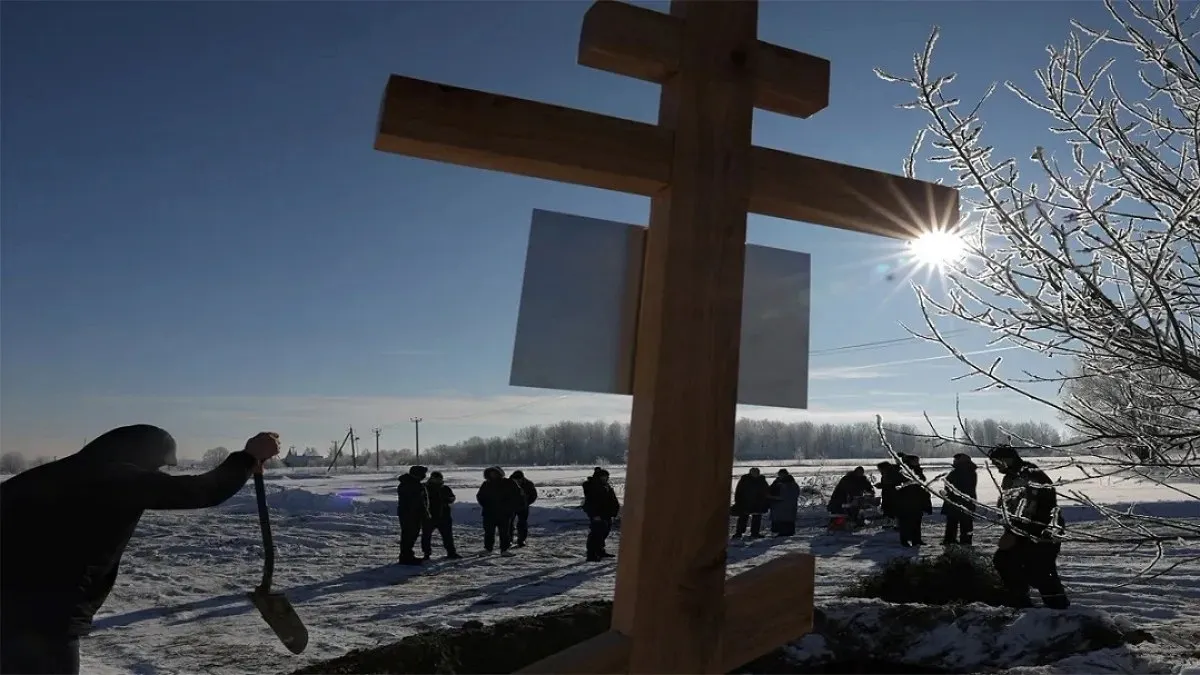
File photo: REUTERS
Leaked records from Russia’s state statistics agency, Rosstat, reveal that more than 4,00,000 Russian troops killed in Ukraine since Moscow initiated its full-scale invasion nearly five years ago.
The hacker groups Cyber Partisans, a Belarusian opposition-aligned collective, and Silent Crow, a Ukrainian hacking outfit, breached the system and extracted over 11 million death certificates containing details on the victims’ ages, residences, and locations of death.
The hackers announced the cyber breach on 1 November and released the material over the weekend, which was subsequently shared with The Guardian and select media outlets. While Rosstat acknowledged the hacking incident, it denied that hackers compromised any sensitive information.
The leaked files link 4,12,576 death certificates directly to the conflict through official cause-of-death codes or explicit written notes referencing combat and military operations. This dataset provides an unprecedented glimpse into Russia’s wartime casualties, which Moscow has systematically kept hidden by treating military losses as a state secret and refraining from publishing official death tolls since the early months of the war.
Although The Guardian could not independently verify every entry in the database, the figures align closely with independent assessments. British intelligence calculated in September that roughly 5,00,000 Russian service members had died since the invasion began.
Meanwhile, the independent Russian news site Mediazona has verified by name nearly 2,86,000 slain personnel using public records, social media obituaries, and cemetery photographs, estimating the actual death count to be near half a million.
Analyzing the leaked material, Janis Kluge, head of the Russia and Eurasia division at the German Institute for International and Security Affairs, observed, “The data looks authentic, and it’s very rich”.
Kluge, who has extensively researched Russian military statistics, described the incident by saying, “This is the biggest leak of data when it comes to Russian casualties.” Experts emphasize that the data likely undercounts total deaths because many soldiers remain missing or unidentified, and a typical six-month reporting delay exists between a fatality and its official entry. As a result, Kluge noted, “We are probably at this time closer to 5,00,000 killed Russian soldiers than 4,00,000.”
The documentation highlights stark geographic disparities in how the war impacts different Russian communities, with impoverished and distant regions bearing a disproportionately heavy burden.
In eastern Russian territories such as Buryatia, Tuva, and Zabaykalsky Krai, war-related deaths represented around one-third of all male mortalities aged 18-49 between the invasion’s outbreak and mid-2024, whereas in Moscow and St Petersburg, combat fatalities accounted for only about 10 percent.
Moreover, battlefield deaths escalated sharply in late 2024 and 2025. During several months in that timeframe, monthly troop deaths topped 15,000, averaging over 500 casualties daily.
Commenting on this surge, Kluge said, “In late 2024 and in 2025, you see that the numbers in many months are above 15,000 per month, and that’s higher than I think most estimates were. That’s 500 a day, above 500 a day. Certainly shocking.”
The magnitude of these losses stands as historically unprecedented in modern Russian history. In less than five years, the death toll of Russian troops in Ukraine has surpassed the combined casualties from all Soviet and Russian conflicts fought between the end of World War II and the 2022 invasion by more than eightfold, while also exceeding total US military deaths during World War II.
Nevertheless, a source familiar with Russian President Vladimir Putin’s thinking indicated that these heavy casualties will not persuade Moscow to seek a compromise, but will instead fortify his determination.
The source explained, “Putin understands these numbers, and for him to now settle for anything less than everything he wants would feel like a betrayal of himself and the people.”
These revelations emerge as high-level Russian and Ukrainian negotiators prepare to convene on Tuesday in Abu Dhabi for their first US-brokered peace talks in nine months, amid staggering human losses with no immediate end to the war in sight.
Prior negotiations yielded minimal progress, as Moscow continues to demand that Ukraine surrender remaining territories in the Donbas region. Neither Vladimir Putin nor Ukrainian President Volodymyr Zelenskyy will participate directly; instead, both nations are dispatching senior delegations alongside Donald Trump’s envoys Steve Witkoff and Jared Kushner.
Writing on X, Witkoff confirmed that discussions will concentrate on a “post-war security arrangement, de-escalation” and humanitarian matters.
Meanwhile, European governments remain concerned that negotiations could expand to broader European security framework issues, including Moscow’s demand for reduced NATO military presence in neighboring states.
Although France’s foreign minister stated that Paris would join the conference, the Kremlin subsequently denied that France would attend.
Source: The Guardian (adapted)
